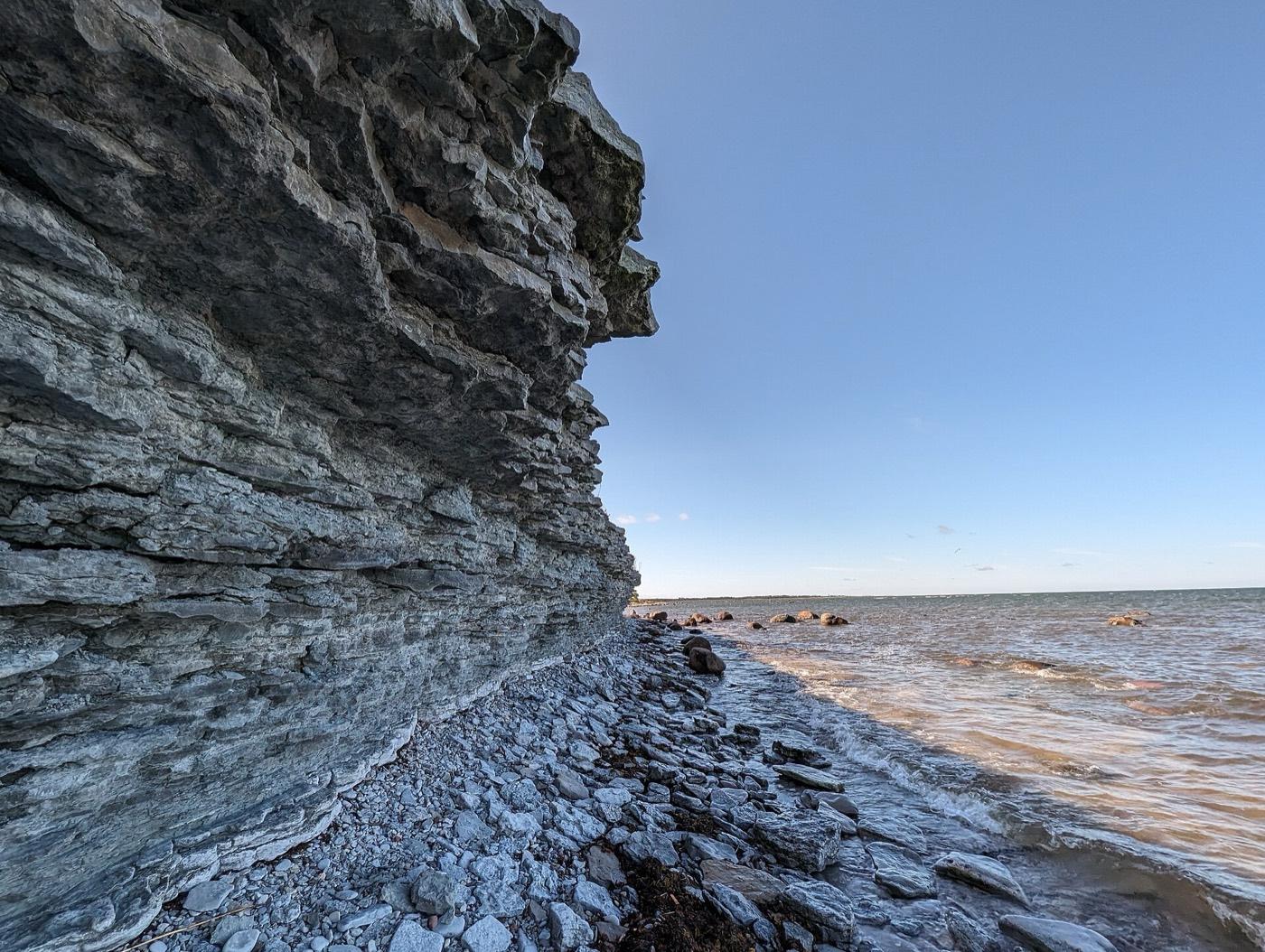
Ohesaare and Kaugatuma Cliffs Fossil Hunting Guide
Image: ErikAbner (CC BY 4.0)
Late Silurian coastal cliffs on the Sõrve peninsula of Saaremaa, holding crinoid genera found nowhere else and the only Přídolí symbiotic associations known anywhere. Both cliffs sit inside landscape protection areas, so treat them as viewing sites rather than collecting ground.
By Edward Chen · Published 11 September 2026
Introduction
The Sõrve peninsula is a thin finger of land running south from Saaremaa. The sea has cut into its western edge to expose the youngest Silurian rocks in Estonia.
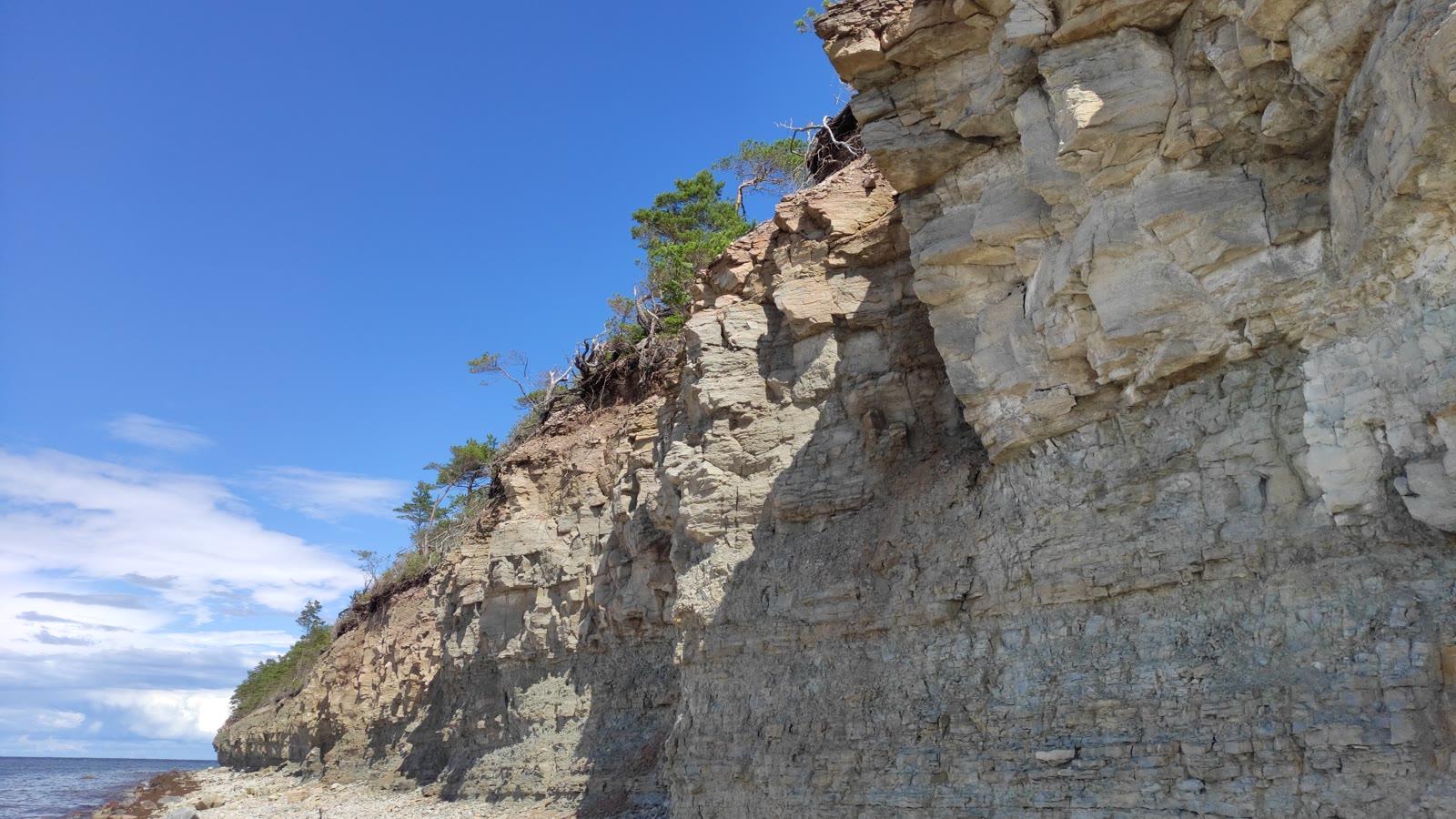
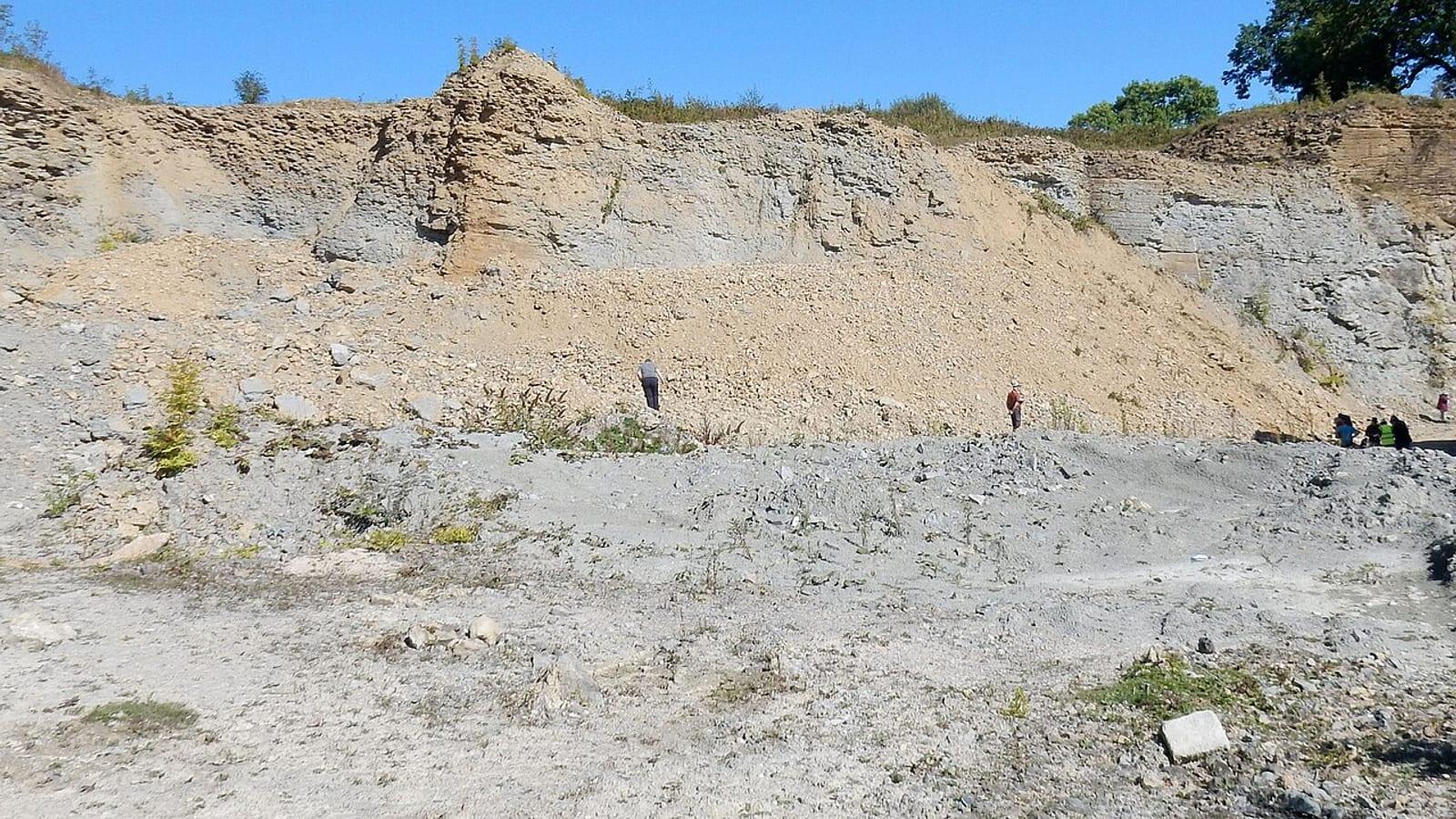
Ohesaare cliff runs 400 to 700 metres long and reaches about 3.5 metres high. Kaugatuma cliff lies to the north. Between them they expose the Přídolí, the final series of the Silurian, and they are the best Upper Silurian exposures in the country.
Two claims here are about the world rather than about Estonia. The crinoid genera Methabocrinus, Saaremaacrinus and Velocrinus occur only in the Přídolí of Saaremaa. And these cliffs yield the only Přídolí symbiotic associations known anywhere, meaning fossils preserving two organisms living together.
The shingle at the foot of the cliffs is where the weathered-out material gathers, and it is the best place to look.
Location and Directions
Saaremaa is Estonia's largest island, reached by ferry from Virtsu on the mainland to Muhu, then by causeway.
GPS for Ohesaare cliff: 57.9988°N, 22.0181°E. It stands near Ohesaare village on the west coast of the Sõrve peninsula, toward its southern end. Kaugatuma cliff lies north of it on the same coast.
Both are reached on foot from small parking areas, and both are open ground with no ticket and no opening time.
The peninsula is a long drive from the main town of Kuressaare, so allow a full day if you intend to work both cliffs.
A practical approach works best here. Rather than hammering, walk the shingle slowly and turn likely pieces over. The sea has already broken the rock along its weaknesses, which often means along the fossils. A wet pebble shows detail that a dry one hides.
What Fossils You'll Find
The Přídolí beds here are richly fossiliferous, and the shingle beach concentrates the finds.
Brachiopods, corals, trilobites and echinoderms are abundant and are the everyday finds. Bryozoans and molluscs occur throughout.
Crinoids are the scientific speciality. Alongside the three endemic genera, the general crinoid fauna is well preserved and diverse.
Early vertebrates are the other reason these cliffs appear in the literature. Both Ohesaare and Kaugatuma are known localities for Silurian fish material, principally scales and plates of jawless and early jawed fishes.
Look at the shingle and the rockfall, and photograph rather than pocket. Most fossils there are already loose.
Symbiotic associations are worth explaining, because they are the site's strongest scientific claim. A symbiont is an organism living in or on another, and fossils that capture the relationship are rare. The only known Přídolí examples occur at these two cliffs. That makes them a reference locality for such relationships at the end of the Silurian.
 Photo: Taawet, CC BY-SA 3.0, via Wikimedia Commons
Geologic History
The Přídolí is the last series of the Silurian, roughly 423 to 419 million years ago. Estonia then lay on the margin of Baltica in a warm, shallow, tropical shelf sea.
The sediments are carbonates laid down in shallow water with normal marine salinity, which is why the fauna is so varied and so well preserved.
Estonia's Silurian dips gently south. The youngest beds in the country therefore crop out at the southern end of Saaremaa. Older rocks appear further north and on the mainland.
Glaciation and post-glacial rebound shaped the present coast. Land in this part of the Baltic is still rising, and the shore is still changing.
 Photo: Tõnu Pani, CC BY-SA 3.0, via Wikimedia Commons
Collecting Rules and Regulations
Treat both cliffs as viewing-only. Each sits inside a landscape protection area. Estonian conservation rules prohibit the use of natural resources in a conservation zone, unless that area's own protection rules say otherwise. The cliffs carry statutory protection under Estonian conservation law, and the faces are not to be worked.
That is a real restriction. The shingle is full of weathered-out material and the cliffs shed more constantly. The site rewards a walk and a camera.
Do not hammer the cliff face, and do not dig into it. Beyond the legal position, undercutting a 4 metre cliff is an obvious hazard.
Estonia protects its geological heritage and the Sõrve sites are recognised as high-value geoheritage in the published literature. Treat them accordingly and take nothing.
If you find vertebrate material, report it. The University of Tartu and Tallinn University of Technology both hold national palaeontological collections.
Saaremaa has a second geological attraction worth combining with a fossil trip. The Kaali crater field in the centre of the island was formed by a meteorite impact within human history. It is one of the youngest and most accessible impact sites in Europe.
 Photo: Taawet, CC BY-SA 3.0, via Wikimedia Commons
Safety
The cliffs are low but they are actively eroding. Keep out from the base.
The shingle is loose and tiring to walk on, and the shore can be slippery.
The Sõrve peninsula is exposed to Baltic weather from the west, and conditions change quickly.
The peninsula saw heavy fighting in the Second World War in Estonian coastal areas. Do not disturb metal objects.
Facilities are sparse. Carry water and fuel up before you drive south.
Sources
https://link.springer.com/article/10.1007/s12371-024-00957-7 https://sandatlas.org/top-10-geosites-in-estonia/ https://woostergeologists.scotblogs.wooster.edu/2024/05/18/the-geoheritage-of-the-sorve-peninsula-saaremaa-island-estonia-a-silurian-marine-paradise/ https://projects.centralbaltic.eu/images/files/result_pdf/GEOISLANDS_result1_fossils_rock.pdf
.jpg)

.jpg)