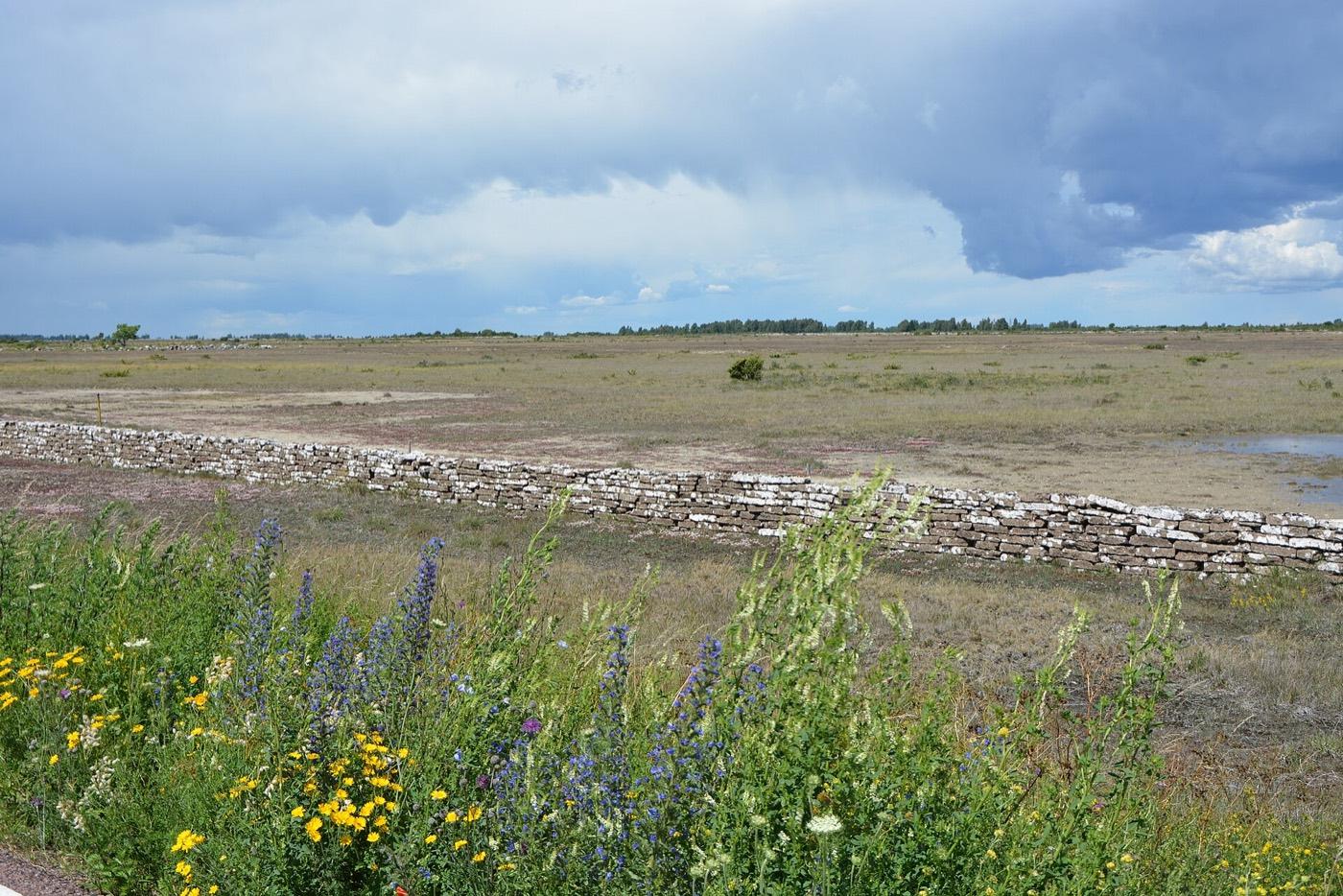
Öland Ordovician Limestone Fossil Hunting Guide
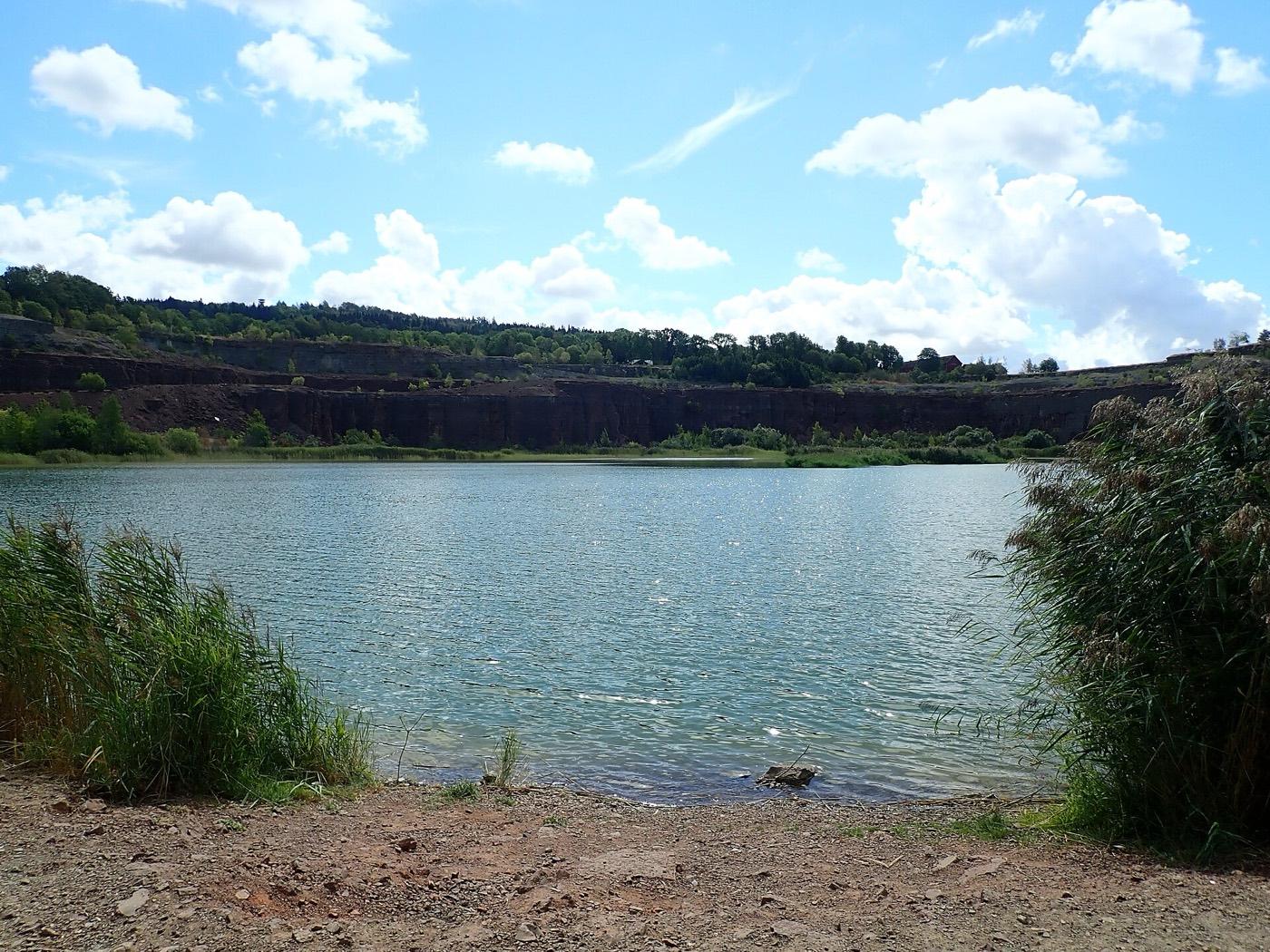
Image: Bernt Fransson (CC BY-SA 4.0)
A long island of Ordovician limestone off the Swedish Baltic coast, with pavements, quarries and shore ledges exposing orthoceratite limestone and Cambrian Orsten. The county administrative board publishes a leaflet in English on fossil gathering and the law.
By Edward Chen · Published 11 September 2026
Introduction
Öland is essentially one slab of Ordovician limestone, 137 kilometres long and rarely more than 16 wide, lying off the south-east coast of Sweden. The rock is close to the surface almost everywhere. That is why the island looks the way it does and why it is productive for fossils.
The signature fossil is the orthocone nautiloid, a straight-shelled cephalopod. The rock that contains them, orthoceratite limestone, is quarried and polished across the island.
Orsten also occurs in the Cambrian of Öland, as it does at Kinnekulle. Orsten preserves tiny arthropods in three dimensions with limbs and bristles intact, and it is one of the most detailed windows on Cambrian life anywhere.
Unusually for a fossil destination, there is an official English-language document on what you may collect. The county administrative board publishes a leaflet on limestone, fossils and the law.
Location and Directions
Öland is reached by the Ölandsbron, the six kilometre bridge from Kalmar on the mainland. There is no ferry needed and no charge.
GPS for Stora Alvaret: 56.4667°N, 16.5000°E.
The island divides into two characters. The south is dominated by the Stora Alvaret, a vast limestone plain where thin soil and grazing have produced an open, almost treeless landscape. The north has more quarrying, more woodland and a more varied coast.
Productive ground includes coastal ledges and raised beaches, disused quarries, and loose material along the shore. Gillberga and Horns udde, both on the west coast of northern Oland, are among the better known geological localities. Horns udde sits largely inside the Horns kungsgard nature reserve, where collecting is prohibited, and a disused quarry needs the owner's permission.
Read the access rules before you choose a spot. Large parts of the south are inside a World Heritage area and a Natura 2000 site.
The red and grey banding in Öland limestone is worth recognising. The colours come from iron content and reflect different depositional conditions, and quarried slabs often show both. Fossils occur throughout, but weathered natural surfaces show them far better than freshly cut faces.
What Fossils You'll Find
Orthocone nautiloids are the classic. Sections through their conical shells appear on weathered limestone surfaces and on quarried slabs, and they can be large.
Trilobites occur, particularly in the alum shale and in some limestone horizons. Brachiopods, bryozoans and echinoderm debris are common.
The Orsten fauna is present but is not a field collectable in any practical sense. The fossils are fractions of a millimetre across and are recovered in a laboratory, which dissolves limestone nodules in acid.
The most accessible approach on Öland is to look at weathered pavement surfaces and loose slabs rather than to break rock. Natural weathering etches the fossils into relief far better than a hammer does.
 Photo: Groszvater, CC BY 2.5, via Wikimedia Commons
Geologic History
The limestone was laid down in the Ordovician, roughly 490 to 460 million years ago. Baltica then sat in tropical latitudes, and a shallow, clear sea covered the area.
Sedimentation was extremely slow. A few millimetres of limestone can represent thousands of years. That is why shells accumulated in such concentration and why the rock is so densely fossiliferous.
Beneath the limestone lies Cambrian alum shale, the source of the Orsten nodules.
Glaciation stripped and polished the surface during the last ice age. Post-glacial rebound has lifted the island, producing the raised shorelines visible along the coast. The thin soils and exposed pavement of the Stora Alvaret are a direct consequence.
Öland's limestone has been quarried since the Middle Ages and shipped across the Baltic. Floors in churches and palaces from Stockholm to St Petersburg are Öland stone. The orthocones in them are the same animals you find weathering out of the pavement.
 Photo: David Castor, CC0, via Wikimedia Commons
Collecting Rules and Regulations
Start with the source. The Länsstyrelsen for Kalmar County publishes an English-language leaflet on limestone, fossils and the law on Öland. Read it before you collect.
The allemansrätten permits walking and the collection of small amounts of loose material, but it does not override protected-area rules.
The Stora Alvaret and the southern agricultural landscape form a UNESCO World Heritage Site, and there are nature reserves and Natura 2000 sites across the island. Collecting inside them is restricted.
Do not remove material from quarry faces or from archaeological features. Many of Öland's limestone walls and structures are protected.
Personal collecting of a few loose specimens is a different matter from commercial extraction, which requires permission.
 Photo: Sten Porse, CC BY-SA 3.0, via Wikimedia Commons
Safety
Limestone pavement is uneven and cracked, with fissures that catch ankles. Wear boots.
The alvar is exposed with little shade and no shelter. Carry water, and take a map, because the landscape is featureless enough to confuse navigation.
Some coastal ledges are slippery with algae and are cut off when the water rises.
Disused quarries can have unstable faces and deep water.
Ticks are common in Swedish grassland and woodland.
Öland is busy in July and August, when Swedish holiday traffic fills the bridge and the coast. Late spring and early autumn give better light on weathered surfaces and far more room on the alvar.
 Photo: Bernt Fransson,Lindås, CC BY-SA 4.0, via Wikimedia Commons
Sources
https://www.lansstyrelsen.se/download/18.1dfa69ad1630328ad7c2fd4a/1526067825276/fossil_eng.pdf https://en.wikipedia.org/wiki/Orsten https://projects.centralbaltic.eu/images/files/result_pdf/GEOISLANDS_result1_fossils_rock.pdf