Penha Garcia Ichnological Park Fossil Hunting Guide
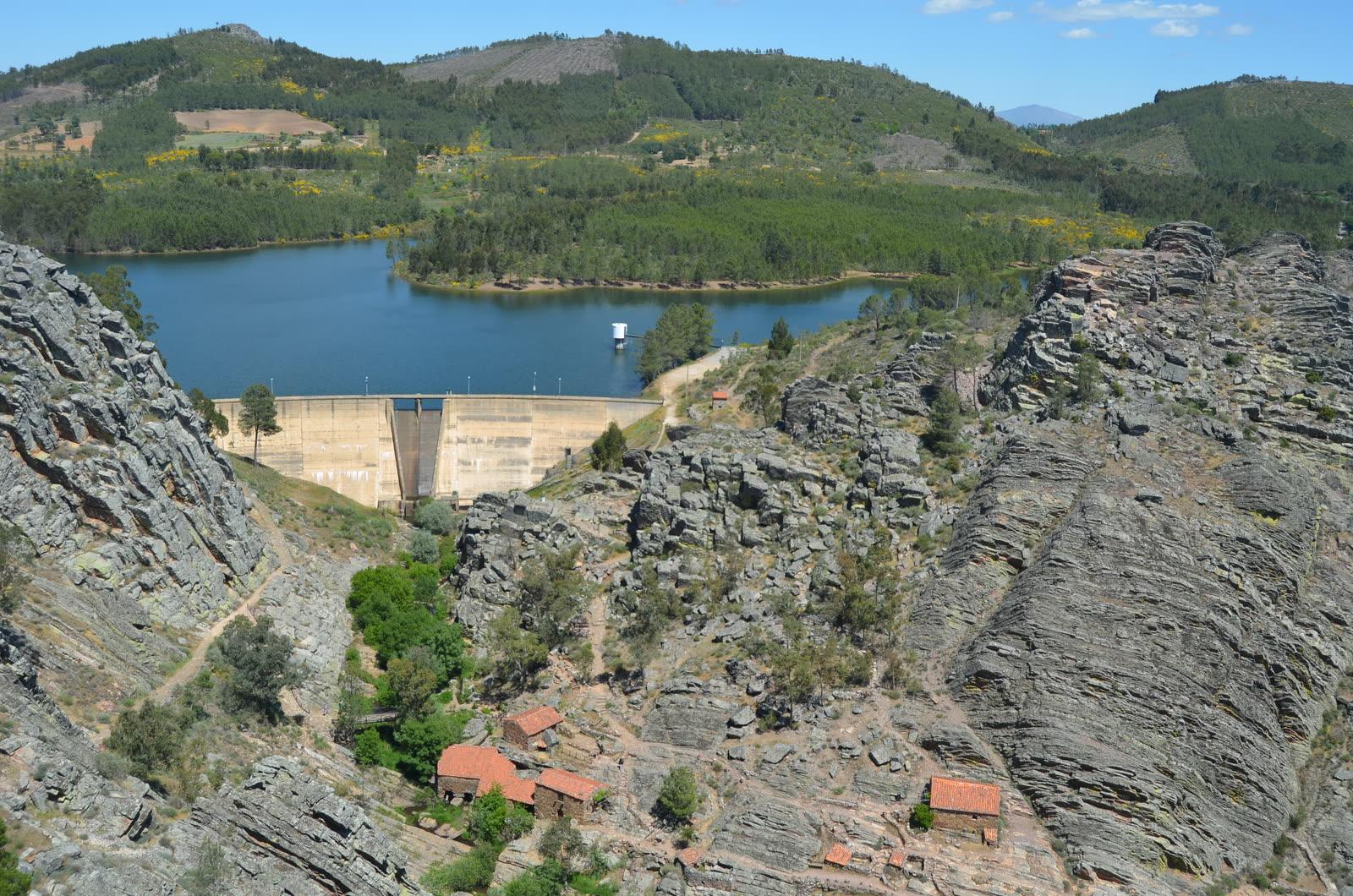
Image: Pedro from Maia (Porto), Portugal (CC BY 2.0)
Penha Garcia Ichnological Park in Idanha-a-Nova, Portugal, shows Ordovician trace fossils in the Ponsul river gorge. The Penha Garcia Formation holds trilobite feeding burrows of the genus Cruziana up to 260 mm wide. A 3 km trail, the Rota dos Fósseis, leads to them.
By Edward Chen · Published 1 October 2026
Introduction
Penha Garcia Ichnological Park lies in the Ponsul river gorge beside Penha Garcia village, in the municipality of Idanha-a-Nova in central Portugal. Its Ordovician quartzite carries trace fossils of the genus Cruziana, the feeding burrows of trilobites. Some burrows are several meters long and more than 20 cm wide. A park paper reports a world record width of 260 mm. The park is a municipal protected area inside the Naturtejo UNESCO Global Geopark.
The park shows 21 ichnogenera and 36 ichnospecies. These record the behavior of trilobites, worms, bivalves and sea anemones on a sandy sea floor. A free, waymarked trail, the Rota dos Fósseis, leads visitors past the best rock surfaces. The fossils stay in the rock. You may not collect.
Location and Directions
Penha Garcia is a village near the Spanish border in the Beira Baixa region. The park is on the main tourist route of Idanha-a-Nova. The historical villages of Monsanto and Idanha-a-Velha and the hot springs at Termas de Monfortinho are nearby.
The Rota dos Fósseis, also called PR3 IDN, is a 3 km circular trail. It links the village centre with the gorge. The official start is at Largo do Chão da Igreja, by the church. Signs use yellow and red bars.
The route takes about 1 hour 30 minutes and has an easy rating. Altitude ranges from 475 to 580 m. Parking is available at Penha Garcia castle.
The Fossil Home (Casa dos Fósseis) sits in a restored watermill about halfway along the trail. It holds local fossils, rocks and minerals and explains how trilobites made the burrows. About 14,000 visitors sign its honor book each year. This guide found no published opening hours for the Fossil Home. Ask at the Penha Garcia tourism office at Rua do Espírito Santo or call 277 366 011.
This guide found no admission charge for the park or the trail. The trail also passes the Templar castle, the church viewpoints, four restored watermills and the Pego river pool.
What Fossils You'll Find
 Photo: CorreiaPM, Public domain, via Wikimedia Commons

Most fossils here are trace fossils, which are tracks and burrows rather than bones. The Cruziana rugosa group dominates. Thousands of burrows cover more than 100 bedding planes. They are 1 mm to 260 mm wide. The longest burrow measured is 3,000 mm. The burrows form dense networks that researchers call highways.
Trilobites dug these burrows while they fed in the sediment. The site is rare because a burrow and its maker occur in the same unit. One asaphid trilobite body fossil comes from the Penha Garcia Formation.
Other trace fossils include Skolithos in dense piperock and Diplocraterion burrows. A trackway of the type Merostomichnites belongs to a large phyllocarid crustacean. It is the only one of its kind that visitors can see in Portugal. Bivalve burrows record some of the earliest behavior of this group.
Body fossils are rare. They include obolid brachiopods and a bed of giant chitinophosphatic brachiopods that marks the old coastline. In the younger Brejo Fundeiro Formation, black shales at the Reca stream hold the trilobite Neseuretus tristani.
Local people called the burrows the Painted Snakes. Legends about them started one of the oldest popular geoconservation movements in Portugal.
Geologic History
 Photo: Pedro from Maia (Porto), Portugal, CC BY 2.0, via Wikimedia Commons
.jpg)
The burrows lie in the Penha Garcia Formation. Bayet-Goll and Neto de Carvalho proposed this name in 2020 for the Armorican Quartzite of the area. The stratotype is in the park. The unit is more than 300 m thick. It overlies the Serra da Gorda Formation and passes up into the Brejo Fundeiro Formation.
The rocks date from the Early to Middle Ordovician, from the Floian to the Darriwilian. The park brochure puts most of the quartzite in the Floian, at 477.7 million years, and possibly into the upper Dapingian, at 467.3 million years.
The sediment came from a delta on the southern margin of the Rheic Ocean, on the edge of the supercontinent Gondwana. Storms, waves and rivers shaped the delta. The burrows reflect the Great Ordovician Biodiversification Event, a time when marine animal life diversified. The giant burrows may reflect a trend toward large trilobites that peaked about 465 million years ago.
The Variscan mountain-building event later folded these beds. The quartzite now stands in near vertical cliffs in the gorge, which is about 140 m deep. The gorge cut through the folded rock in the last 2 million years.
Researchers have studied the site since the 19th century. Nery Delgado's 1885 monograph on trilobite-like fossils drew mostly on Penha Garcia material. Roland Goldring used Penha Garcia samples in 1985 to show that Cruziana is a trilobite burrow.
Collecting Rules and Regulations
You may not collect fossils here. The park is a municipal protected area. A dedicated ranger watches it. The municipality surveys erosion and vandalism with drone and close-range 3D models.
The local community asks visitors not to damage the fossils. Do not hammer, chip, scratch or remove any rock. Do not take loose pieces from the path. The Fossil Home keeps fossils from the valley away from tourists and collectors.
This guide found no published statute or penalty for removal of material. Leave everything in place and take photographs.
Safety
Watch your footing on the trail. Some sections have stairs or uneven ground. Wet schist is slippery in bad weather.
The trail is hard for wheelchairs and prams. It climbs to the castle and then drops into the gorge. Wear sturdy shoes.
Summer is the busy season. Crowds fill the Pego river pool in summer. Carry water and sun protection, and keep to the waymarked route.
Sources
https://old.oiccpress.com/geoconservation-research/article/the-penha-garcia-ichnological-park-at-naturtejo-unesco-global-geopark-portugal-a-geotourism-destination-in-the-footprint-of-the-great-ordovician-biodiversification-event-2/ http://geonaturescola.com/ficheiros/rotas/1483903177parque-icnologico-penha-garcia.pdf https://www.unesco.org/en/iggp/naturtejo-unesco-global-geopark https://www.portugalthings.com/fossils-route-penha-garcia-pr3-idn/ https://greensavers.sapo.pt/parque-icnologico-de-penha-garcia-valorizado-com-projeto-de-616-mil-euros/
Nearby sites
 Canelas Quarry and Arouca Geopark Fossil Hunting GuideTrilobites, Brachiopods
 Lourinhã Jurassic Dinosaur Coast Fossil Hunting GuideDinosaur eggs and embryos, Sauropod bone (Lusotitan, Dinheirosaurus)
 Cabo Espichel Dinosaur Tracksites Fossil Hunting GuideDinosaur tracks, Sauropod trackways
 Jbel Tiskaouine Ordovician Trilobite Site Alnif Fossil Hunting GuideJbel Tiskaouine, Flexicalymene