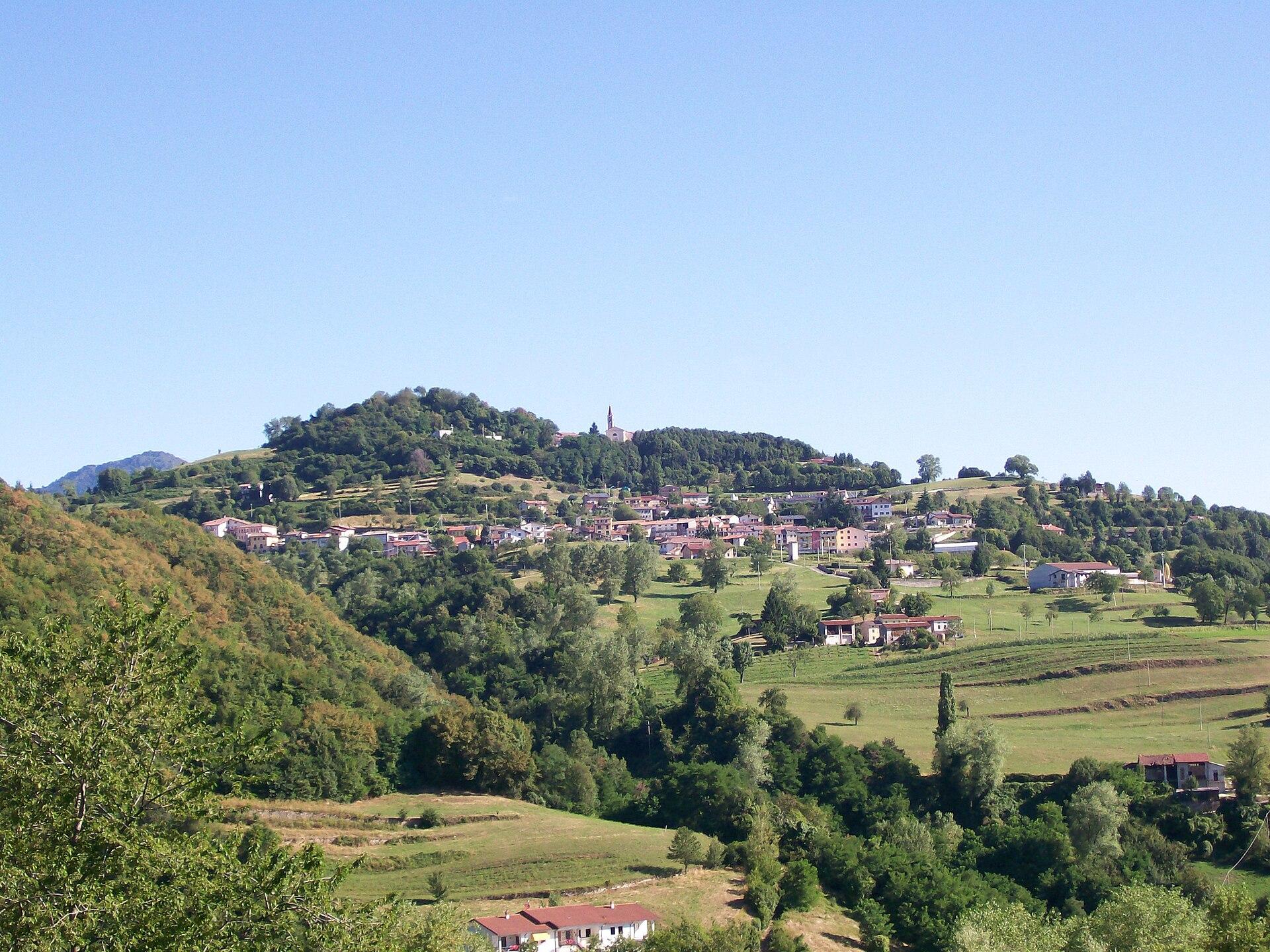
Pesciara di Bolca Fossil Quarry Guide
Image: MZ14 (CC BY 3.0)
The Pesciara di Bolca above Verona, Italy, is one of the world's leading Eocene fossil Lagerstätten, 50-million-year-old laminated limestones with more than 300 species of articulated fish, many preserved with original colour patterns. The underground quarry has been worked exclusively for fossils since 1817. Guided tours run March–November through the Museo dei Fossili di Bolca.
By Edward Chen · Updated 31 July 2026
Introduction
The Pesciara di Bolca, literally "the fishbowl of Bolca", is an underground fossil quarry on the slopes of Monte Bolca, in the Lessini hills above Verona, northeastern Italy. Together with the nearby Monte Postale outcrop, it preserves one of the most productive and best-known Eocene marine fossil deposits anywhere in the world. Fish from Bolca have been collected, illustrated, and studied since the late 16th century, and entered every great natural-history cabinet of Renaissance Europe.
The quarry was originally mined for building stone but has been worked exclusively for fossils since 1817. Today it is owned and operated by the Cerato family, who have held the rights for nearly 400 years and continue extracting specimens under scientific supervision. Public access is via guided tour, available March through November, booked through the village's Museo dei Fossili di Bolca.
This guide covers what's preserved, how the tour works, and how to combine the Pesciara with a visit to Verona.
Location and Directions
Bolca is a small mountain village in the comune of Vestenanova, about 50 km northeast of Verona in the foothills of the Italian Pre-Alps.
Directions to the Pesciara di Bolca
From Verona, take the A4 motorway east toward Venice, exit at Soave San Bonifacio, then take SP38 and local mountain roads up the Val d'Alpone via Vestenanova to Bolca. Allow 1.5 hours driving from Verona. The road climbs steeply through vineyards and beech woods. There is parking near the church in the centre of Bolca and a short walk to the museum.
The Museo dei Fossili di Bolca is the starting point for any visit. It exhibits more than 500 specimens, fish, crustaceans, mollusks, insects, palms, and other plants. Entry is via paid ticket. The Pesciara quarry itself is a short drive or walk from the village. From March to November, the museum provides a combined ticket that includes a guided underground tour of the working fossil quarry, where visitors see the famous laminated limestones and the original fossil-bearing horizons.
Tour languages are primarily Italian. Some English-language tours run during the summer high season, check ahead. Wear sturdy shoes, bring a light jacket (the quarry is cool year-round), and a torch is helpful even though some areas are lit.
What Fossils You'll See
The Bolca limestones formed in a shallow tropical lagoon on the edge of the western Tethys Sea during the early Eocene (Ypresian–Lutetian, roughly 50 to 48 million years ago), in a setting analogous to the modern Indo-Pacific coral-reef-lagoon-and-back-reef complex but populated with a fauna that was just diversifying into the modern marine fish groups we know today.
The museum and quarry display articulated specimens representing more than 300 fish species, by far the most varied Eocene marine fish fauna known anywhere in the world, and many of the species at Bolca are the earliest fossil occurrences of modern marine fish groups. The reef-dwelling perciforms, butterflyfish (Pygaeus), angelfish (Pomacanthus, with its iconic disc-shaped body), surgeonfish (Acanthurus), snappers (Lutjanus), and jacks (Caranx), appear at Bolca and document the origin of the modern coral-reef fish community. The first true sea bass, the first parrotfish-relatives, and the earliest unambiguous freshwater fish that occasionally washed into the lagoon are all represented.
Beyond fish, the deposit preserves a notable assemblage of other marine and terrestrial organisms washed into the lagoon. Crustaceans include the large swimming crab Harpactocarcinus punctulatus, several smaller xanthid crabs, hermit crabs in their adopted shells, mantis shrimps, and abundant penaeid shrimps. Insects, including butterflies, moths, beetles, dragonflies, and bees, are surprisingly common, occasionally with original wing colours and patterns preserved. The terrestrial plant fauna washed in from the surrounding subtropical forest is internationally famous: palm fronds (Latanites), the distinctive coconut-like fruit Cocos, seeds and fruits of more than 230 plant species, leaves of the dawn redwood Metasequoia, the laurel-relative Laurus, the avocado Persea, and the cinnamon Cinnamomum all occur as silhouettes on the laminated limestone. Rare marine reptiles include the crocodyliform Crocodylus vicetinus, several sea turtles, and the snake Palaeophis. A handful of marine bird remains have also been recovered.
Paleonature.org counts at least 300 fish species described from this small area, placing Bolca among the most productive fossil deposits in the world.
 Photo: Ghedoghedo, CC BY-SA 4.0, via Wikimedia Commons

Geologic History
During the early Eocene, the area that is now Verona's mountainous hinterland lay at the western edge of the broad tropical Tethys Ocean, on the southern margin of the European plate. The climate was warm and stable, with surface ocean temperatures of perhaps 28 to 30 degrees Celsius and limited equator-to-pole temperature gradients, conditions much warmer than today and analogous to the Paleocene–Eocene Thermal Maximum and the broader Early Eocene Climatic Optimum during which most of the Bolca deposits accumulated.
A shallow lagoon protected by an outer reef system formed along this Italian sector of the Tethys margin. The lagoon was periodically isolated from the open sea by storm berms, drift sands, tectonic subsidence, and shifting reef morphology. When isolation lasted long enough, episodes of mass mortality were triggered by algal blooms (which crashed the dissolved oxygen as the algae decayed), hypoxia from stratification of the warm surface water over cooler nutrient-rich bottom water, or, for some intervals, volcanic gas releases from the contemporaneous Lessini volcanic system that was still active at the lagoon's western edge. These kill events buried entire fish communities in fine anoxic carbonate muds, preserving them in notable detail as flattened compressions with skin outlines, fin rays, scales, and even pigment patterns commonly intact.
The Bolca limestones are part of the wider Veneto carbonate platform that built up across this western Tethys margin from the late Paleocene through the Eocene. After deposition, the carbonate platform was deeply buried during the Oligocene and Miocene, then uplifted, deformed, and tilted into the modern Pre-Alps during the Alpine orogeny. The Pesciara di Bolca exposure now lies along the steep western flank of the Monte Bolca anticline, with the fossil beds dipping at roughly 30 degrees into the mountainside.
The deposit was first described scientifically in the 16th century and was a touchstone of the early modern debate over the nature of fossils, Conrad Gessner, Ulisse Aldrovandi, and Leonardo da Vinci all knew of the Bolca fishes, and Aldrovandi included engravings of them in his 1638 Musaeum Metallicum. Cardinal Bartolomeo Pero became the first known collector of Bolca specimens in 1572. The Cerato family acquired the quarry rights in the 1620s, and have continued working the site for 400 years, making them the world's longest continuous family lineage of fossil quarriers. Commercial quarrying for building stone ended in 1817, after which the operation focused exclusively on fossils for scientific and museum markets. The Cerato family today operates under tight scientific supervision and reports all notable finds to ISPRA and the Verona scientific community.
How the Pesciara Came to Be Protected
The Pesciara is protected as a Site of Community Importance under the EU Habitats Directive, as a national geosite, and as a protected paleontological locality under the Italian Codice dei Beni Culturali (Decree 42/2004). Italy's Istituto Superiore per la Protezione e la Ricerca Ambientale (ISPRA) coordinates conservation and research with the Soprintendenza Archeologia, Belle Arti e Paesaggio del Veneto. All material recovered from the Pesciara is property of the Italian State.
Collecting Rules and Regulations
Is Fossil Collecting Allowed?
No. Collection is prohibited. All material recovered from the Pesciara is the property of the State of Italy.
Key Points:
- Underground quarry tour only via Museo dei Fossili di Bolca, March–November
- No collecting, hammering, or removal of any fossil or rock
- The Cerato family continues extraction under scientific supervision only
- Photography permitted. Tripods and flash subject to guide approval
- Combine the visit with Verona, the Val d'Alpone wineries, and the Lessini stone trails
Safety
The Pesciara is an underground working quarry and the tour is the only way in, so the safety of the visit rests on staying with the guide.
Inside, the passages are cool, damp, and uneven, with low headroom in places. Wear sturdy shoes with a grip rather than sandals, take a light jacket, since the quarry holds a steady low temperature year round whatever the weather outside, and carry a torch even though parts of the route are lit. Watch your head and your footing on the wet limestone floor.
The tour season runs March to November, and tours are mostly in Italian, with some English departures in the summer high season. Book through the Museo dei Fossili di Bolca and confirm the language before you travel, because following safety instructions you cannot understand is the main avoidable risk here.
Getting to Bolca is the other part. The approach from the Soave San Bonifacio exit climbs steeply through the Val d'Alpone on narrow mountain roads with tight bends and limited passing space. Allow the full hour and a half from Verona rather than what a mapping app suggests, and be careful in winter, when the upper sections can be icy and the village sits high enough to hold snow.
Parking is near the church in the centre of Bolca, with a short walk to the museum. The village is small and has limited services, so bring what you need for the day.
Sources
Nearby sites
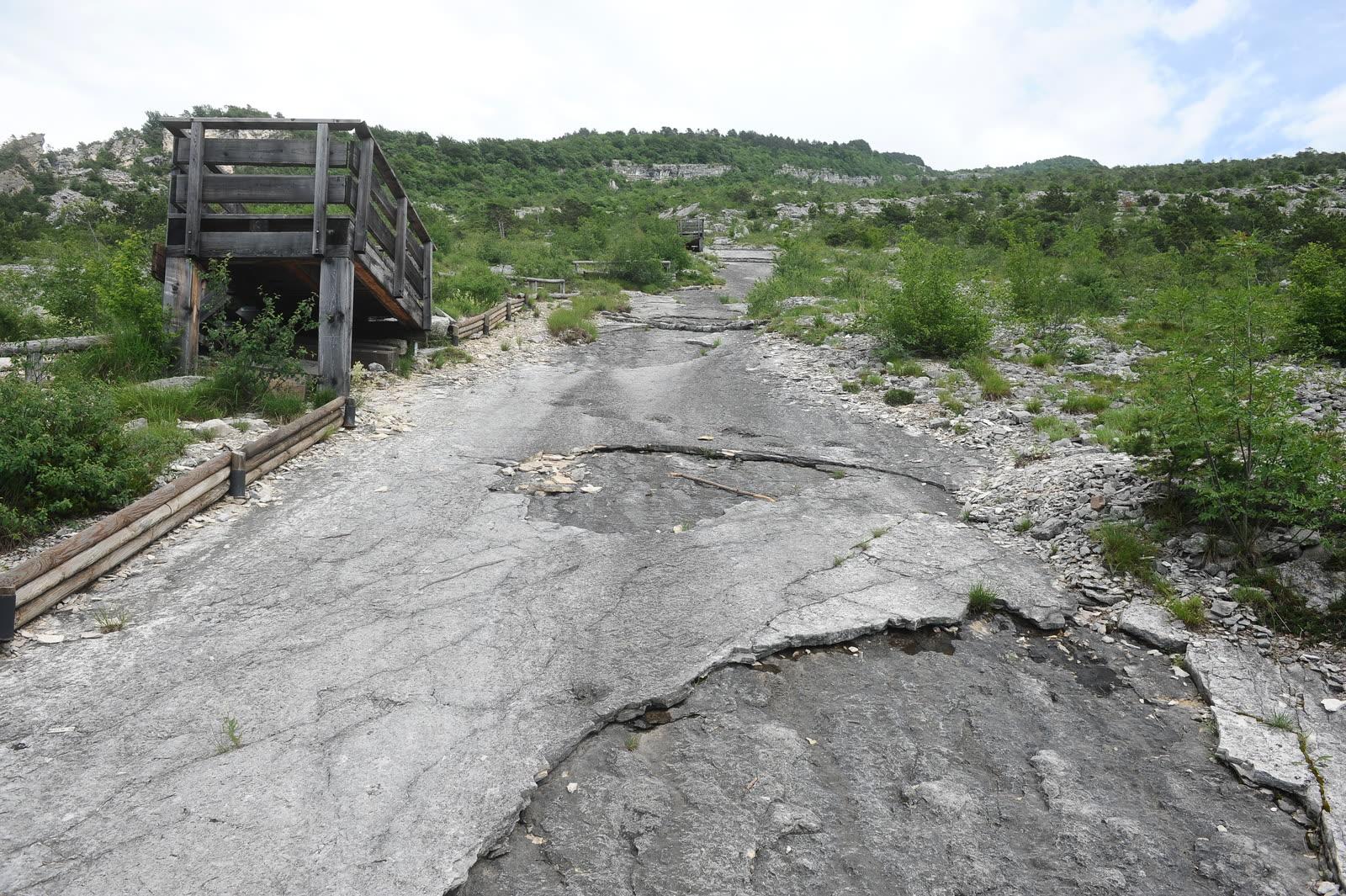 Lavini di Marco Fossil Hunting GuideTheropod footprints, Sauropodomorph trackways
 Monte San Giorgio (Besano-Meride) Fossil Hunting GuideBesanosaurus leptorhynchus, Ceresiosaurus calcagnii
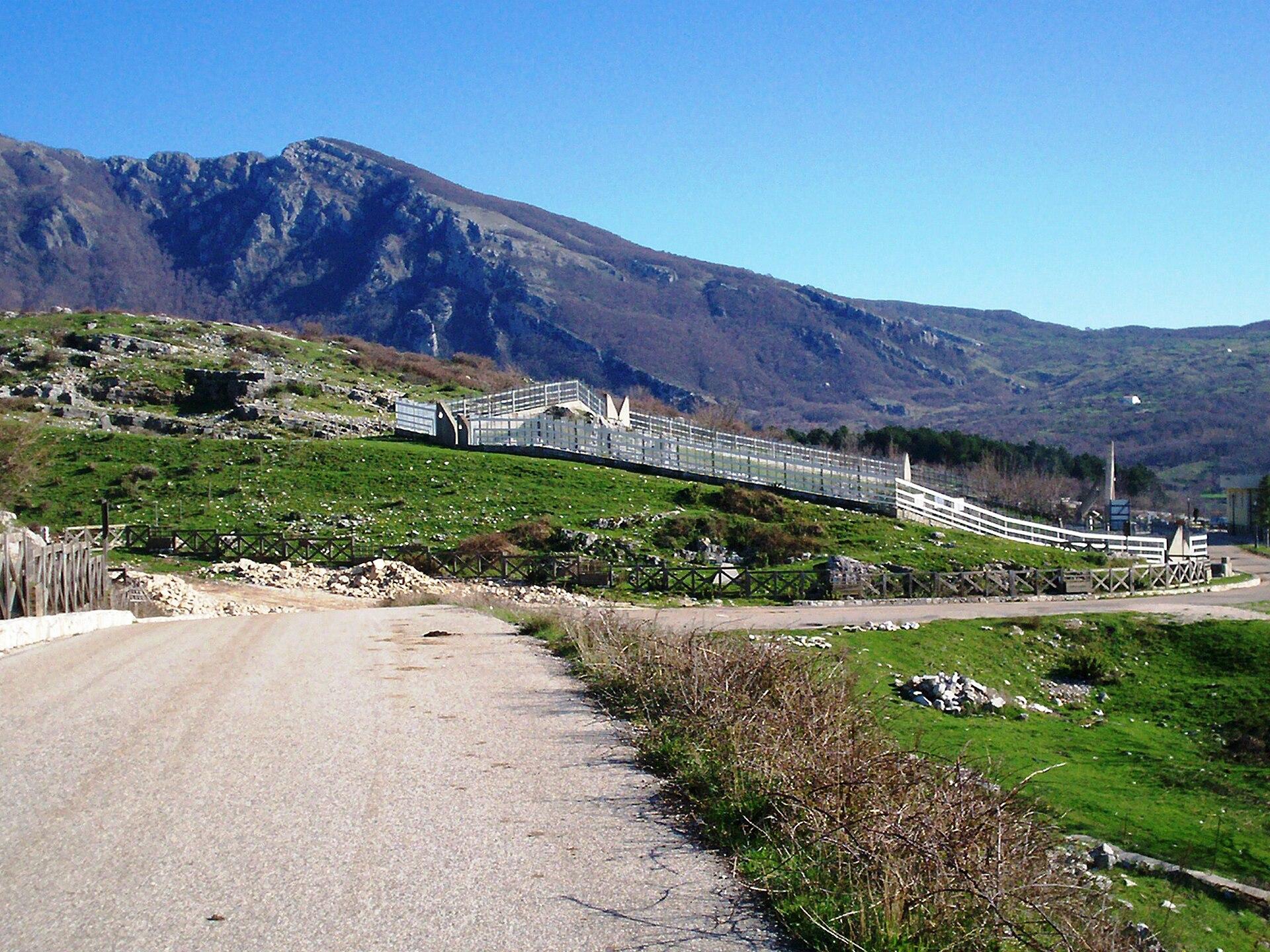 Pietraroja Plattenkalk Geosite Fossil Hunting GuideScipionyx samniticus (theropod), Notagogus parvus (fish)
 Landesplattenberg Engi Fossil Hunting GuideFossil fish, Sea turtles