Poricy Park Fossil Beds Fossil Hunting Guide
Image: James St. John (CC BY 2.0)
Poricy Park in Middletown, New Jersey lets visitors collect Late Cretaceous marine fossils from the bed of Poricy Brook, where the Navesink Formation is exposed. Belemnites, oysters, and other shells about 70 million years old are found by sifting the stream gravel.
By Edward Chen · Published 23 July 2026
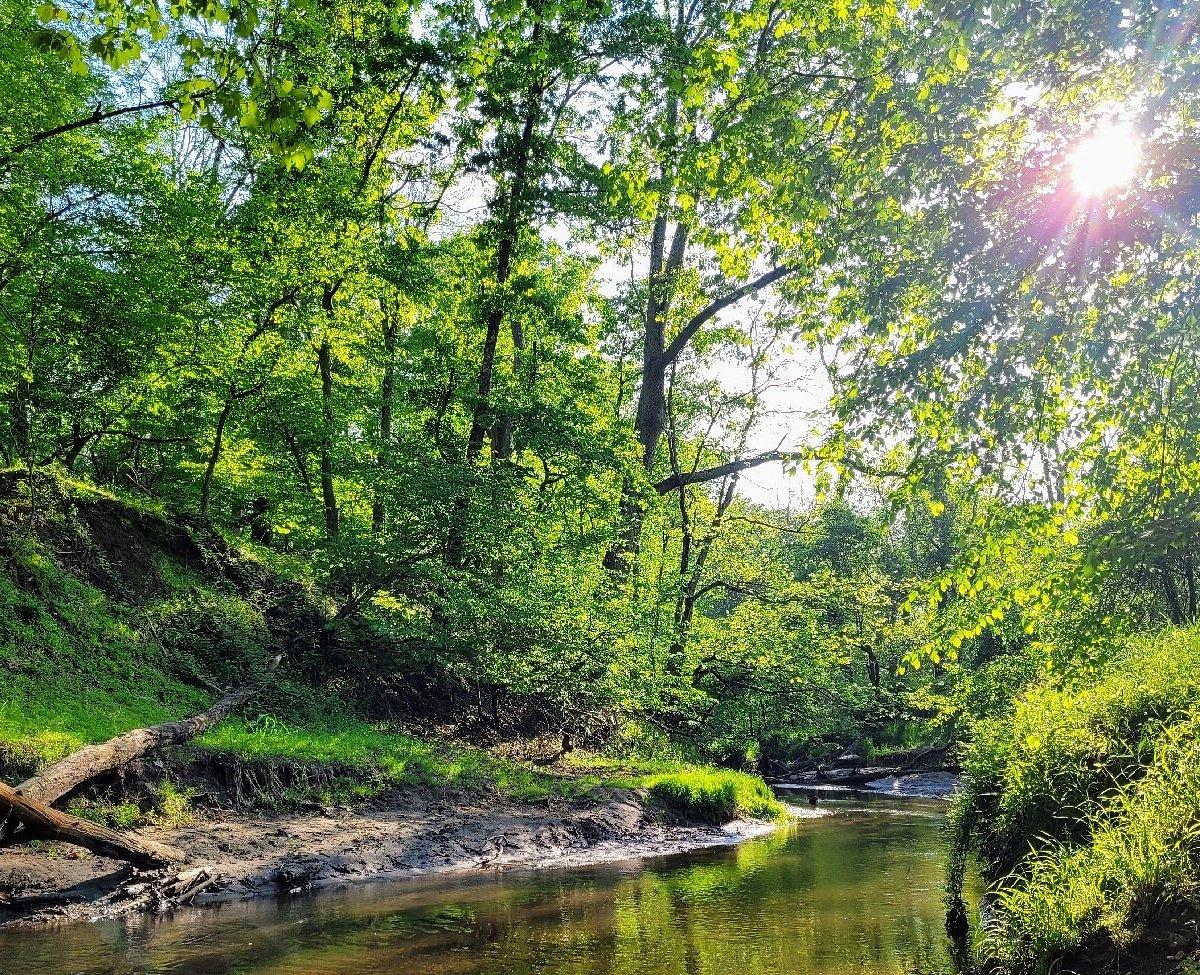
Poricy Park is a 250-acre township nature preserve in Middletown, Monmouth County, New Jersey, and one of the few places in the state where the public can legally collect fossils. The fossils come from Poricy Brook, a small stream that has cut down into the Navesink Formation, a marine deposit laid down near the end of the Cretaceous. The shells and other remains in the stream bed are around 70 million years old and record a shallow sea that covered this part of New Jersey while dinosaurs still lived on the nearby land.
The collecting is gentle work. Fossils weather out of the exposed clay and gather in the gravel of the brook, so the method is to sift and pick through the stream bed, not to dig or hammer. The park runs a nature center that rents screens and can point you to the productive stretches. This guide covers how to reach the fossil beds, what you can expect to find, the geology of the Navesink Formation, the park's collecting rules, and the practical details for a visit.
Location and Directions
Poricy Park is at 345 Oak Hill Road in Middletown, near 40.368 degrees north, 74.108 degrees west. The main nature center sits off Oak Hill Road, but the fossil beds are reached from a separate small parking area on Middletown-Lincroft Road, from which a short trail leads down to Poricy Brook.
Middletown is in Monmouth County, an easy drive from the Garden State Parkway. Take the parkway to the Middletown area and follow local roads to Middletown-Lincroft Road. The fossil-bed parking area is small, so arrive early on summer weekends. From the parking area, a marked trail descends to the brook, where the collecting takes place along the stream bed.
The park is free to enter. Restrooms and the fossil-screen rental are at the nature center, so it is worth stopping there first. Wear shoes you can get wet, because the collecting is done standing in and beside the shallow brook.
What Fossils You'll Find
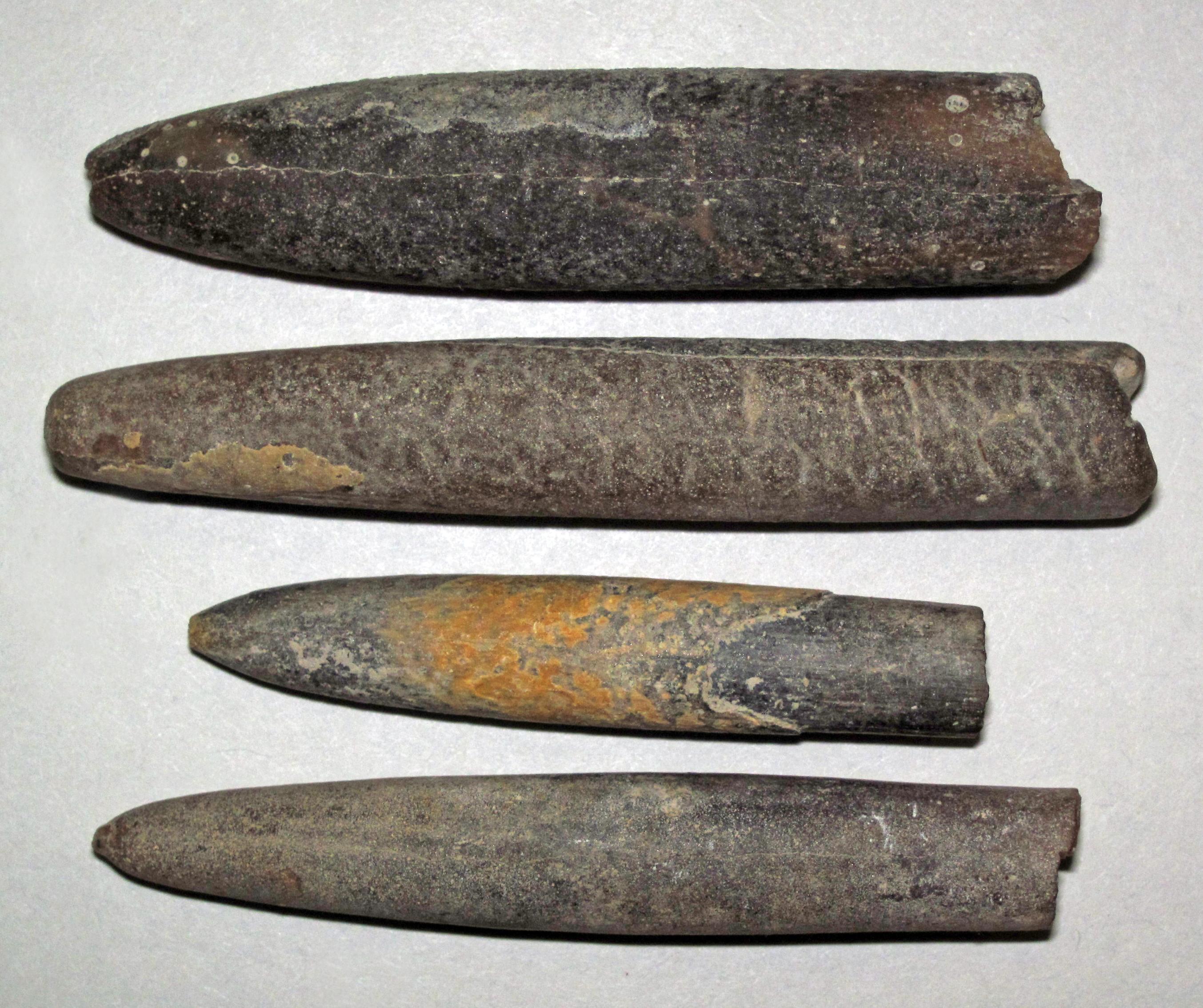
The Navesink Formation at Poricy Brook produces a range of Late Cretaceous marine fossils. The most sought-after find is the belemnite Belemnitella americana, the bullet-shaped internal guard of an extinct squid relative. These are solid, dark, and durable, and they survive the tumbling in the stream well, which makes them one of the more common good finds.
Shellfish are abundant. Oysters, including the curved, thick-shelled Exogyra and the smaller Pycnodonte, are frequent, along with other bivalves and gastropod snails. Many are preserved as internal or external molds because the original shell material has partly dissolved. Shark teeth turn up in the gravel as well, small and dark, and are easy to miss without screening the sediment. Occasional other vertebrate scraps and the tubes of marine worms are also recorded from the site.
The best approach is to work the loose gravel of the stream bed with a screen or by hand, letting the water wash away the fine sediment so the fossils stand out. Material that has just weathered out after rain tends to be concentrated in the brook, so a visit after wet weather can be productive.
Geologic History
The Navesink Formation was deposited during the Maastrichtian, the final stage of the Cretaceous, roughly 72 to 66 million years ago. At that time the Atlantic coastal plain of New Jersey lay beneath a shallow sea, and the sea floor here was an offshore marine shelf. The formation is a dark, greenish, clay-rich sand, and its green color comes from glauconite, a mineral that forms on slowly accumulating sea floors.
The animals whose remains fill the brook lived on and above that shelf: oysters and other shellfish rooted in the sediment, belemnites and ammonites swimming above, and sharks cruising the water. When they died, their hard parts settled into the glauconite mud and were buried. Long after the sea withdrew, Poricy Brook began cutting down through the soft formation, releasing the fossils into the stream where collectors find them today. Because the brook keeps eroding the exposure, the supply of fossils is renewed after each period of high water.
Collecting Rules and Regulations
Fossil collecting is allowed at Poricy Park under the park's rules, and it is free. The rules exist to protect the stream banks from erosion, so they matter. Collect only from the loose gravel of the stream bed. Do not dig into the banks, which speeds erosion and is not permitted. Rock hammers, picks, shovels, and other excavating tools are not allowed, and visitors using them will be asked to leave.
The park asks visitors to collect conservatively and sets a limit of five fossils per person to keep the beds productive for others. Anything unusual should be shown to the nature center staff, who track significant finds. Proper footwear is required, and flip-flops, slip-on shoes, and bare feet are not permitted in the brook. Groups should contact the nature center in advance, both to arrange a guided fossil trip and to avoid overcrowding the beds.
Safety
The hazards at Poricy Brook are minor but real. The stream bed and its banks are slippery, and the water, though shallow, is cold. Wear closed, secure footwear with good grip, which the park requires anyway, and watch your footing on wet clay and gravel. Supervise children closely near and in the water.
The trail down to the brook is short but can be muddy after rain. Bring water and sun protection in summer, since the open stream bed offers little shade. There are no cliffs or tidal hazards here, so the main rule is simply to move carefully on the slick surfaces and to respect the banks by staying in the stream bed to collect.
Sources
https://www.middletownnj.org/DocumentCenter/View/697/Fossils-of-Poricy-Brook https://en.wikipedia.org/wiki/Poricy_Park https://en.wikipedia.org/wiki/Navesink_Formation