Streedagh Point, County Sligo Fossil Hunting Guide
Image: Anne Burgess (CC BY-SA 2.0)
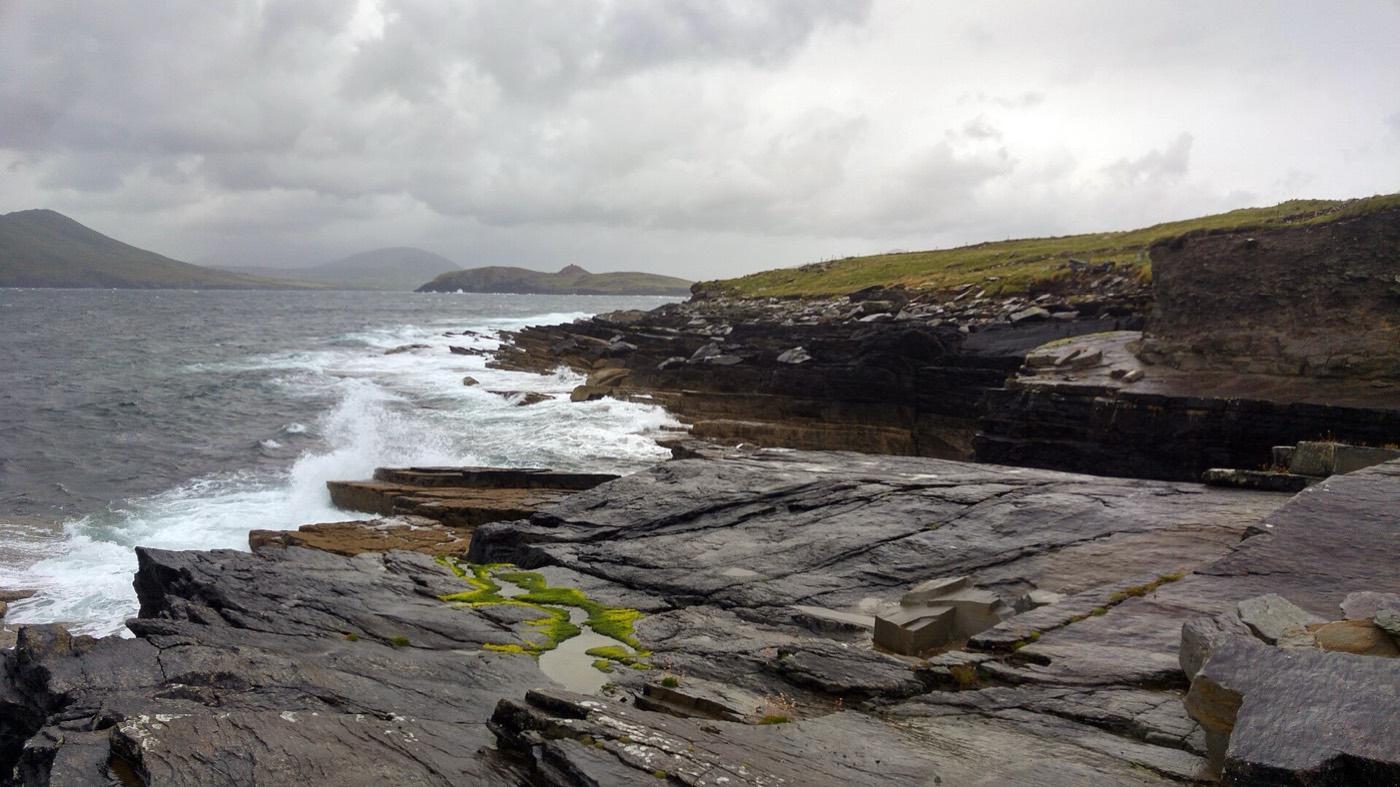
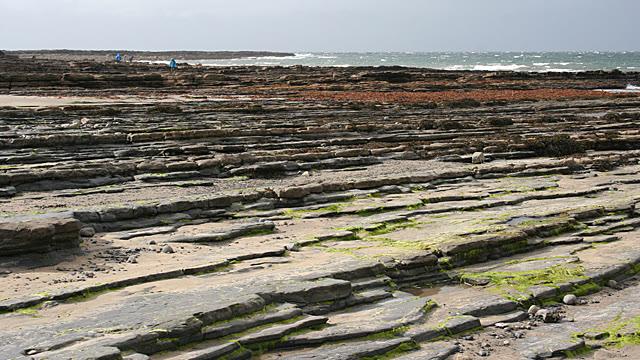
A wave-cut platform on the Sligo coast where Carboniferous limestone carries solitary corals up to a metre long. The rock is exposed at low tide and the beach is free to walk, with Benbulben behind it.
By Edward Chen · Published 17 September 2026
Introduction
Most people come to Streedagh for the shipwrecks. Three ships of the Spanish Armada went down here in September 1588, and at a low spring tide parts of them still show in the sand.
The rock beneath the sand is far older and, for a fossil hunter, far more interesting.
Streedagh Point exposes the Glencar Limestone Formation across a broad wave-cut platform. The limestone formed in a warm, shallow sea about 340 million years ago.
What sets the site apart is the size of its corals. Solitary rugose corals here reach a metre in length and 10 cm across, which is exceptional for the group.
The Geological Survey of Ireland lists Streedagh Point as a County Geological Site and a proposed Natural Heritage Area. The county listing carries no statutory force on its own, but it does give the place a published description.
The walk is level, the sand is firm and Benbulben stands over the whole strand.
Location and Directions
Take the N15 north from Sligo town to Grange. In Grange turn onto the L3203, which is signed for Streedagh.
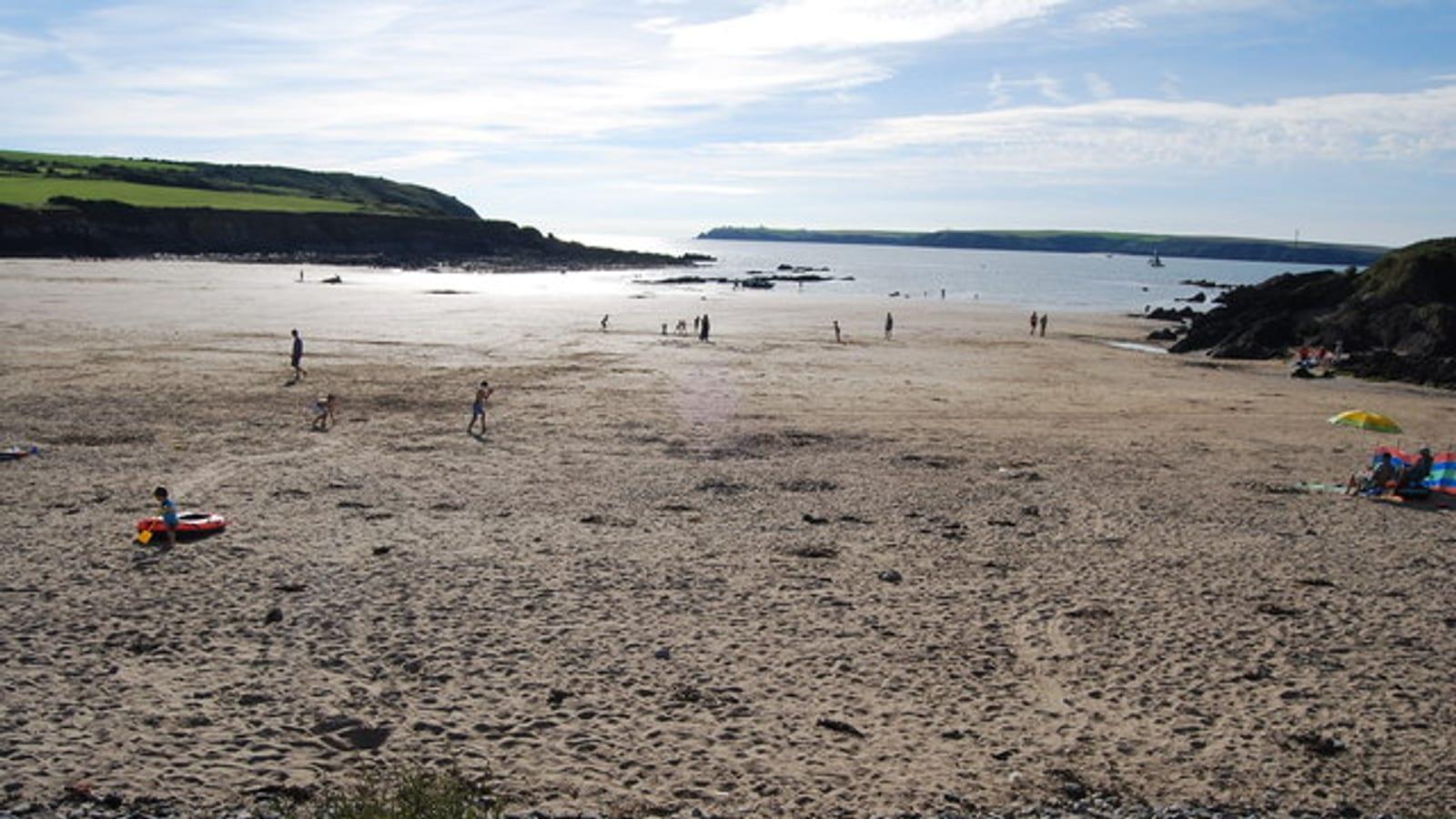
After about 1.1 km turn right for the car park at the western end of the strand. Parking is free.
The car park surface is potholed and it floods at high water. When the tide is in, park further up the approach road rather than on the low ground.
From the car park the walk out towards Connors Island and back is about 6 km on firm, level sand. Allow around two hours at an easy pace.
The fossil-bearing platform lies on the seaward side of the shingle bank. Reach it near low water.
 Photo: Jonathan Wilkins, CC BY-SA 2.0, via Wikimedia Commons
What Fossils You'll Find
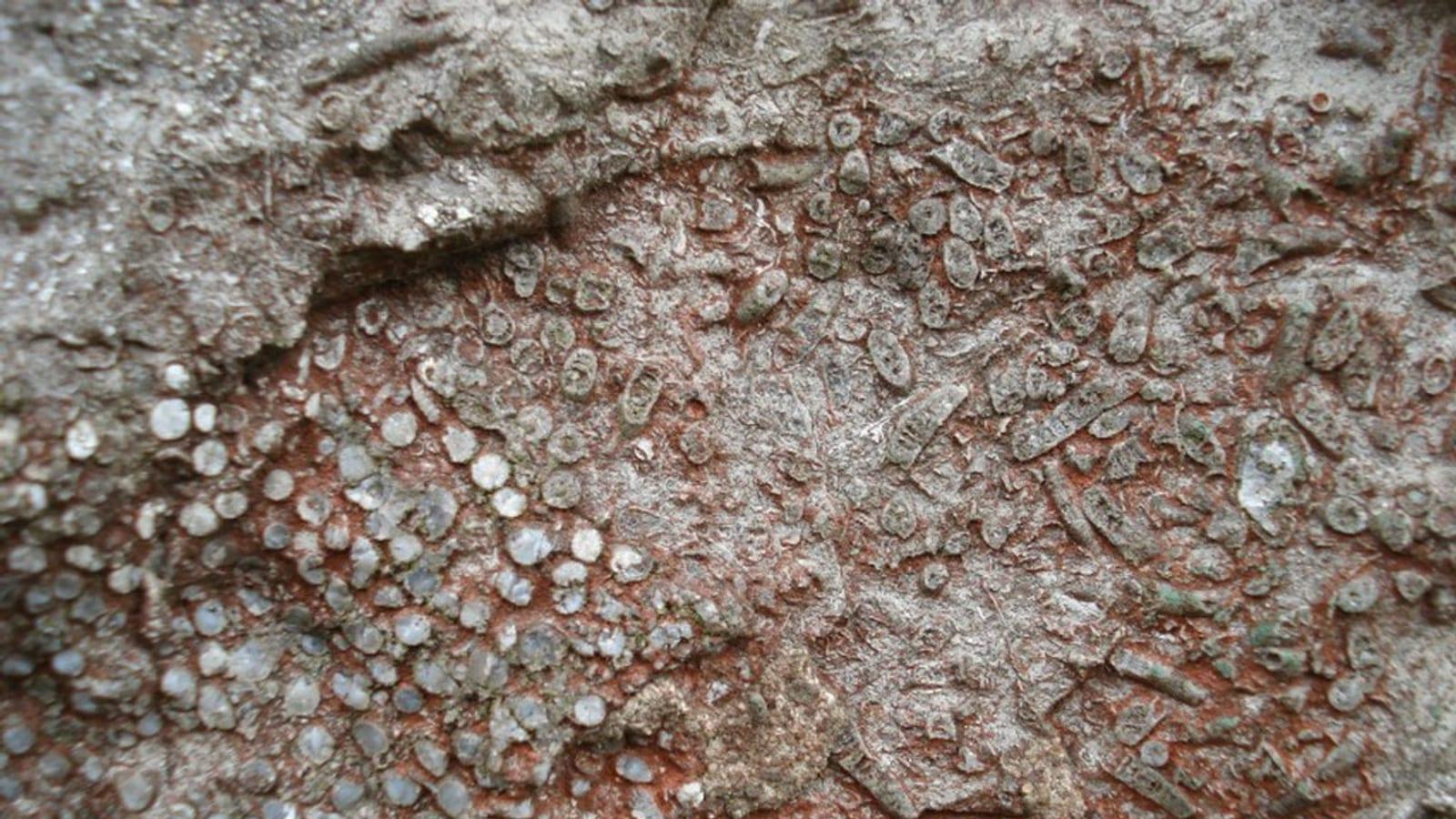
Corals dominate. Siphonophyllia is the animal to look for, and Streedagh holds some of the most impressive specimens of Siphonophyllia samsonensis on this coast.
These are solitary rugose corals. Each one grew as a single horn-shaped skeleton rather than as part of a reef colony.
The largest reach a metre long. In section the plates radiate from the centre. That pattern separates them at a glance from a bivalve or a nodule.
Zaphrentis, a smaller solitary coral, occurs through the same beds and turns up more often than the giants.
Brachiopods, crinoid columnals and bryozoans fill the rock between the corals. Foraminifera occur too, although you need a lens for them.
Look in the shingle bank as well as in the platform. Loose pieces weathered out of the limestone often show a cleaner cross-section than the bedrock does.
 Photo: Joseph Mischyshyn, CC BY-SA 2.0, via Wikimedia Commons
Geologic History
The Glencar Limestone Formation belongs to the Asbian stage of the Viséan, in the Early Carboniferous.
The beds are thin and dark, and they alternate between muddy limestone, crinoidal limestone, shale and mudstone. That alternation records a sea floor that shifted between quieter and more energetic conditions.
Ireland sat close to the equator at the time. The sea was warm, shallow and clear enough for corals and crinoids to thrive across wide areas.
The same limestone builds the flat top and the terraced sides of Benbulben, which rises behind the strand. The mountain and the foreshore are two views of one rock sequence.
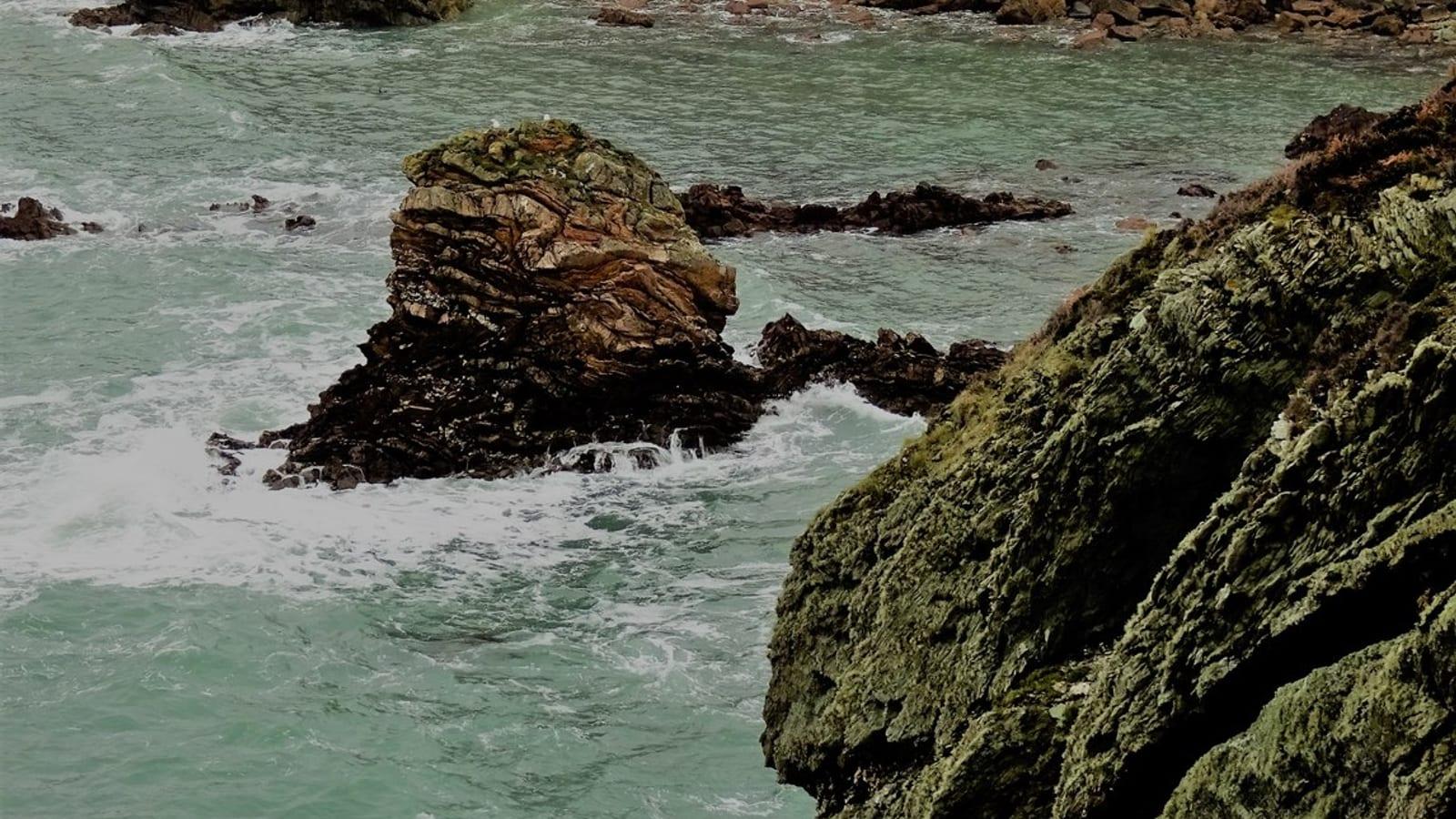
Glaciers later stripped the ground and the Atlantic did the rest. The platform you walk on is a modern cut across ancient beds.
Collecting Rules and Regulations
Streedagh Point is a County Geological Site and a proposed Natural Heritage Area, and it lies within a Special Area of Conservation for its dune and machair habitats.
Irish guidance asks you to leave fossils where you find them and photograph them instead. Streedagh is a site of national importance and a proposed Natural Heritage Area, so treat it as look-only. Do not hammer the bedrock platform, and do not attempt to extract the large corals.
The big Siphonophyllia specimens are the reason the site is designated. Leave them in place for the next visitor and for the researchers who still work here.
Take photographs of what you cannot carry. A metre-long coral is a better photograph than it would ever be a specimen.
Park considerately. The car park serves swimmers, walkers and the Armada trail as well as fossil hunters.
Safety
The tide is the main hazard. Streedagh has a long, flat strand, so the water comes in quickly across the sand.
Check the tide table before you set out and turn back well before low water passes. Do not walk out to Connors Island on a rising tide.
The limestone platform is slippery where algae grow on it. Boots with grip are better than trainers on the rock, even though the sand is easy walking.
Atlantic weather changes fast. Carry a windproof layer even in summer.
The beach has no lifeguard. Swimming here is at your own risk and rip currents occur.