Talampaya National Park Fossil Hunting Guide
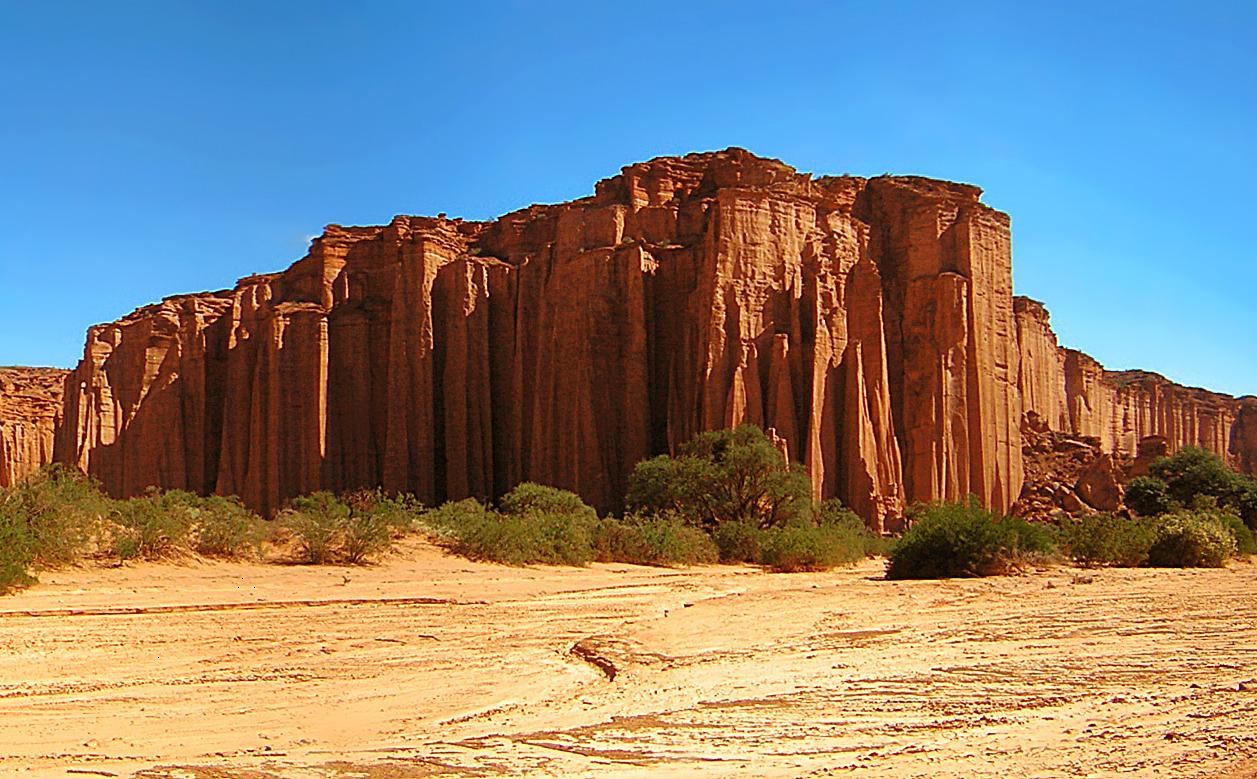
Image: I, HANNAN (CC BY-SA 2.5)
Talampaya National Park in northwestern Argentina preserves a Triassic fluvial and lacustrine sequence in the Ischigualasto-Villa Unión Basin that contains dicynodonts, cynodonts, rhynchosaurs, and some of the oldest known dinosaurs. The park is viewed by guided 4x4 tour only.
By Edward Chen · Updated 1 August 2026
Introduction
Talampaya National Park covers 215,000 hectares of red sandstone canyon, badland, and floodplain in the province of La Rioja in northwestern Argentina. The park sits along the western edge of the Ischigualasto-Villa Unión Basin and exposes a continuous Triassic sedimentary sequence that, together with the adjoining Ischigualasto Provincial Park in San Juan Province, contains one of the most complete records of Triassic terrestrial life anywhere on Earth. The two parks were inscribed jointly on the UNESCO World Heritage list in 2000 as the Ischigualasto / Talampaya Natural Parks. The Triassic strata at Talampaya record the rise of the archosauromorph reptiles, the appearance of the first dinosaurs, and the early radiation of mammal forerunners across an interval of roughly 50 million years. The park is administered by the Administración de Parques Nacionales, and access is by guided 4x4 tour only. Self-driving inside the park is not permitted. This guide covers how to plan a visit, what each of the standard tour routes shows, the Triassic stratigraphy, and the access rules.
Location and Directions
Talampaya sits in the southern Famatina range, about 60 kilometres south of the town of Villa Unión and about 230 kilometres west of the city of La Rioja. The closest commercial airport is La Rioja Capitán Vicente Almandos Almonacid Airport, with onward driving via Ruta Nacional 38 and Ruta Nacional 76. Many visitors arrive instead from San Juan or Mendoza, two of the major Cuyo wine-region cities to the south.
The park's main visitor centre, the Centro de Interpretación at Puerta de Talampaya, is at GPS 29.7747 degrees south, 67.8389 degrees west, on Ruta Nacional 76 at approximately kilometre 144. The centre holds the booking desk, a cafeteria, restrooms, and the main paleontological exhibit gallery.
Casual independent travel into the park is not allowed. All visits run as a guided tour with one of the authorised concession operators based at the visitor centre. Tour options include:
The Cañón de Talampaya tour, the standard 2.5-hour route, follows the Talampaya River canyon between sandstone cliffs that rise to 145 metres. It includes botanical, geological, and historical interpretive stops.
The Ciudad Perdida tour, a 4-hour route, drives further west into a network of weathered sandstone pillars formed by differential erosion of the Talampaya Formation.
The Cañón Arco Iris and Cañón del Triásico routes focus on the paleontologically richest part of the park, with stops at the Chañares Formation outcrop where Lagosuchus talampayensis and the early dinosauromorphs were first identified.
Tour fees vary by route. The park-entry fee at the time of writing is approximately 11,000 Argentine pesos for foreign visitors, with separate per-person tour costs paid to the concession operator.
What Fossils You'll Find
You will not collect at Talampaya. What you can do is see Triassic vertebrate exposures with on-site interpretation during the paleontological tours. Identifications below are drawn from the UNESCO nomination file, the UNEP-WCMC datasheet, and published work by Alfred Romer and Oscar Reig.
- Dinodontosaurus. A large dicynodont known from the Chañares Formation, present at several locations along the Cañón del Triásico route. Body length reached about 2.5 metres.
- Massetognathus pascuali. A small cynodont from the Chañares Formation, one of the most common mammal forerunners in the park.
- Hyperodapedon mariensis and other rhynchosaurs. Beaked herbivorous archosauromorphs that dominated mid-Triassic faunas, present in the upper Ischigualasto-equivalent beds.
- Lagosuchus talampayensis. A small bipedal dinosauromorph described from Talampaya material in 1971. Considered close to the ancestry of dinosaurs.
- Early dinosaurs. Relatives of Eoraptor lunensis and Herrerasaurus ischigualastensis have been recovered from Ischigualasto Formation outcrops within the park boundary, although the type specimens of those species come from the adjacent provincial park.
- Plant fossils. Permineralised wood, ferns, and the seed-fern Dicroidium are common in the Los Rastros Formation lacustrine beds.
- Trace fossils. Petroglyphs at the entrance to the canyon are not paleontological but are an additional cultural heritage component of the park.
The Centro de Interpretación holds prepared casts and full-skeleton mounts of several of these taxa, alongside detailed stratigraphic charts.
Geologic History
The Triassic sequence at Talampaya was deposited in an extensional rift basin that formed during the early breakup of Pangaea, between roughly 250 and 200 million years ago. The basin contains six named formations, from oldest to youngest: Talampaya, Tarjados, Chañares, Los Rastros, Ischigualasto, and Los Colorados.
The Talampaya and Tarjados formations, lower Triassic in age, are red sandstone and conglomerate units deposited in alluvial and aeolian settings. The towering canyon walls along the standard tour are cut into these units.
The Chañares Formation, middle Triassic at roughly 236 mya based on recent U-Pb ages on ash beds, contains rapidly deposited tuffaceous mudstones and concretionary nodules that preserve articulated vertebrate skeletons in three dimensions. Dicynodonts, cynodonts, and early dinosauromorphs come from this unit.
The Los Rastros Formation, late middle to early late Triassic, records a lacustrine system with extensive plant fossils and an early reptile fauna.
The Ischigualasto Formation, late Triassic Carnian, contains the oldest known dinosaurs, including Eoraptor, Herrerasaurus, and Pisanosaurus, primarily exposed in the adjacent Ischigualasto Provincial Park to the south but also present in the southern Talampaya outcrops.
The Los Colorados Formation, latest Triassic Norian, caps the section with red bed alluvial deposits and contains aetosaurs, late dicynodonts, and the early sauropodomorph Coloradisaurus.
After deposition, Andean compression uplifted the basin and tilted the strata. Modern stream cutting and wind erosion have exposed the section in vertical cross section across the park.
How Talampaya Became a Fossil Site
The Argentine naturalist Florentino Ameghino briefly described fossils from the wider region in the late nineteenth century. The first systematic paleontological work in the basin began in the 1940s under Argentine geologist Ángel Cabrera at the Museo de La Plata. Alfred Romer of Harvard University led a series of expeditions in the late 1950s and 1960s that produced the type material of Lagosuchus talampayensis, Massetognathus, and several other Chañares-Formation taxa.
La Rioja Provincial Park was established in 1975 and re-designated Talampaya National Park in 1997 by the Argentine national government. The joint UNESCO World Heritage inscription with Ischigualasto followed in 2000. Active research continues under collaboration between APN, CONICET, the Museo Argentino de Ciencias Naturales, and university partners.
Collecting Rules and Regulations
Collecting is prohibited. Talampaya National Park is administered by the Administración de Parques Nacionales under Argentina's National Parks Law 22351. Removing fossils, rocks, plants, or any material from the park is an offence under federal Argentine law.
Practical rules:
- Independent travel inside the park is not permitted. All visits are guided by authorised concession operators based at the Puerta de Talampaya visitor centre.
- Visitors must register at the centre and pay the entry fee before joining a tour.
- Stay with the guide group at all times. Stepping outside marked viewing zones is not allowed.
- Photography for personal use is welcomed on every tour.
- Drones are not permitted in the park.
- Pets are not allowed in the park.
- Research collection is restricted to teams working under federal CONICET and APN permit.
Safety
Talampaya is high desert. Daytime summer temperatures (December through March) regularly exceed 40 degrees Celsius. Winter (June through August) brings cold nights, with daytime highs around 18 to 22 degrees Celsius. The recommended visit window is April through November.
Sun exposure at 1,200 metres elevation is intense. Bring high-SPF sunscreen, a wide-brimmed hat, and at least 2 litres of water per person on the standard tour. Longer tours require more.
The standard 4x4 vehicles are open-sided and dusty. Use a buff or scarf to keep dust off your face on the dirt road sections.
There are no medical facilities inside the park. The nearest clinic is in Villa Unión. Carry any personal medication you may need for the duration of the tour.
The park can be reached from La Rioja or San Juan by paved road, but the final approach from Villa Unión along Ruta 76 has sections subject to drifting sand after wind storms. Check road conditions with the visitor centre before driving.
Sources
- UNESCO World Heritage Centre, "Ischigualasto / Talampaya Natural Parks." https://whc.unesco.org/en/list/966/
- UNEP-WCMC, "Ischigualasto-Talampaya Natural Parks Datasheet." http://world-heritage-datasheets.unep-wcmc.org/datasheet/output/site/ischigualasto-talampaya-natural-parks/
- Global Alliance of National Parks, "Talampaya National Park." https://national-parks.org/argentina/talampaya/
- Romer, A.S., 1971. "The Chañares (Argentina) Triassic Reptile Fauna. X. Two New but Incompletely Known Long-Limbed Pseudosuchians." Breviora, 378.
- Marsicano, C.A. et al., 2016. "The Precise Temporal Calibration of Dinosaur Origins." Proceedings of the National Academy of Sciences, 113.
Nearby sites
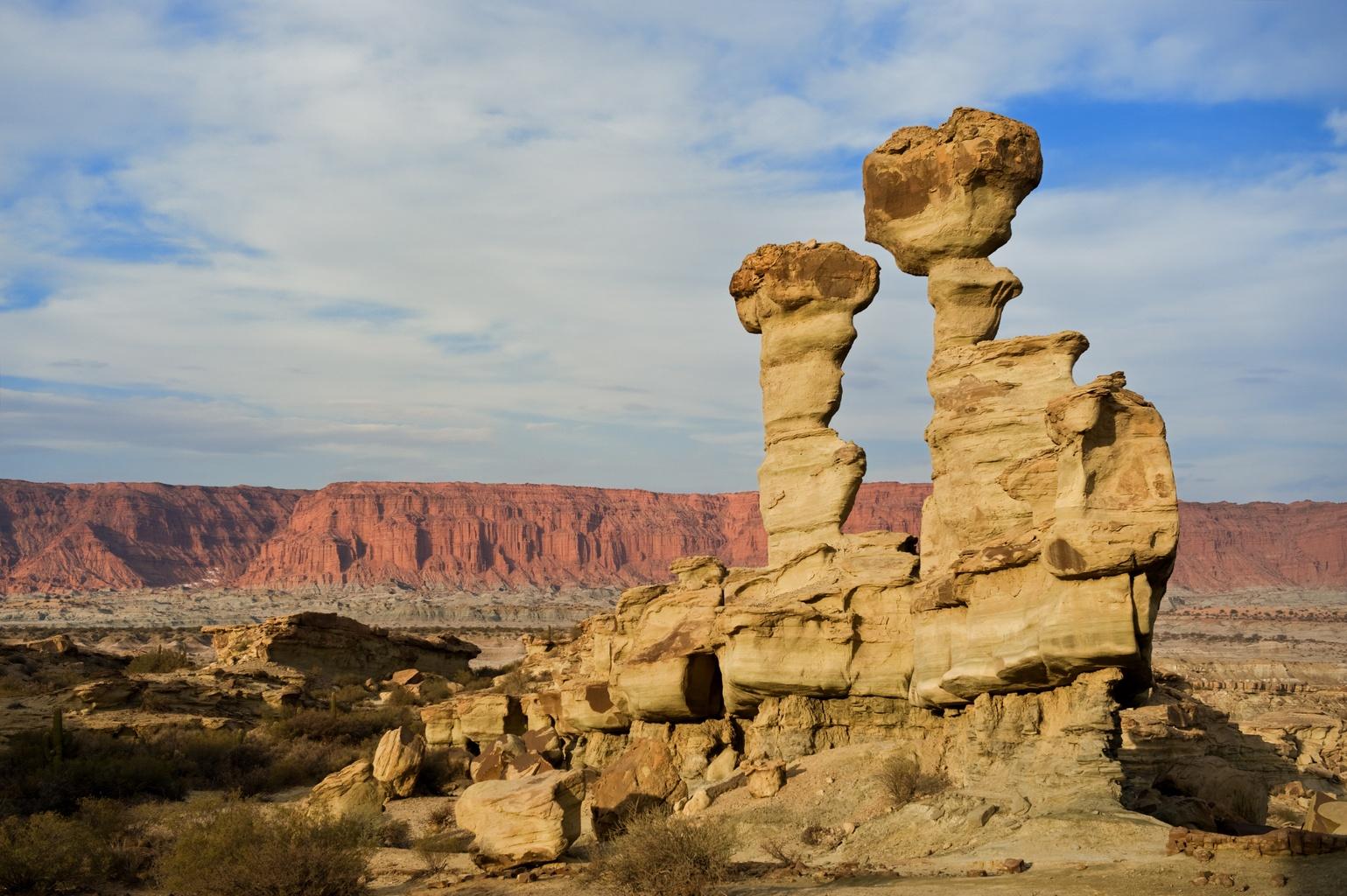 Ischigualasto Provincial Park Fossil GuideEarly dinosaurs, Eoraptor
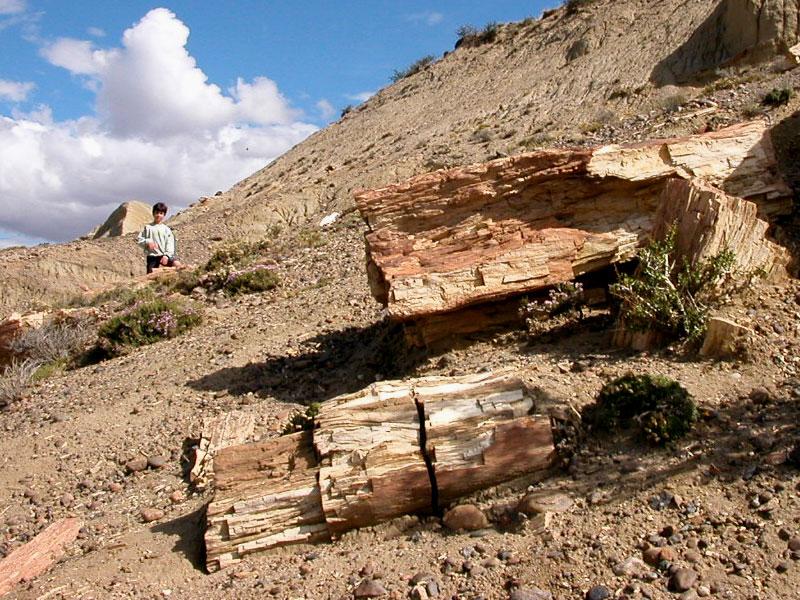 Sarmiento Petrified Forest Natural Monument Fossil Hunting GuideAraucariaceae trunks, Podocarpaceae wood
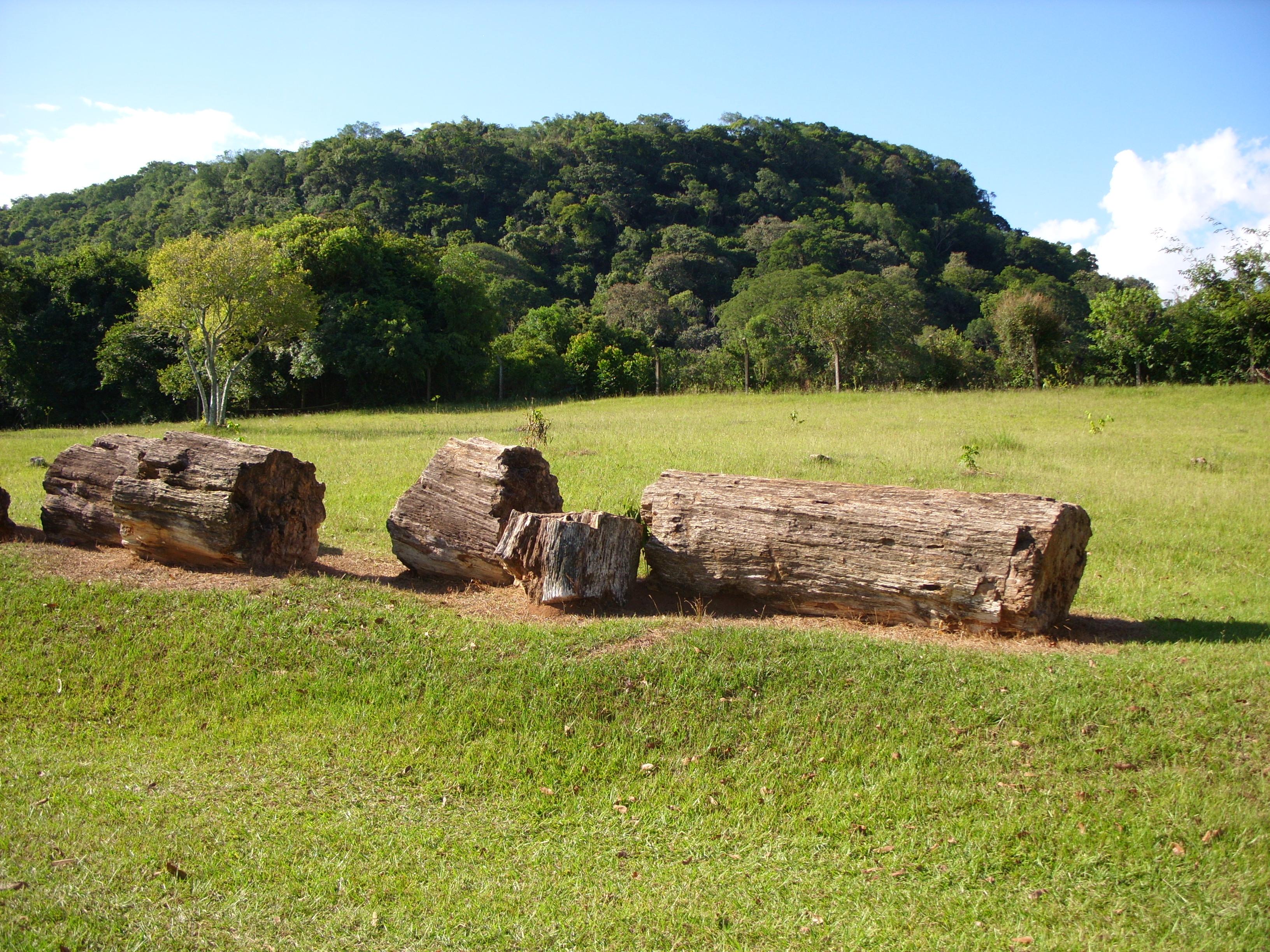 Paleorrota Geopark Fossil Hunting GuideStaurikosaurus pricei (early dinosaur), Hyperodapedon (rhynchosaur)
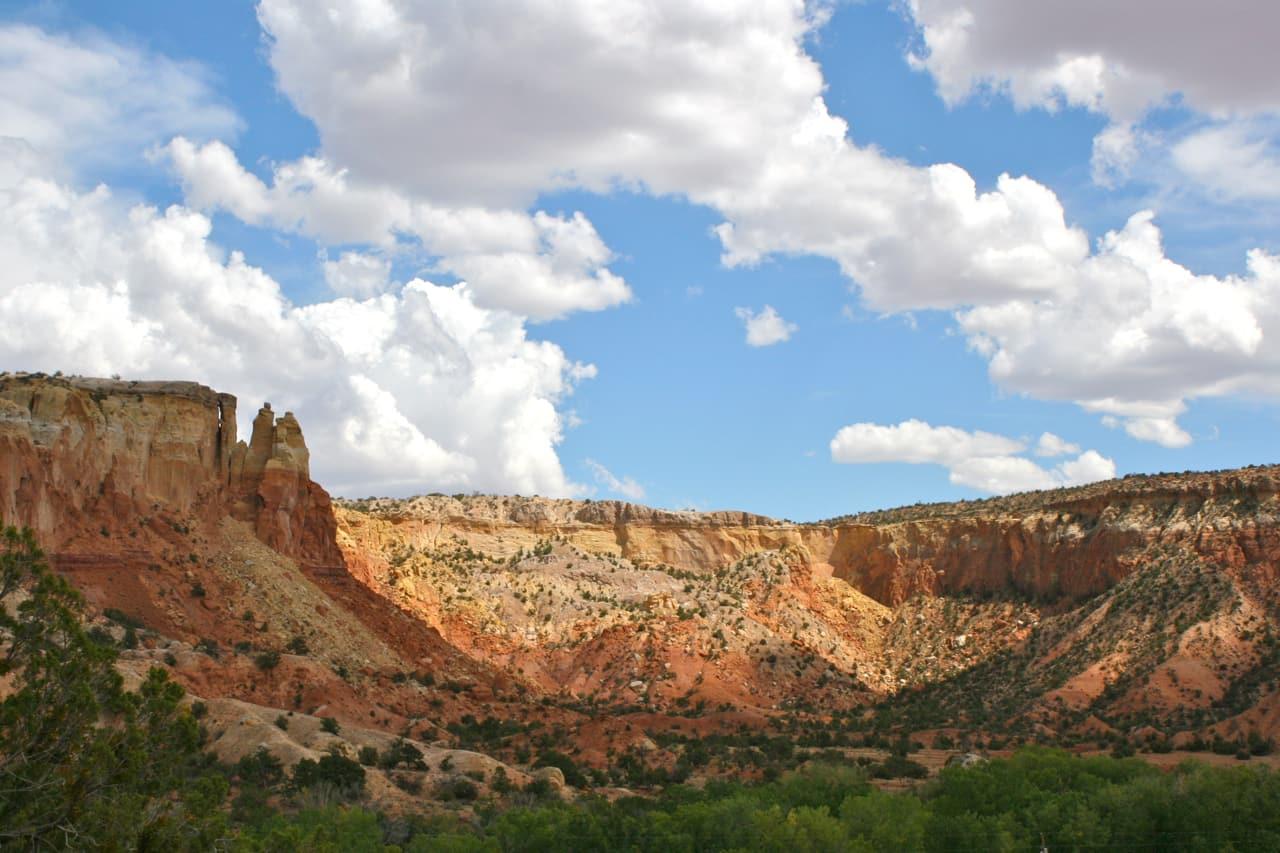 Ghost Ranch Coelophysis Quarry Fossil GuideCoelophysis bauri, Phytosaurs