Arisaig Provincial Park Fossil Hunting Guide
Arisaig Provincial Park on the Northumberland Strait in Antigonish County, Nova Scotia, exposes the Silurian Arisaig Group. Brachiopods, trilobites, crinoids and snails occur in beach rock. All fossils belong to the Province, and collecting from the cliff face needs a Heritage Research Permit.
By Edward Chen · Published 1 October 2026
Introduction
Arisaig Provincial Park, in Antigonish County, Nova Scotia, sits on a five kilometer coastal exposure of the Silurian Arisaig Group. The rocks formed 443 to 417 million years ago. Brachiopods, snails, crinoids and trilobite fragments occur in the beach rock and the cliffs.
The Nova Scotia Museum is caretaker of all fossils in the province. The park guide prohibits collecting from the bedrock cliff face without a Heritage Research Permit. Read the collecting section below before you pick up anything.
The park is small. It has a 1.6 kilometer loop trail, a picnic area and beach access. A Nova Scotia Parks guide calls the exposure one of the world's best Silurian bedrock sections.
Location and Directions
The park is at 5704 Highway 245 in Arisaig, 27 km north of Antigonish on the Northumberland Shore. Drive Route 245 north from Antigonish. Or drive east on Route 245 from Sutherlands River on the Trans Canada Highway. A parking area, toilets, picnic tables and an interpretive kiosk serve visitors.
The loop trail is 1.6 km long. It runs through white spruce forest to the shore. It passes a viewing platform and Arisaig Brook, then climbs a short steep hill to an open field. Several access points lead to the beach.
The tourism listing gives a season of 17 May to 14 October. The listing does not state the year. People may visit outside the season. The local community association says to park outside the gate and walk in when the park roads close.
Nova Scotia Parks does not state a fee on the pages used for this guide. Check parks.novascotia.ca or write to parkinfo@novascotia.ca before you travel.
The fossil-bearing rock lies on the beach and along the cliffs west of the coastal gully. Walk the trail first and read the kiosk panels. The park brochure is the guide to identifying fossils.
What Fossils You'll Find
 Photo: Larry Tweed (Larry from Charlottetown, PEI, Canada), CC BY 2.0, via Wikimedia Commons
.jpg)
Brachiopods are the most common fossils. They look like clams but the two shells differ in shape. The beach rock splits to show their ribbed shells. The park guide also lists bivalves, nautiloids up to 30 cm long, snails, trilobites, graptolites, crinoids and bryozoans.
Trilobites mostly occur as broken pieces. Look for a head section or a whole animal. Crinoid stems look like stacks of small coins. Graptolites survive as a shiny black carbon film on the rock. Tentaculitids, small cone-shaped shells with rings, are common.
Three named species come from the Arisaig Group. A Beloit College study of tentaculitids records Tentaculites canadensis in the Ross Brook and Doctors Brook formations. The Paleobiology Database lists the brachiopod Salopina submedia and the snail Tropidodiscus arisaigensis from other Arisaig Group units.
The fossils do not spread evenly. The dark gray mudstone at the northeast end of the park holds almost none. Fossils become common from the truss bridge on the coastal trail to the southwestern boundary at Arisaig Brook. Trace fossils such as burrows appear too.
Geologic History
 Photo: Michael C. Rygel, CC BY-SA 4.0, via Wikimedia Commons

The park rests on the Ross Brook Formation, an early Silurian unit of dark gray mudstone with sandier layers. It belongs to the Arisaig Group. The group is 1,500 to 1,750 meters thick. It is the most complete section of Silurian sedimentary rock in the Appalachian-Caledonian mountain system.
The basin lay on the edge of the microcontinent Avalonia in the Iapetus Ocean. Mud, silt and sand settled on a shallow continental shelf. Storm waves reached the sea floor and built ripples called sand waves. Layers with no burrows and no fossils suggest that bottom water at times held little oxygen.
Older rocks lie nearby. Ordovician volcanic rocks about 460 million years old crop out at Arisaig Point, and an angular unconformity separates them from the Silurian beds. South of the Hollow Fault, Precambrian rocks of the Georgeville Group form the high flat hills of the Antigonish Highlands.
Other Arisaig Group units include the Doctors Brook and Moydart formations. The Moydart Formation has a marine green member and a terrestrial red member. Wave action 130,000 years ago cut a platform that now caps the cliffs. Glaciers left till and gravel above it.
Collecting Rules and Regulations
All fossils in Nova Scotia belong to the Province under the Special Places Protection Act. The Nova Scotia Museum is caretaker. The park guide prohibits collecting from the bedrock exposures, meaning the cliff face, without a Heritage Research Permit.
The rules for loose beach rock are less clear. The park guide says you can find most fossils in rocks that lie on the beach. A provincial article says you can collect fossils from the loose beach rock. A community page says collectors can take loose fossils in the interim while the Heritage Division revises its permit system. None of these texts carries a date.
The current Nova Scotia government permits page is stricter. It states that it is illegal to excavate or collect fossils in the province without authorization. Treat that page as the rule until the Nova Scotia Museum tells you otherwise. This guide classes the site as permit for that reason.
The safe practice is to photograph what you find and leave it in place. Do not hammer the cliff or dig into the bank. Report an unusual fossil to the Nova Scotia Museum at 902-424-6451.
Heritage Research Permits are free. Apply with the Heritage Research Permit form to SPP@novascotia.ca. The provincial page lists Field Research and Professional Research permits.
Safety
The cliffs stand above your head, and the mudstone breaks away. The province advises you to keep away from the cliffs or wear a hard hat. Do not walk under an unstable face to reach a fossil.
Check the tide tables before you walk the shore. Know when high and low tide are due. The provincial article warns that no lifeguards watch the beaches at Arisaig. Swim at your own risk.
Wear sturdy shoes on the wet shingle and rock. Carry water and a phone. The sources do not describe cell coverage, so tell someone your plan. Plan the walk so that you leave the beach well before high tide.
Sources
https://parks.novascotia.ca/sites/default/files/ArisaigTrails.pdf https://novascotia.ca/natr/library/publications/naturesresources/pdf/7.1/07.arisaig_web.pdf https://cch.novascotia.ca/node/131 https://www.novascotia.com/see-do/outdoor-activities/arisaig-provincial-park/2043 https://parks.novascotia.ca/park/arisaig https://arisaignovascotia.com/arisaig-park https://keckgeology.org/wp-content/uploads/2024/07/wittmer-2007.pdf https://keckgeology.org/wp-content/uploads/2024/07/dambrosia-2007.pdf https://paleobiodb.org/data1.2/occs/list.json?lngmin=-62.4&lngmax=-61.9&latmin=45.65&latmax=45.85&show=class,coords,strat&limit=500
Nearby sites
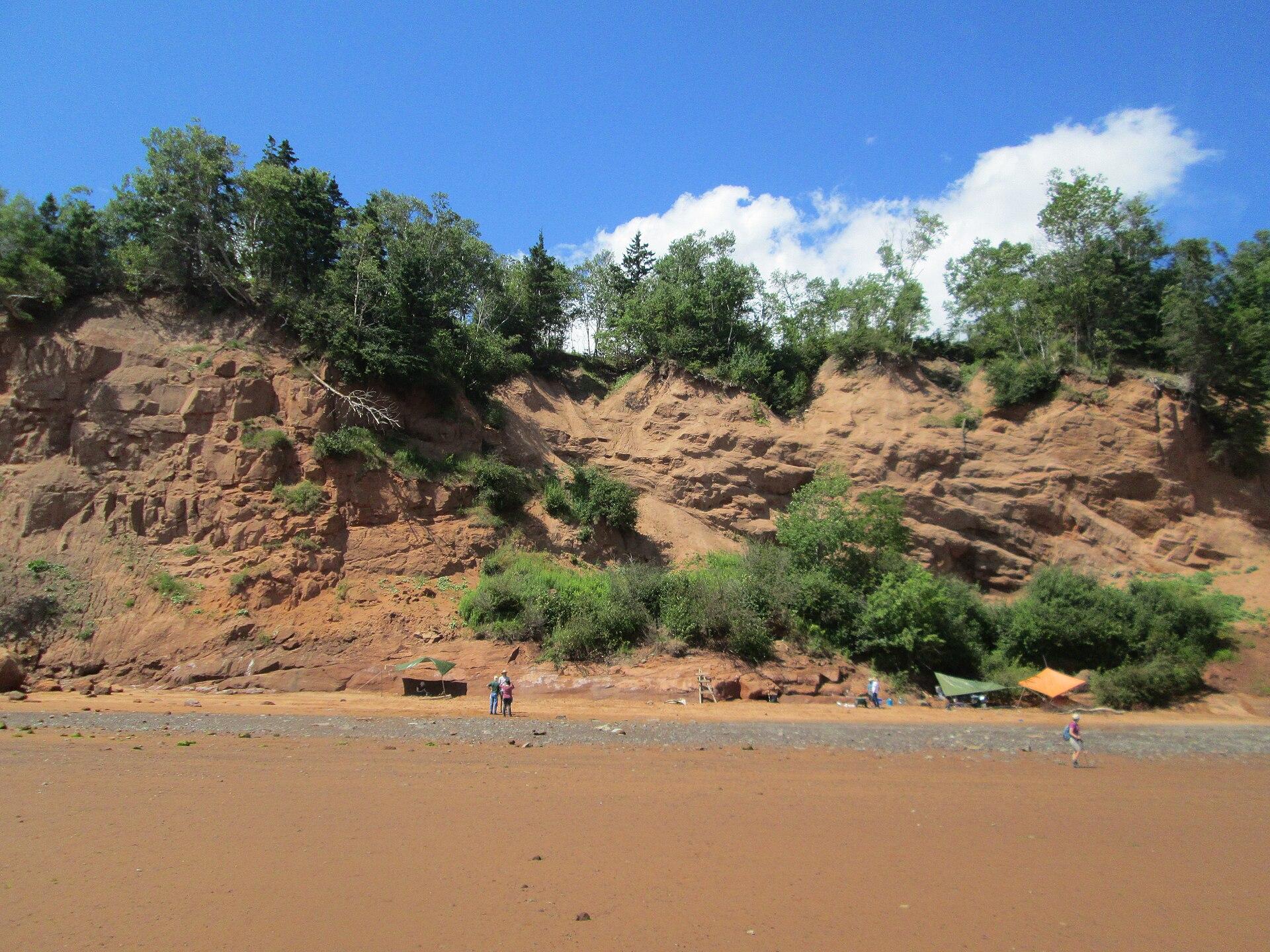 Wasson Bluff, Parrsboro Fossil Hunting GuideDinosaurs, Dinosaur tracks
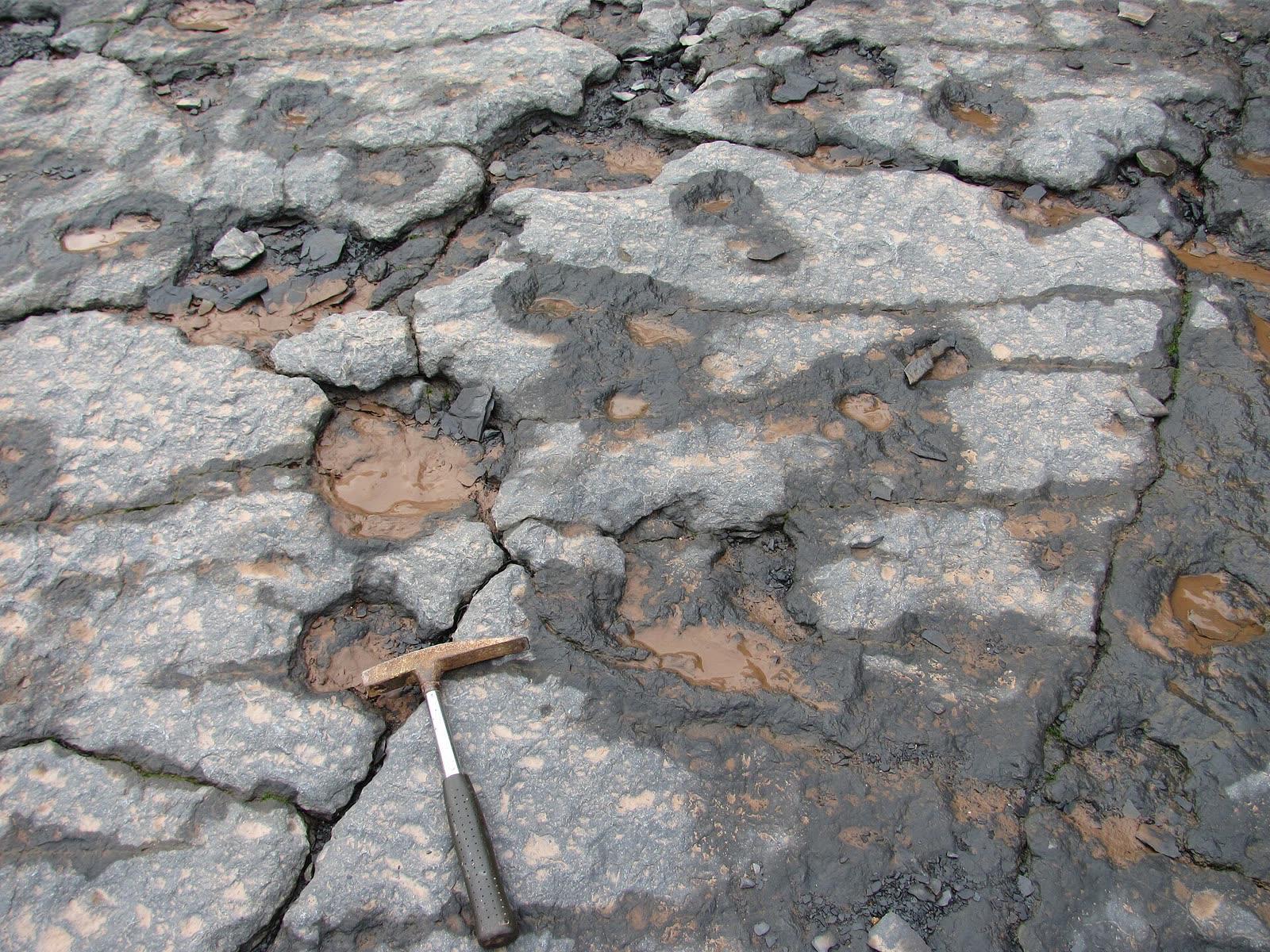 Blue Beach, Avonport Fossil Hunting GuideEarly tetrapods, Tetrapod trackways
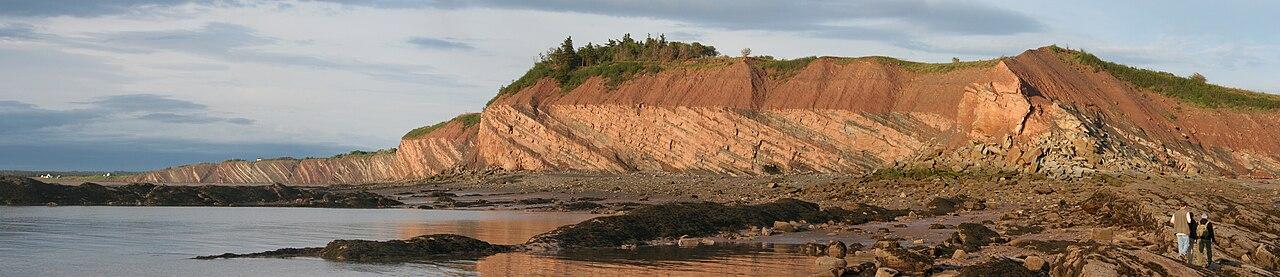 Joggins Fossil Cliffs Fossil Hunting GuideLycopsid trees, Plant fossils
 Stonehammer UNESCO Global Geopark Fossil Hunting GuideParadoxides regina (trilobite), Carboniferous tetrapod trackways