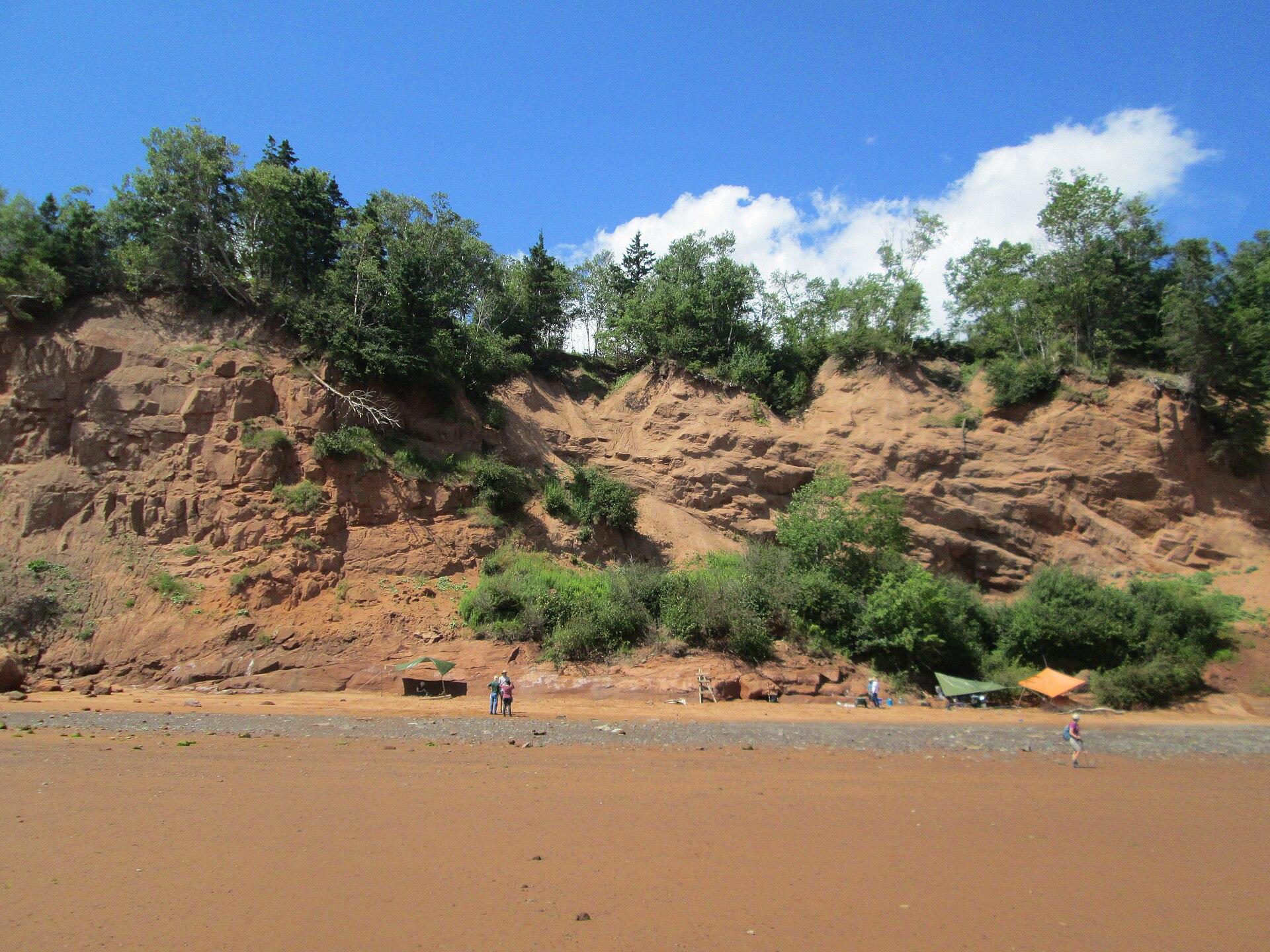
Wasson Bluff, Parrsboro Fossil Hunting Guide
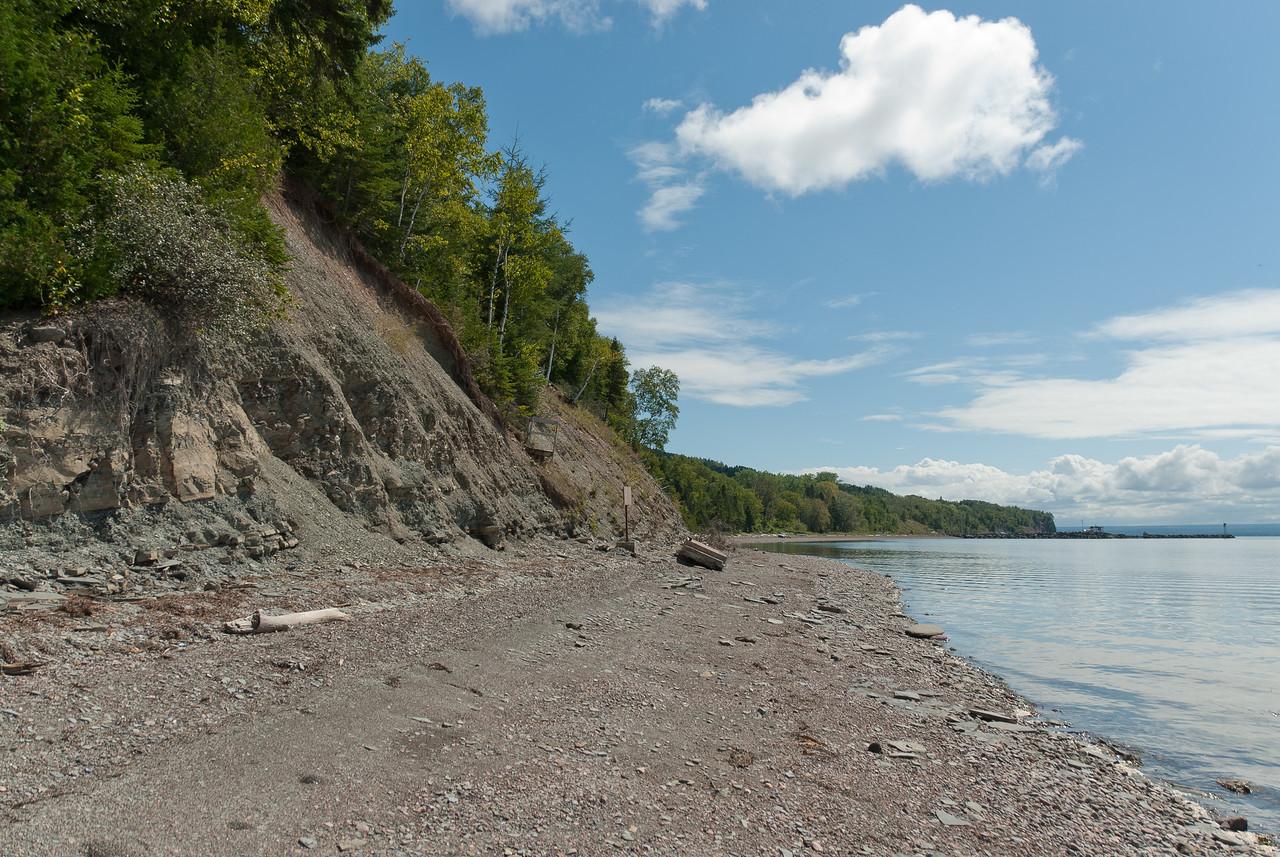
Image: Larry from Charlottetown, PEI, Canada (CC BY 2.0)
A Bay of Fundy shoreline that holds Canada's oldest known dinosaurs and the smallest dinosaur footprints ever found. The McCoy Brook Formation records the world immediately after the end-Triassic extinction, and the bluff is a designated Special Place with guided access only.
By Edward Chen · Published 14 September 2026
Introduction
The end-Triassic extinction removed roughly three-quarters of species on Earth. Very few places preserve what the world looked like immediately afterwards, and Wasson Bluff is one of them.
The bluff sits on the Bay of Fundy shore east of Parrsboro. Its rocks belong to the McCoy Brook Formation, laid down in the earliest Jurassic as the supercontinent Pangaea pulled apart. The basin that became the Bay of Fundy opened at the same time.
More than 100,000 bones have come out of this shoreline. Among them are the oldest dinosaurs known from Canada and some of the smallest dinosaur footprints ever recorded. Animals no larger than a robin made those tracks.
Wasson Bluff is designated under Nova Scotia's Special Places Protection Act, which the Department of Communities, Culture, Tourism and Heritage administers. That gives it legal protection. The beach is public and the geopark recommends a guided trip rather than requiring one, but collecting needs a Heritage Research Permit either way.
Location and Directions
Wasson Bluff is about 8 kilometres east of Parrsboro, on the north shore of the Minas Basin in Cumberland County. The cliffs run roughly 1.6 kilometres, from Wasson Brook in the east to Swan Creek in the west.
GPS: 45.3917°N, 64.2422°W.
The Fundy Geological Museum in Parrsboro is the starting point. It runs guided beach tours in season and is the practical route to the fossil exposures.
The site lies within the Cliffs of Fundy UNESCO Global Geopark, which covers this stretch of coastline and interprets its geology across a number of connected locations.
Tides here are the largest in the world, with a range that can exceed 15 metres. The beach that carries you along the cliff base at low water is under several metres of water a few hours later.
Never walk the shoreline without a tide table and a clear understanding of when the water turns.
 Photo: Bwark, CC BY-SA 3.0, via Wikimedia Commons

What Fossils You'll Find
The McCoy Brook fauna is small-bodied and varied. Early sauropodomorph dinosaurs, crocodylomorphs, sphenodontians, early mammal relatives, fish and amphibians all occur.
Prosauropod remains from the bluff represent the oldest known Canadian dinosaurs. Tritheledontid and other early cynodont material places mammal ancestry in the same beds.
Trackways are preserved in the sandstones. The smallest are around two centimetres long and record hatchling or very small adult dinosaurs, which is the sort of evidence body fossils rarely supply.
Fossil material is found in basalt talus, in sandstone, and in the fissure fills where bone accumulated in cracks within the older volcanic rock. Agate and zeolite minerals fill cavities in the basalt and are part of what makes the Parrsboro shore famous among mineral collectors.
Most of the bone is small, and an untrained eye does not recognise it. A guide will show you what a fragment looks like in the rock, which is more useful than any photograph.
 Photo: Lisa Millar, CC BY-SA 3.0, via Wikimedia Commons

Geologic History
Around 201 million years ago, rifting tore Pangaea apart along what is now the eastern seaboard of North America. Enormous volumes of basalt erupted, an event known as the Central Atlantic Magmatic Province, and that eruption is implicated in the end-Triassic extinction itself.
The North Mountain Basalt at Wasson Bluff is part of that province. Above and among it, the McCoy Brook Formation accumulated in the Early Jurassic, roughly 200 to 190 million years ago.
The setting was a rift valley with seasonal lakes, dune fields and alluvial fans, under an arid to semi-arid climate. Animals died near water sources and in sand, and their remains were buried quickly.
Later movement on faults tilted and broke the sequence. The bluff therefore shows basalt and sedimentary rock in complicated contact rather than in simple layers.
That structural complication is part of why the site preserves so much. Faulted blocks trapped sediment against basalt and created the fissures that concentrated bone.
 Photo: Michael C. Rygel, CC BY-SA 3.0, via Wikimedia Commons

Collecting Rules and Regulations
Wasson Bluff is a designated Special Place under Nova Scotia's Special Places Protection Act. Collecting fossils here without a heritage research permit is illegal.
That restriction is not decorative. Wasson Bluff has produced material of international importance, and the province protects it accordingly.
Look, photograph and leave everything where it is. Do not hammer the cliff or the talus.
Mineral collecting elsewhere on the Parrsboro shore has different rules. The Fundy Geological Museum can tell you which beaches are open and what is permitted on them. Ask before you assume.
If you find something that looks like bone, note where it is and tell the museum.
Safety
The tide is the main hazard and it is a serious one. The Bay of Fundy has the highest tidal range on Earth, the water comes in quickly, and people are cut off against the cliff every year.
Check the tide table, start on a falling tide, and leave long before the turn.
The cliffs are actively eroding. Rockfall happens without warning, particularly after rain or a freeze-thaw cycle. Stay away from the cliff base where you can.
Boulders on the shore are slick with weed and unstable. Move carefully.
Mobile coverage on this stretch of shore is unreliable. Tell someone your plan.
 Photo: Michael C. Rygel, CC BY-SA 3.0, via Wikimedia Commons

Sources
https://en.wikipedia.org/wiki/Wasson_Bluff https://fundygeological.novascotia.ca/ https://www.fundygeopark.ca/ https://novascotia.ca/nse/protectedareas/
Nearby sites
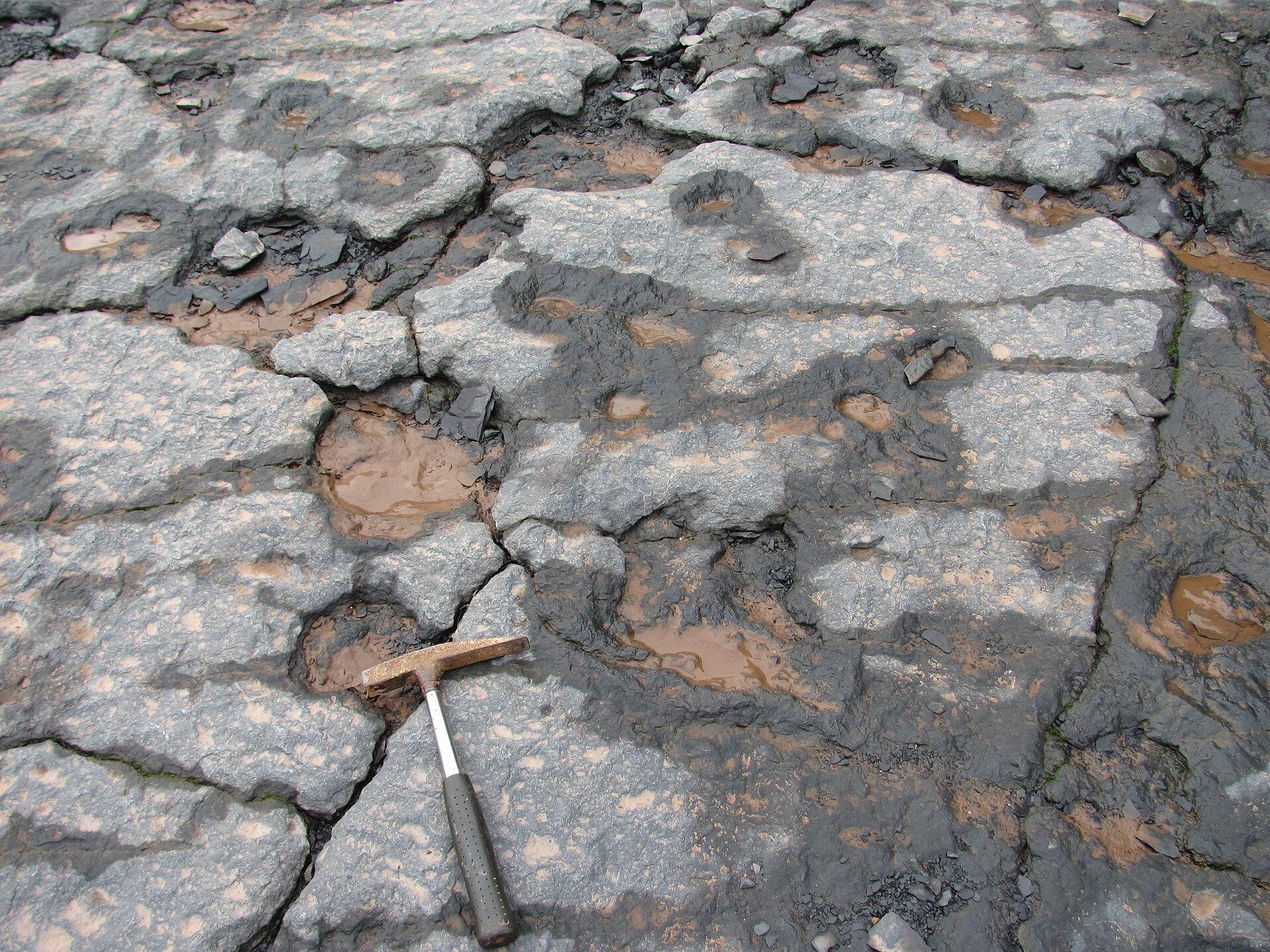 Blue Beach, Avonport Fossil Hunting GuideEarly tetrapods, Tetrapod trackways
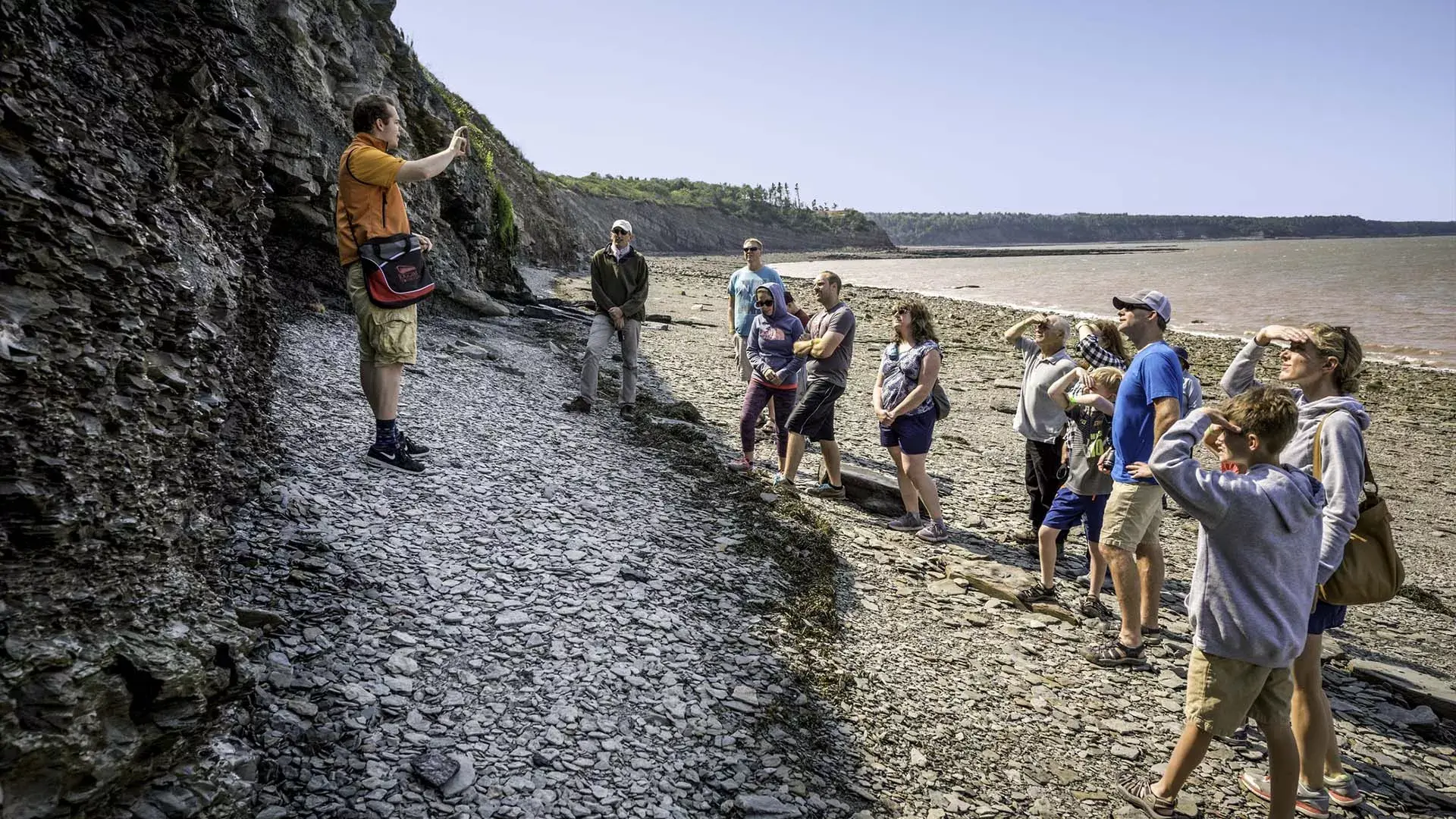 Joggins Fossil Cliffs Fossil Hunting GuideLycopsid trees, Plant fossils
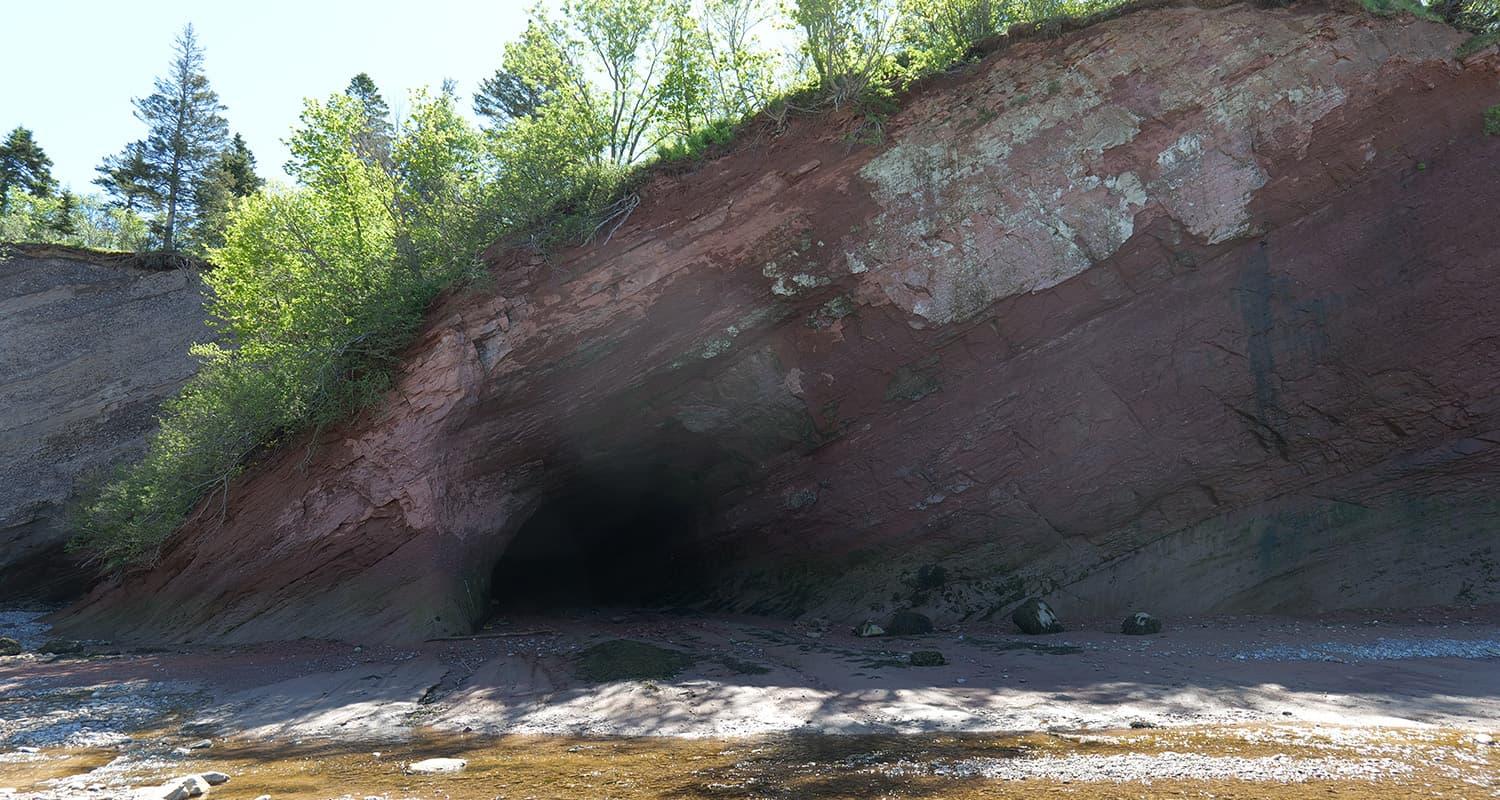 Stonehammer UNESCO Global Geopark Fossil Hunting GuideParadoxides regina (trilobite), Carboniferous tetrapod trackways
 Miguasha National Park Fossil GuideSarcopterygian fish, Placoderms