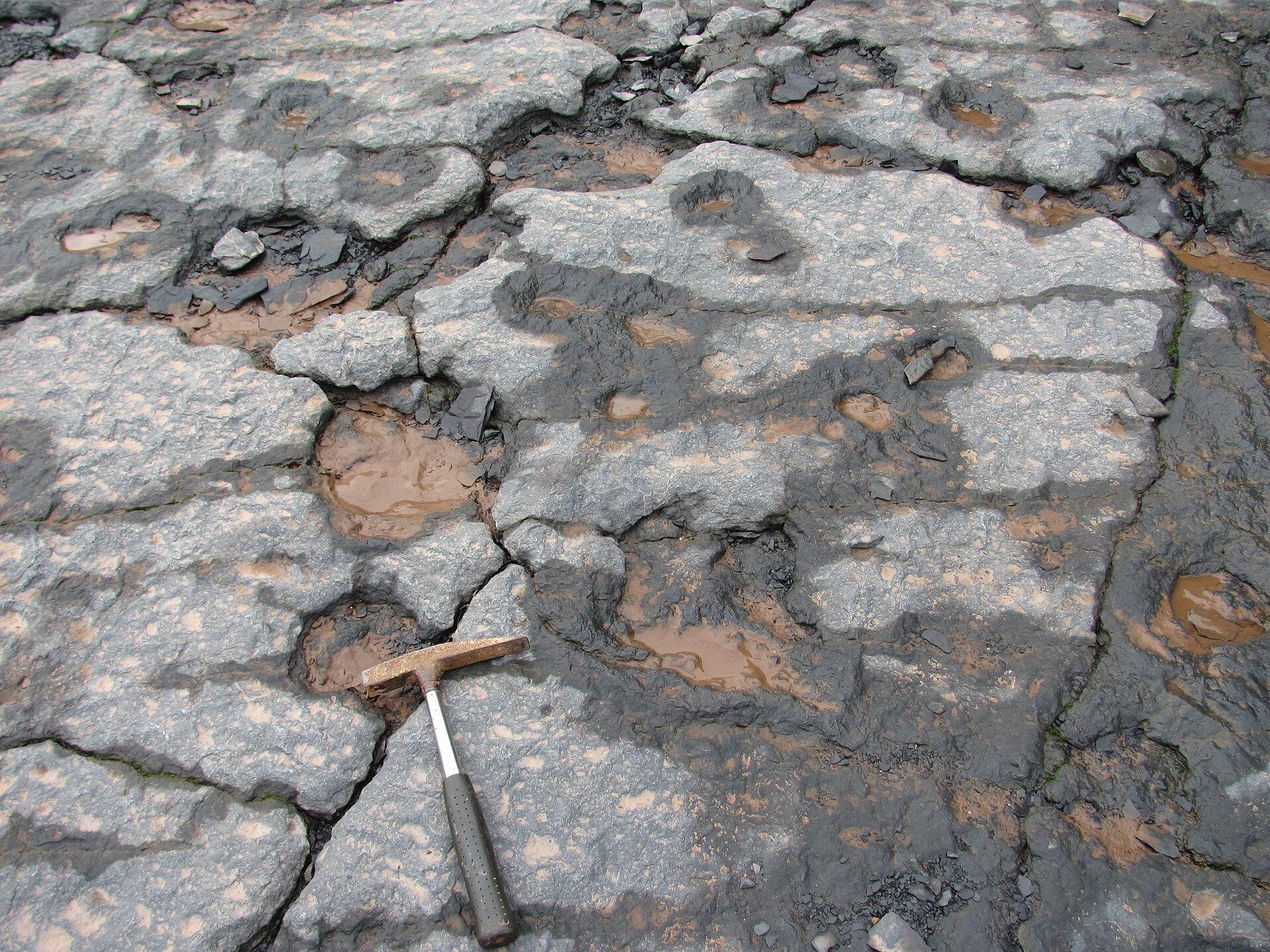
Blue Beach, Avonport Fossil Hunting Guide
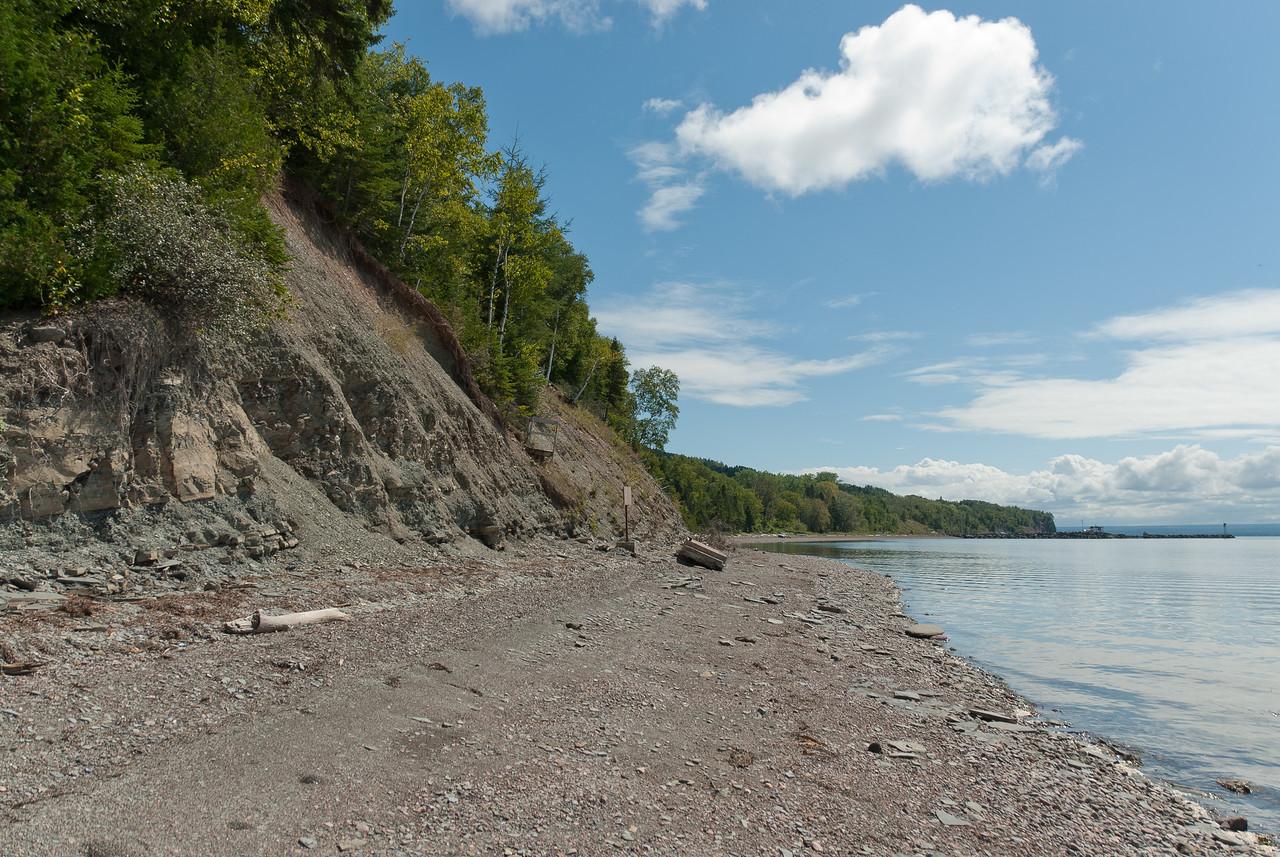
Image: Eckosters (CC BY-SA 3.0)
A tidal Nova Scotia shoreline that fills one of the largest holes in the fossil record. Collecting needs a provincial permit. The Horton Bluff Formation preserves early tetrapods from Romer's Gap, the interval when vertebrates were learning to live on land, and a small private museum interprets the finds.
By Edward Chen · Published 14 September 2026
Introduction
Palaeontologists call it Romer's Gap. For roughly 15 million years after the end of the Devonian, the fossil record of land vertebrates goes almost silent. That silence falls exactly across the transition from water to land.
Blue Beach is one of the handful of places in the world that speaks during that silence. It is in fact the type locality for Romer's Gap itself.
The Horton Bluff Formation on this Avon River shore preserves bones and trackways of early tetrapods from the Tournaisian, around 350 million years ago.
The material matters because it shows limbs and feet already varied in form. Whatcheeriids occur here, and the footprints record animals moving over mud in a way their skeletons alone would not demonstrate.
A small independent museum on the shore, built by people who have collected here for decades, holds and interprets the finds.
The collection grew out of persistence rather than funding. Chris Mansky and Sonja Wood walked the same shore after every tide for years before the museum opened in 2000. That persistence produced a body of material that researchers now travel to study.
 Photo: Weloganite, CC BY-SA 4.0, via Wikimedia Commons

Location and Directions
Blue Beach is a two kilometre stretch of cliff-bordered shore at Avonport, Kings County, about 70 kilometres north-west of Halifax. It lies where the Avon River meets the Minas Basin.
GPS: 45.0983°N, 64.2150°W.
A track leads down to the shore from the road, and the Blue Beach Fossil Museum sits at the top of it. The beach is reached on foot from the end of Blue Beach Road or from Avonport Station. Hantsport, about 5 kilometres south, is the nearest town with services. Check the museum's opening hours before you travel, because it is a small operation with a seasonal schedule.
The beach itself is public and free.
Tides govern everything. The range in this part of the Minas Basin reaches as much as 16 metres. The fossil-bearing shore platform is only walkable for a few hours either side of low water.
Consult a tide table for the Avon River or Hantsport and plan around it. There is no substitute for this step.
 Photo: Paul from Hacketts Cove, Canada, CC BY 2.0, via Wikimedia Commons
.jpg)
What Fossils You'll Find
Loose slabs on the beach are the realistic target, and they turn over with each tide, so the shore presents new material constantly.
Tetrapod trackways are the speciality. They appear as rows of impressions on slab surfaces, sometimes with the drag mark of a tail or belly between them.
Fish material is common, including scales, teeth and bone from rhizodonts and other large predators. Plant fragments occur throughout, along with the burrows and trails of invertebrates.
Actual tetrapod bone is rare and important. Anything that looks like limb bone or skull material should go to the museum rather than into a pocket.
The museum staff will identify what you have found. They are the reason so much scientifically useful material from this shore has been recorded rather than lost.
Look at slab surfaces rather than at the edges of blocks. Tracks and fish material show as impressions and dark films on bedding planes, and a wet surface shows them far better than a dry one.
 Photo: Matt Hall, CC BY 2.0, via Wikimedia Commons

Geologic History
The Horton Bluff Formation was laid down in the Early Carboniferous, in the Tournaisian stage, roughly 359 to 347 million years ago. It sits in the Horton Group, and the beds at Blue Beach fall in the Blue Beach and Hurd Creek Members.
The environment was a large lake system on a continental interior, with shorelines that advanced and retreated. Mudflats dried and cracked between floods, and animals walking across them left tracks that the next layer of sediment covered and preserved.
Nova Scotia lay close to the equator at the time, in the heart of a humid tropical belt, as part of the assembling supercontinent Pangaea.
That equatorial position matters for the biology. Warm, wet, oxygen-rich swamp margins are exactly the setting in which early tetrapods diversified. Romer's Gap may partly reflect where rocks of the right age survive rather than a genuine gap in life.
The same Carboniferous basin system continues north-east to Joggins on the other side of the province, where younger coal-age rocks record the forests that followed.
Later folding tilted the beds, and the modern Avon River and the Fundy tides expose them.
The tides do the excavation work continuously. Each cycle strips sediment, breaks new blocks off the cliff and turns over what is already on the beach. The shore therefore repays repeat visits.
 Photo: Matt Hall, CC BY 2.0, via Wikimedia Commons

Collecting Rules and Regulations
Nova Scotia's Special Places Protection Act governs fossil collecting across the province, and the province states the rule plainly. It is against the law to excavate or collect fossils in Nova Scotia without a Heritage Research Permit.
That wording covers collecting, not only digging. Do not assume a loose piece on the beach is outside it.
The safe course at Blue Beach is simple. Photograph what you find, note where it was, and take it to the museum on the shore rather than home.
Vertebrate bone and trackway slabs are scientifically important. Report them rather than removing them quietly.
The museum is privately run and depends on goodwill. Treat it as the site's front door, because that is what it is.
 Photo: Weloganite, CC BY-SA 4.0, via Wikimedia Commons

Safety
The tide is the single biggest danger. Fundy water rises fast, the shore platform floods, and the cliff behind offers no escape route.
Go on a falling tide, keep track of the time, and leave early.
The cliffs shed rock regularly. Do not work directly beneath them, and do not climb.
Slabs are heavy, wet and slippery. Lift carefully and wear boots with grip.
Mud on this shore is deep in places and clings hard. Stay on firm ground.
Sources
https://en.wikipedia.org/wiki/Blue_Beach https://www.bluebeachfossilmuseum.com/ https://en.wikipedia.org/wiki/Horton_Bluff_Formation https://novascotia.ca/nse/protectedareas/
Nearby sites
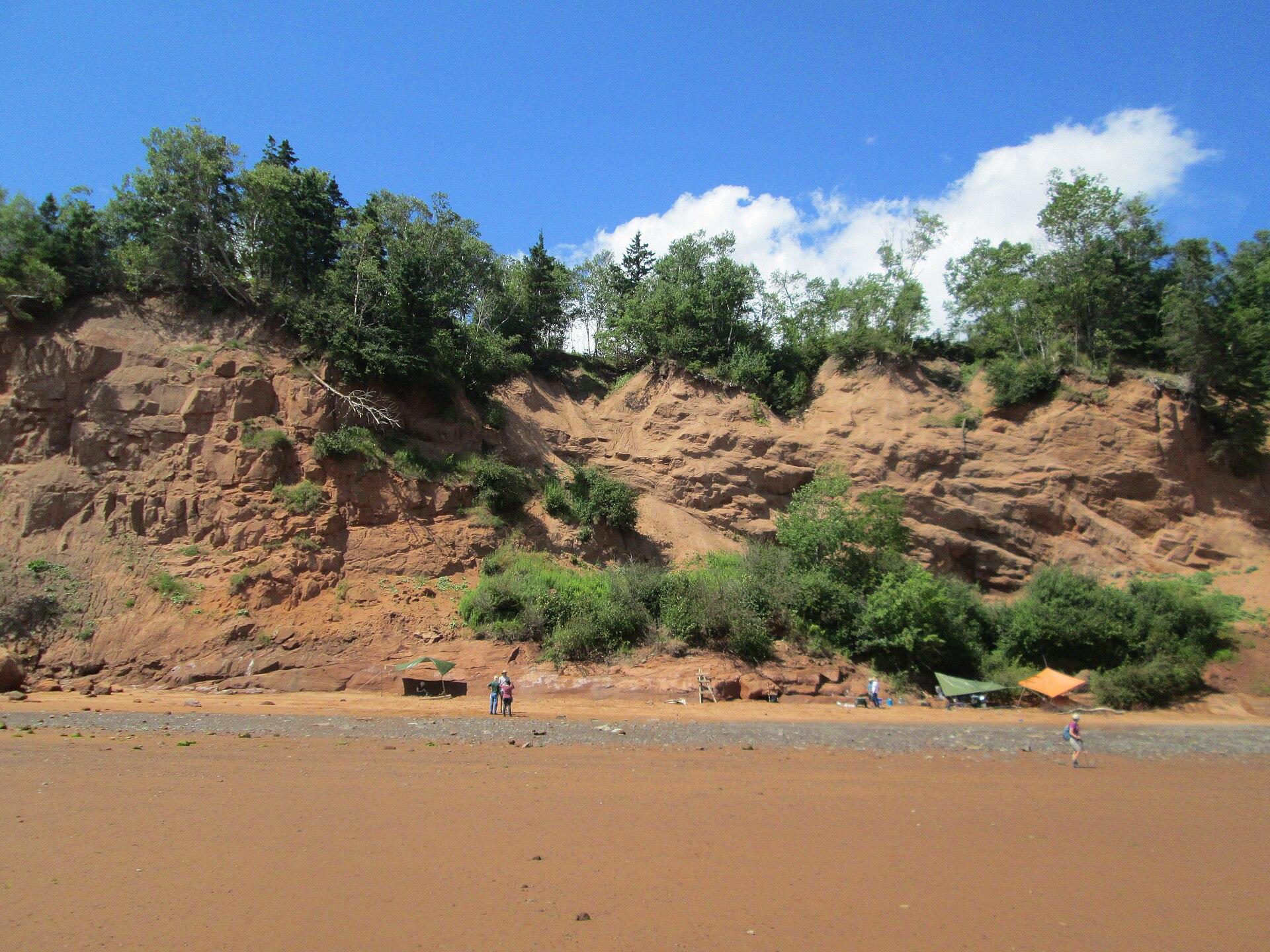 Wasson Bluff, Parrsboro Fossil Hunting GuideDinosaurs, Dinosaur tracks
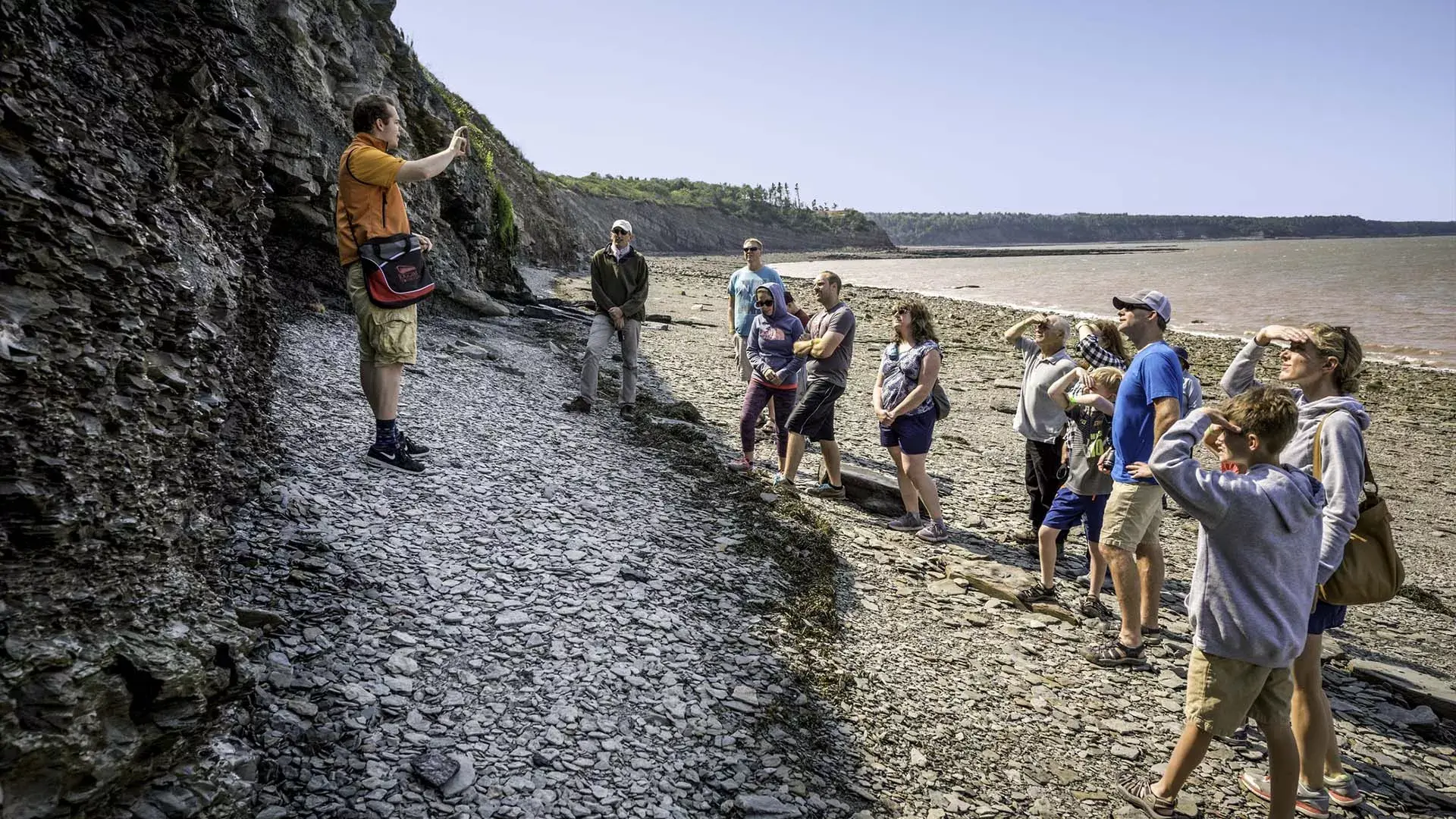 Joggins Fossil Cliffs Fossil Hunting GuideLycopsid trees, Plant fossils
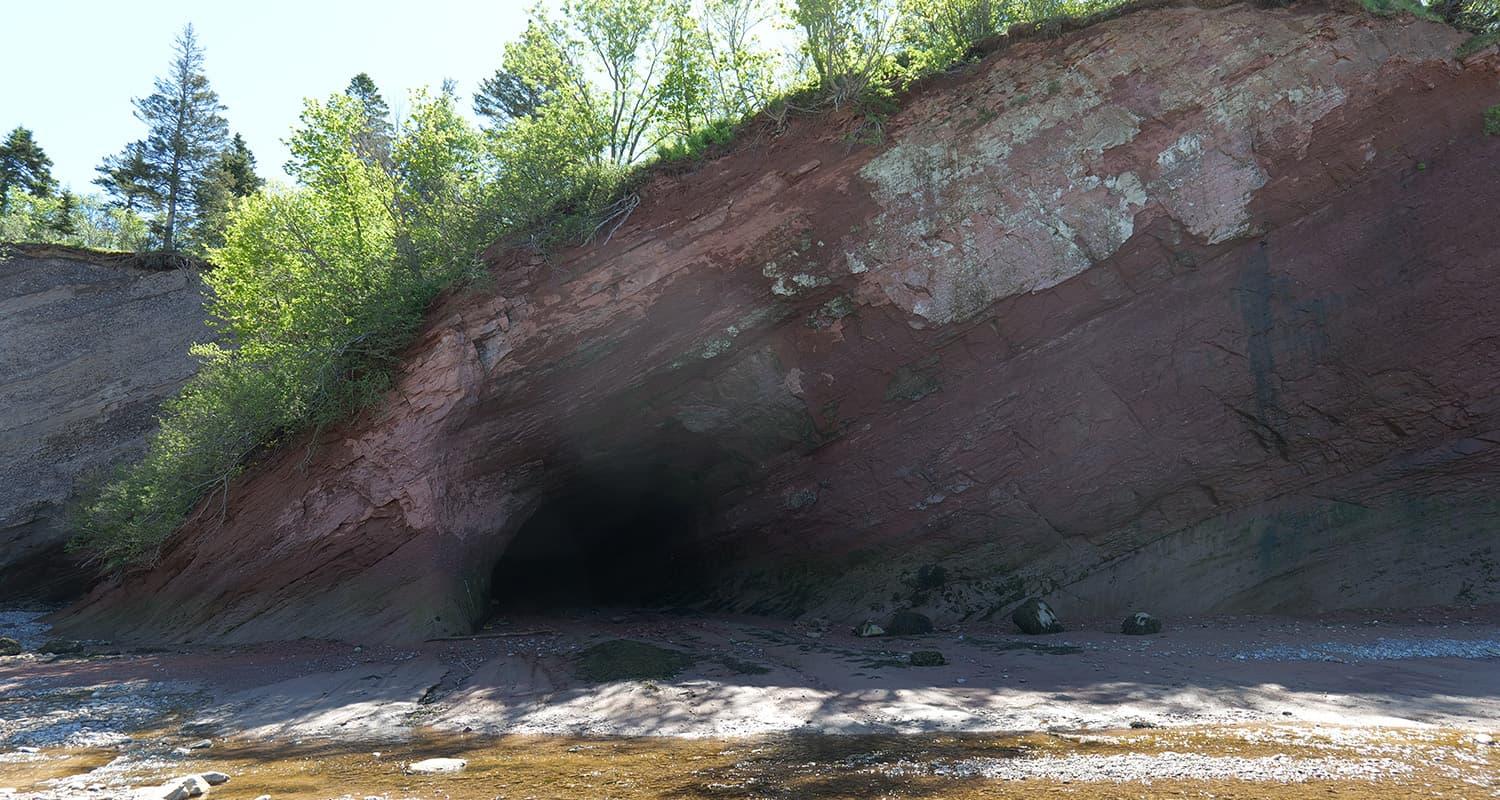 Stonehammer UNESCO Global Geopark Fossil Hunting GuideParadoxides regina (trilobite), Carboniferous tetrapod trackways
 Miguasha National Park Fossil GuideSarcopterygian fish, Placoderms