Driftwood Canyon Provincial Park Fossil Hunting Guide
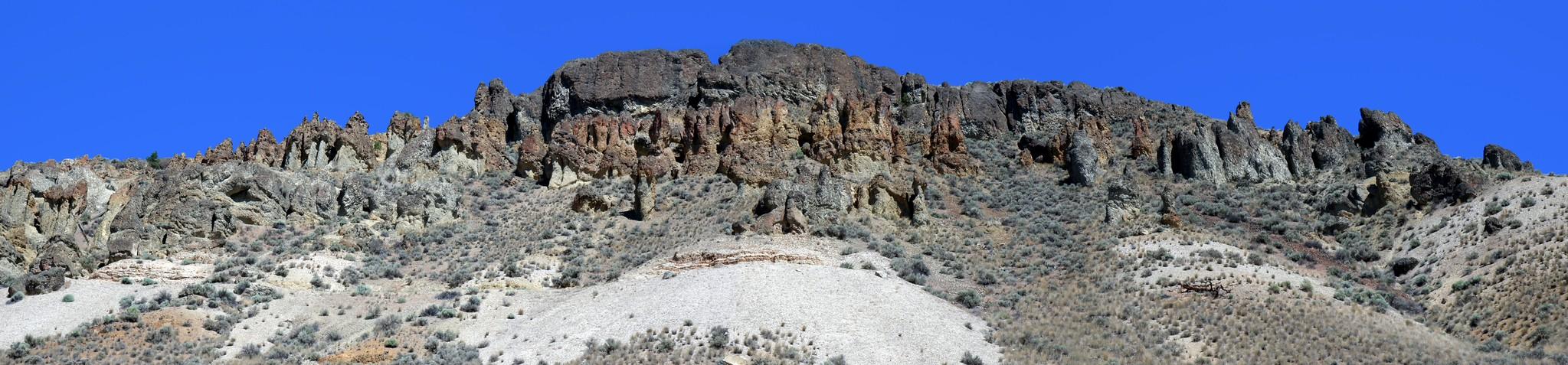
Image: David Greenwood (CC BY-SA 3.0)
Driftwood Canyon Provincial Park is a 23-hectare day-use park 10 km northeast of Smithers, British Columbia. Early Eocene lake shale about 52 million years old holds fossil insects, fish, leaves and pine cones. Visitors view the beds from a trail and platform, and collecting is banned.
By Edward Chen · Published 1 October 2026
 Photo: David Greenwood, Public domain (PD-self), via Wikimedia Commons

Introduction
Driftwood Canyon Provincial Park protects early Eocene lake beds on the east side of Driftwood Creek. The park lies 10 km northeast of Smithers in northwest British Columbia. The shale holds fossil insects, fish, leaves and pine cones about 52 million years old. It is the northernmost site in North America with fossil Eocene insects. You view the fossils from a short trail and a viewing area. The public may not collect fossils.
Gordon Harvey donated the land, and British Columbia established the 23-hectare park in 1967 to protect the fossil beds. Geologists G. M. Dawson and J. W. Dawson surveyed similar deposits in interior British Columbia between the 1870s and 1890s. Collectors gathered specimens at Driftwood Canyon in the 1930s, and systematic study began in the 1950s. In 2010 BC Parks, the Bulkley Valley Naturalists and the Smithers Rotary Club redesigned the interpretive trail. Kermode Parks, run by Mark and Anais Drydyk, is the park operator.
Location and Directions
BC Parks places the park 10 km northeast of Smithers. Follow the signs on Old Babine Lake Road. Access is by Driftwood Road off Highway 16. The park brochure map prints a distance of 16 km to Smithers, so check the distance from your own starting point. Smithers and Telkwa are the nearest communities.
The park is open all year. BC Parks provides limited maintenance in winter, and snowfall can restrict access. BC Parks lists no admission fee. The park is for day use only.
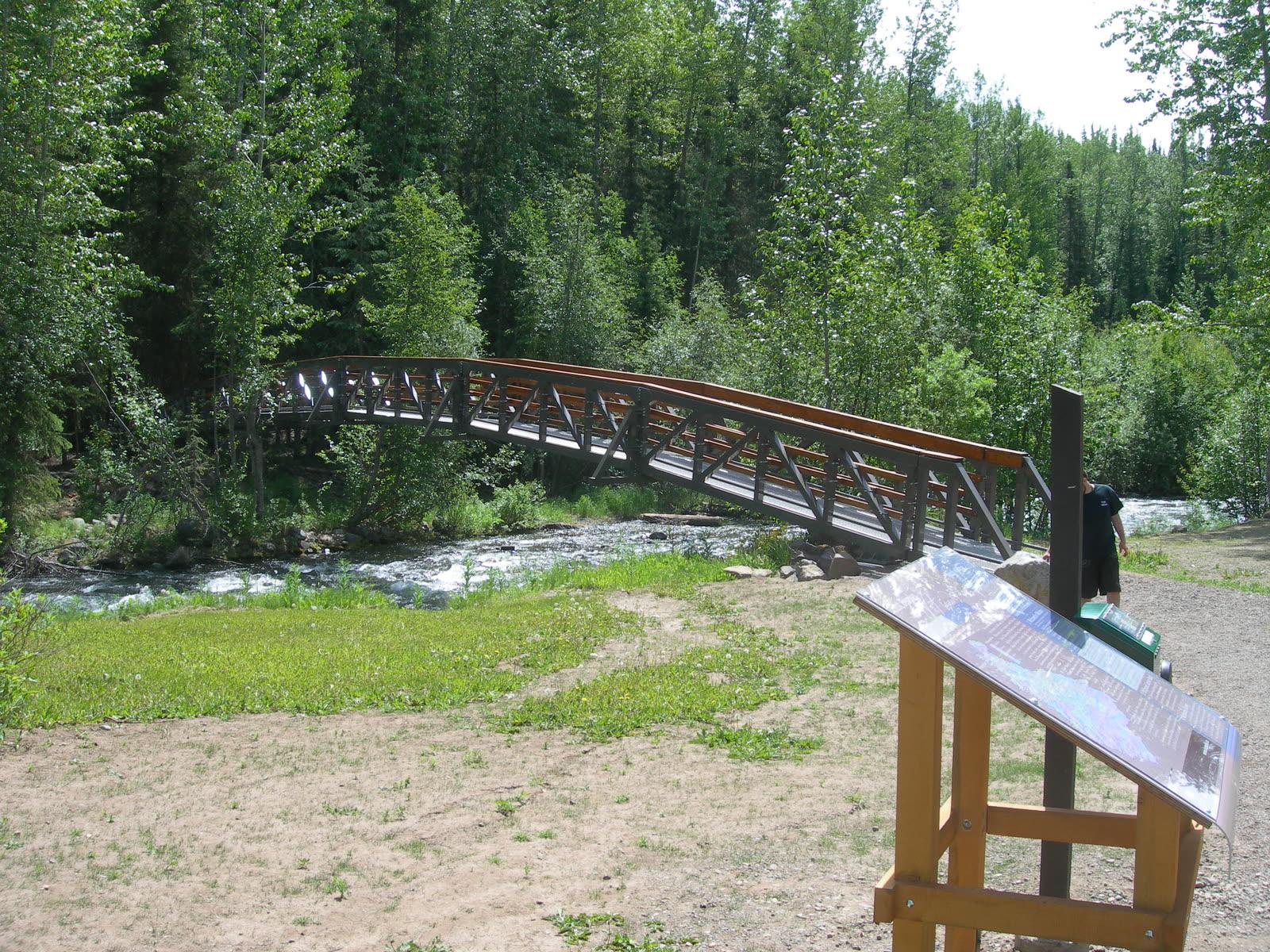
The park has a parking area, two pit toilets and a day-use area with picnic tables and fire pits. Interpretive signs stand at the parking area and along the trail. A short wheelchair-accessible interpretive trail leads from the parking area to the fossil beds. Visitors who use wheelchairs can reach the viewing area. Below the cliff face at the end of the trail, a viewing area carries more interpretive information. A separate platform overlooks Driftwood Creek.
Potable water is not available. Bring your own drinking water. The operator's phone number is 1-250-846-9535.
The Bulkley Valley Museum at 1425 Main Street in Smithers displays Driftwood Canyon fossils. The Smithers Chamber of Commerce lists admission by donation, with opening hours of 9:00 to 17:00 Monday to Friday and 9:00 to 14:00 on Saturday. Confirm the hours before you go. The museum is the place to see real specimens up close, because you cannot touch the park beds.
What Fossils You'll Find
You will see the fossil beds from the trail and the viewing area. You will not collect from them. The beds record a lake and its forested shore in the early Eocene.
Fish are the best-known fossils. The ancestral salmon relative Eosalmo driftwoodensis comes from these beds, together with the bowfin Amia and the sucker Amyzon. Insects include water striders, aphids, leafhoppers, lacewings, beetles and wasps.
Plants include the dawn redwood Metasequoia, the floating fern Azolla primaeva, alder, ginkgo, sassafras and cedar. Researchers described the pine Pinus driftwoodensis from the site.
Two land mammals come from the Driftwood Creek beds. They are the hedgehog relative Silvacola acares and a tapir relative that researchers refer to as cf. Heptodon. Researchers described bird species from the site in 2019, from two groups called coliiforms and songziids.
Specimens sit in six museums. Three are in British Columbia. They are the Bulkley Valley Museum, the Beaty Biodiversity Museum at the University of British Columbia and the Royal British Columbia Museum. The others are the Royal Ontario Museum, the Canadian Museum of Nature and the Burke Museum in Seattle.
Geologic History
The fossils come from the Driftwood Creek beds, an unnamed unit in the lower Eocene Ootsa Lake Group. The beds are finely layered lake shale to silty sandstone. They hold minor coal and layers of volcanic ash. The lake lay between mountains, so geologists call it an intermontane lake.
Uranium-lead dating of one ash layer gives an age of 51.77 million years, with an error of 0.34 million years. That places the beds early in the Eocene.
Each fine layer is a millimeter or less thick. The park brochure states that each layer records one year in the life of the lake or swamp. Insects, leaves and fish settled into the mud and stayed in these thin layers.
The cliff at the end of the trail shows the stacked layers. The ash layers between the shale beds give the dates that fix the age of the fossils.
Collecting Rules and Regulations
Leave every fossil where you find it. BC Parks says it works to conserve the fossil beds. It asks visitors to leave all fossils in place so that future generations can study them. BC Parks says the fossils are worth more in the ground than exposed to erosion.
Take photographs, and move nothing.
Other park rules apply. Light fires only in the designated fire rings. Do not gather firewood. Keep pets on a leash at all times. BC Parks bans firearms except during hunting season.
Safety
Do not stand directly beneath the cliff face. BC Parks warns that this is dangerous.
Stay on the trail and behind the viewing platform. Do not go off the trail or past the viewing platform.
Bring drinking water because the park has none. In winter, check road conditions before you leave Smithers. Snow can block access, and BC Parks does limited maintenance.
Sources
https://bcparks.ca/driftwood-canyon-park/ https://nrs.objectstore.gov.bc.ca/kuwyyf/driftwood_canyon_brochure_7827e89181.pdf https://en.wikipedia.org/wiki/Driftwood_Canyon_Provincial_Park https://www.tandfonline.com/doi/abs/10.1080/02724634.2014.838175 https://en.wikipedia.org/wiki/Pinus_driftwoodensis https://bvmuseum.org/driftwood-fossils/
Nearby sites
 Tumbler Ridge UNESCO Global Geopark Fossil Hunting GuideTyrannosaurid trackways, Ankylosaur footprints
 Pipestone Creek Bonebed Fossil Hunting GuideDinosaur bones, Ceratopsians
 Puntledge River, Courtenay Fossil Hunting GuideMarine reptiles, Elasmosaurs
 McAbee Fossil Beds Fossil Hunting GuidePlants, Leaves