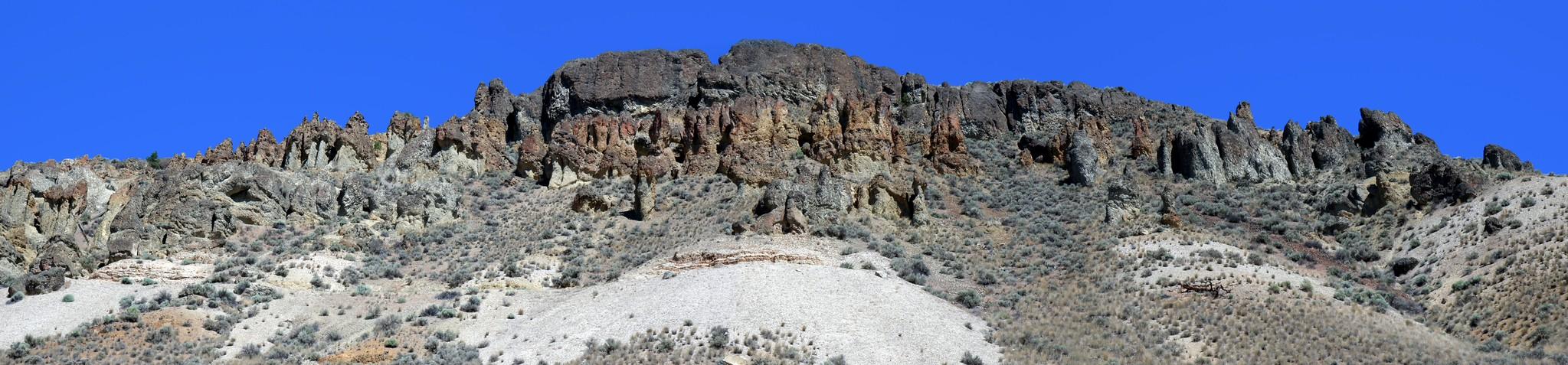
McAbee Fossil Beds Fossil Hunting Guide
Image: Flickr user ₡ґǘșϯγ Ɗᶏ Ⱪᶅṏⱳդ (NSID 148598741@N02) (CC0)
McAbee Fossil Beds Heritage Site is a 376-hectare Provincial Heritage Site east of Cache Creek, British Columbia. The Eocene Tranquille Formation holds fossil leaves, insects and fish about 53 million years old. Entry is by paid admission and collecting is prohibited.
By Edward Chen · Published 1 October 2026
Introduction
McAbee Fossil Beds Heritage Site is a 376-hectare Provincial Heritage Site east of Cache Creek in British Columbia. Its lake beds hold fossil leaves, insects and fish from the early Eocene, about 53 million years ago. The St'uxwtews Bonaparte First Nation holds title to the land. The St'uxwtews Pesuten Heritage Society runs the site. You pay an admission fee and walk marked trails. The operator bans all collecting.
British Columbia designated the site on 19 July 2012 under the Heritage Conservation Act. G. M. Dawson reported plant fossils here in the late 19th century. Len Hills and Mark Wilson began systematic work in the 1960s and 1970s. Wilson wrote the 2007 provincial assessment that led to the designation. The site reopened to the public in 2019 under Indigenous management. The land is Secwepemculecw, the unceded territory of the Secwepemc.
Location and Directions
The heritage site lies north of Highway 1, east of the village of Cache Creek. It is on the road to Kamloops. Drivers can see the beds from the highway. Visit Cache Creek gives the mailing address as Highway 1, Cache Creek, BC V0K 1H0. The GPS position is 50.797 degrees north and 121.141 degrees west.
For the 2026 season the operator listed daily opening from 1 May to 30 September, from 9:00 to 17:00. The last trail hike starts at 16:00. Season dates change from year to year, so check the operator's website before you travel. The phone numbers are 1-800-782-0922 and 1-250-457-9722.
Admission in Canadian dollars is $8 for adults aged 18 to 64 and $6 for elders aged 65 and over. Children aged 5 to 17 pay $5. Children under 5 enter free. First Nations and Métis visitors with a status card enter free. Groups of 10 or more pay $6 each and must book. School groups pay $5 per student, with one free chaperone for every 10 students.
Older pages on other websites list higher prices. Use the operator's figures.
The site has about 8 km of trails. Beginner loops take about 30 minutes. Longer hikes take about 2 hours. The operator names the Deep View Trail and the Desert Grasslands Trail as the routes where you can see fossils.
Water is available on site. Dogs on a leash are welcome. Cell reception is poor.
What Fossils You'll Find
 Photo: Simon Fraser University Public Affairs and Media Relations, CC BY 2.0, via Wikimedia Commons

You will see fossils in the rock where they formed. You will not collect them. The beds record a lake community from the Eocene Okanagan Highlands.
Plants are the most common fossils. Researchers have recorded 76 plant genera at McAbee. They include the sassafras Sassafras hesperia, the winged-fruit tree Dipteronia brownii, and maples, beeches and elms. The beech Fagus langevinii comes from the same Okanagan Highlands flora.
Fish include Amyzon, Eohiodon (since reassigned to Hiodon) and the early salmon relative Eosalmo. Insects include the extinct bulldog ant Macabeemyrma ovata. The crayfish Aenigmastacus crandalli also comes from the beds.
Specimens from McAbee sit in five collections. They are the Royal British Columbia Museum, the Royal Tyrrell Museum, the Royal Ontario Museum, the Canadian Museum of Nature and Thompson Rivers University. If you want to see specimens up close, visit one of them.
Geologic History
The fossils come from the Tranquille Formation of the Kamloops Group. The Tranquille Formation is a lake deposit. Fine sediment settled in a still Eocene lake. Leaves, insects and fish sank into it, and the sediment preserved them.
Volcanic rock later buried the lake beds. The Dewdrop Flats Formation lies above the Tranquille Formation. It consists of basalt and andesite flows and breccias. Argon-argon dating of the deposit gives an age of 52.9 million years, with an error of 0.83 million years.
The beds belong to the Eocene Okanagan Highlands, a chain of upland lakes across southern British Columbia and northern Washington. The McAbee fossils show which plants and animals lived on the uplands of that time.
The area has a long study record. Dawson noted the plants in the 19th century. Hills and Wilson collected here from the 1960s. A voluntary agreement with claim holders in 2008 protected the beds before the 2012 designation.
Collecting Rules and Regulations
You may not collect. The operator states that removal or disturbance of fossils is strictly prohibited. Provincial heritage law protects the site, and unauthorized removal of fossils is illegal and carries penalties. Leave every rock and fossil where you find it. Do not dig, split or move rock.
Fossil removal is not permitted on a guided group tour either. The operator describes group tours as a chance to observe fossils in their natural setting, with no collecting.
Researchers and educators who need off-trail access must hold a permit from the BC Heritage Branch. The contact is heritage@gov.bc.ca. A visitor does not need this permit to walk the public trails.
All visitors accept an assumption of risk notice before they enter. Read the notice at the entrance.
Safety
Stay on the marked trails. Trails can be uneven, steep or slippery, especially in or after bad weather. A fall on loose ground can cause injury.
Watch for wildlife. Keep children close and supervise them at all times.
Check the weather before you start a hike. Weather in the interior can change fast. Carry water, sun protection and warm layers.
Plan for limited cell reception. Tell another person your route and your return time. Start your hike before 16:00, because that is the last hike start of the day.
Sources
https://mcabeefossil-beds.com/admission-1 https://mcabeefossil-beds.com/rules-and-hazards https://mcabeefossil-beds.com/about https://mcabeefossil-beds.com/groups https://www2.gov.bc.ca/gov/content/industry/natural-resource-use/fossil-management/mcabee https://en.wikipedia.org/wiki/McAbee_Fossil_Beds https://thewrennews.ca/secwepemc-stewardship-reshapes-53-million-year-old-forest/
Nearby sites
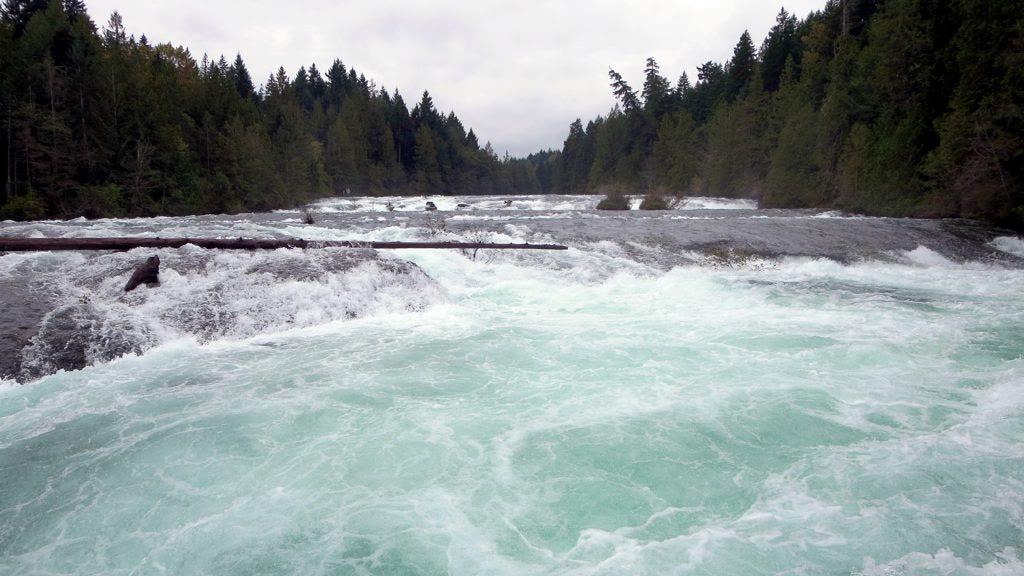 Puntledge River, Courtenay Fossil Hunting GuideMarine reptiles, Elasmosaurs
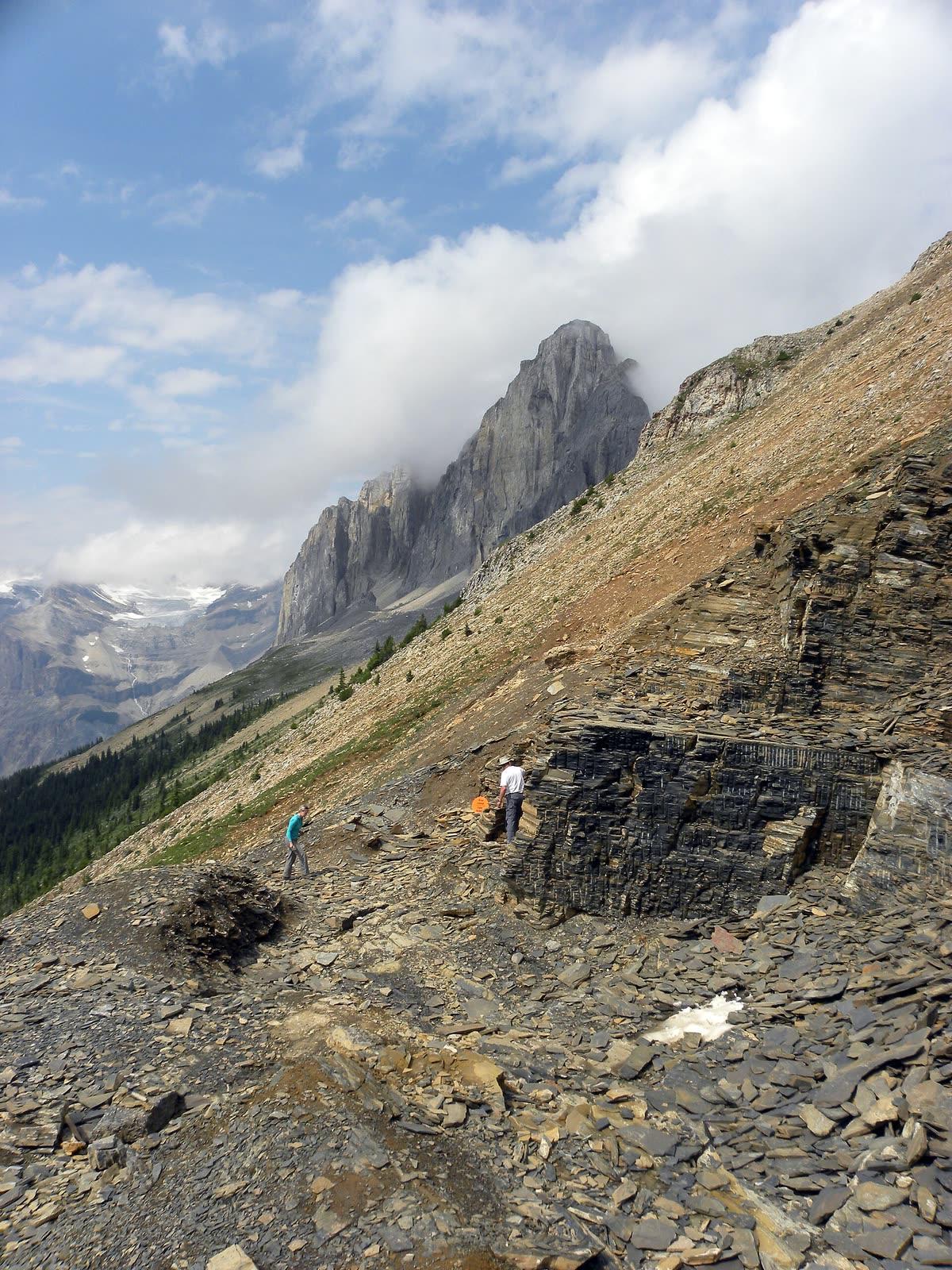 Burgess Shale Fossil Hike GuideTrilobites, Anomalocaris
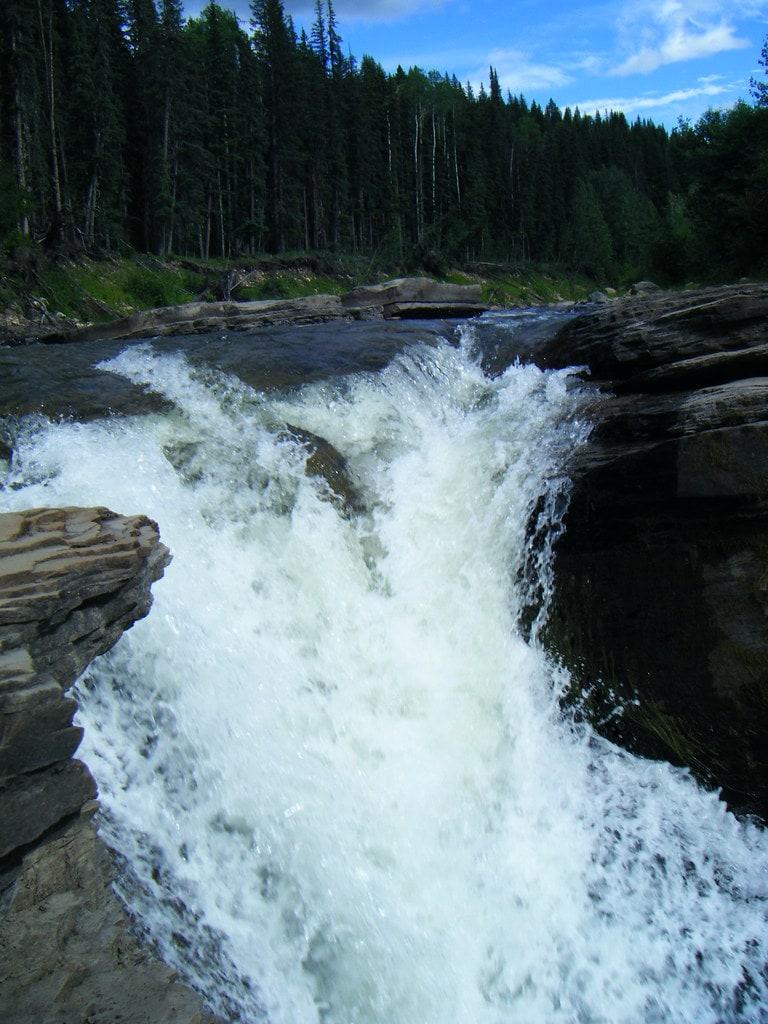 Tumbler Ridge UNESCO Global Geopark Fossil Hunting GuideTyrannosaurid trackways, Ankylosaur footprints
 Pipestone Creek Bonebed Fossil Hunting GuideDinosaur bones, Ceratopsians