Falls of the Ohio State Park Fossil Hunting Guide
Image: William Alden (CC BY-SA 2.0)
The Devonian fossil beds at Clarksville, Indiana are among the largest naturally exposed beds of their age anywhere, holding more than 250 coral species in place on a 390-million-year-old sea floor. Collecting is prohibited. This is a place to walk on the reef and look at it.
By Edward Chen · Updated 4 August 2026
Introduction
Falls of the Ohio State Park occupies the Indiana bank of the Ohio River at Clarksville, directly across from Louisville. It is Indiana's smallest state park and holds one of the most significant fossil exposures in North America: a Middle Devonian coral reef, roughly 390 million years old, lying flat and open across acres of riverbed.
These are among the largest naturally exposed Devonian fossil beds anywhere in the world, and more than 250 species of coral have been described from them. What sets the site apart is not rarity but scale and position. The corals are not specimens in a wall. They are where they grew, in the arrangement they grew in, so what you are walking across is an actual sea floor rather than a collection of pieces.
Collecting is prohibited, and that is the whole basis of the place. Everything here survives because nobody takes it.
Location and Directions
The park is at 201 West Riverside Drive, Clarksville, near 38.277 degrees north, 85.766 degrees west, immediately off Interstate 65 at the Indiana end of the bridges from Louisville.
The interpretive centre is the starting point. It sits on the bluff above the beds, with exhibits on the reef, the fossils, and the site's later history, and a view over the river. There is an admission charge for the centre, while the grounds and the fossil beds themselves are free to walk.
Timing is everything at this site, and it is not about tides but river level. The beds lie in the riverbed below the dam, and they are exposed only when the Ohio runs low, typically in late summer and autumn. In spring and after sustained rain the water covers them completely and there is nothing to see. Check current river conditions with the park before making a long journey, because a visit at high water is a visit to a view of a river.
When the beds are out, the walk down from the centre puts you directly onto them.
 Photo: William Alden, CC BY-SA 2.0, via Wikimedia Commons
.jpg)
What Fossils You'll Find
You will find a reef, which is a different experience from finding specimens.
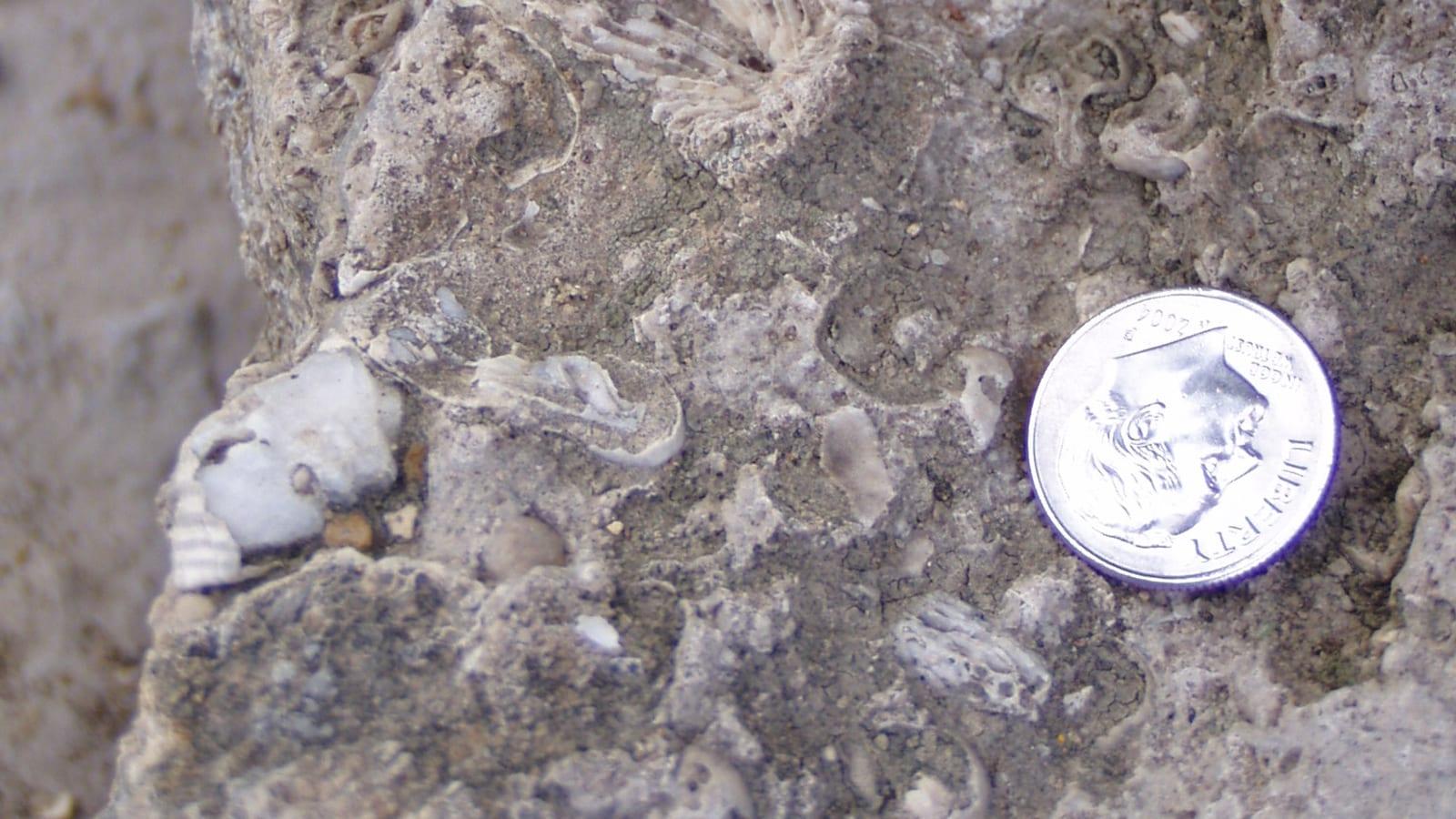
Corals dominate and are the reason for the site's reputation, with over 250 species recorded. Both colonial and solitary forms occur, and on a well-exposed surface you can see rounded colonial heads, branching forms, and horn corals sitting alongside one another as they lived. Recognising two or three coral types and then picking them out across a wide bedding plane is the most rewarding way to spend time here.
Brachiopods are abundant in and between the coral masses. Crinoid stems and columnals are scattered through the rock, bryozoans appear as lacy encrusting sheets, and trilobites occur, though as usual they are the scarce find.
The park runs a Fossil Challenge, a self-guided identification programme, and it is a genuinely good way to structure a visit, particularly with children, because it converts a flat grey expanse of rock into a series of things to hunt for.
Low-angle light in the early morning or late afternoon makes the fossils stand out far better than midday sun does, and wetting a surface with river water brings out detail that is invisible when dry. Both are worth doing.
 Photo: James St. John, CC BY 2.0, via Wikimedia Commons
_1_(32652293793).jpg)
Geologic History
The Jeffersonville Limestone was deposited in the Middle Devonian, roughly 390 to 386 million years ago, when this part of North America lay in warm, shallow tropical water south of the equator. Reef-building corals flourished on that sea floor, and the limestone here records their communities in place rather than as debris swept together.
What makes the exposure exceptional is a coincidence of geology and geography. The beds are close to horizontal, so erosion has stripped a wide flat surface rather than cutting a narrow section, and that surface happens to lie in a riverbed where the Ohio scours it clean of soil and vegetation every year. The result is acres of bedding plane exposed as a single continuous view of the ancient sea floor.
The falls themselves, a set of rapids where the river dropped across this hard limestone, shaped the region's human history. They were the only major obstruction on the Ohio, so boats had to portage, and Louisville and Clarksville grew up at the point where everyone had to stop. The rapids are now controlled by a dam, which is why the beds' exposure depends on managed water levels as well as rainfall.
 Photo: James St. John, CC BY 2.0, via Wikimedia Commons
_2_(32623238724).jpg)
Collecting Rules and Regulations
Collecting is prohibited. All of it. No fossils, no rock, no chips. The fossil beds are protected as a National Wildlife Conservation Area, and removing material is an offence.
The reasoning is worth understanding rather than just obeying. The value of this site is that the reef is intact and in position. A hammered coral head is not just one fossil lost, it is a hole in a continuous record that thousands of visitors and researchers come to read. A site like this survives only where nobody makes an exception for themselves.
Do not hammer, chisel, prise, or mark the rock. Take photographs instead, which the park actively encourages.
Stay off closed areas and follow signage. Parts of the site are managed for wildlife, and the conservation area supports substantial bird populations, particularly waterfowl and shorebirds using the exposed beds.
If you want to collect Devonian material, the nearby Ohio and Kentucky sites covered elsewhere on this site permit it. Come here to look.
Safety
The fossil beds are a riverbed, and they behave like one. The limestone is smooth, and where it is wet or algae-covered it is genuinely slippery, which is the most common way people get hurt here. Wear boots or shoes with real grip, walk deliberately rather than striding, and treat any greenish or damp surface as skating ice.
The surface is also uneven, cut by potholes, channels, and crevices scoured by the river, some of them deep and some holding standing water. Watch where you put your feet rather than watching the fossils while walking, and keep children in sight, because the pools and channels are easy to step into.
River levels can change while you are out on the beds, since flow is managed at the dam upstream as well as driven by rainfall. Do not walk far out without knowing how you will get back, and leave promptly if the water starts rising.
The beds are wide open with no shade at all, and the pale limestone reflects heat and light. Carry water and use sun protection, particularly in the late summer months when the beds are most likely to be exposed. Check the weather, since there is nowhere to shelter out on the rock if a storm arrives.
Sources
https://www.in.gov/dnr/state-parks/parks-lakes/falls-of-the-ohio-state-park/ https://fallsoftheohio.org/ https://www.in.gov/dnr/state-parks/files/sp-Fossil-Challenge.pdf https://igws.indiana.edu/
Frequently asked questions
- Can you collect fossils at the Falls of the Ohio?
- No. Collecting is prohibited. The fossil beds are protected as a National Wildlife Conservation Area and the fossils are preserved in place. Park staff encourage looking, photographing, and identifying instead.
- When are the fossil beds exposed?
- Late summer and autumn, when the Ohio River runs low. In spring and after heavy rain the beds are underwater and there is nothing to see, so check river levels before travelling.
- What fossils are at the Falls of the Ohio?
- More than 250 coral species, plus brachiopods, crinoids, bryozoans, and trilobites, preserved in a Middle Devonian reef roughly 390 million years old.
Nearby sites
 Big Bone Lick State Historic Site Fossil Hunting GuideAmerican mastodon (Mammut americanum), Columbian mammoth (Mammuthus columbi)
 St. Leon Roadcut Fossil Hunting GuideBrachiopods, Bryozoans
 East Fork State Park Fossil Hunting GuideTrilobites, Brachiopods
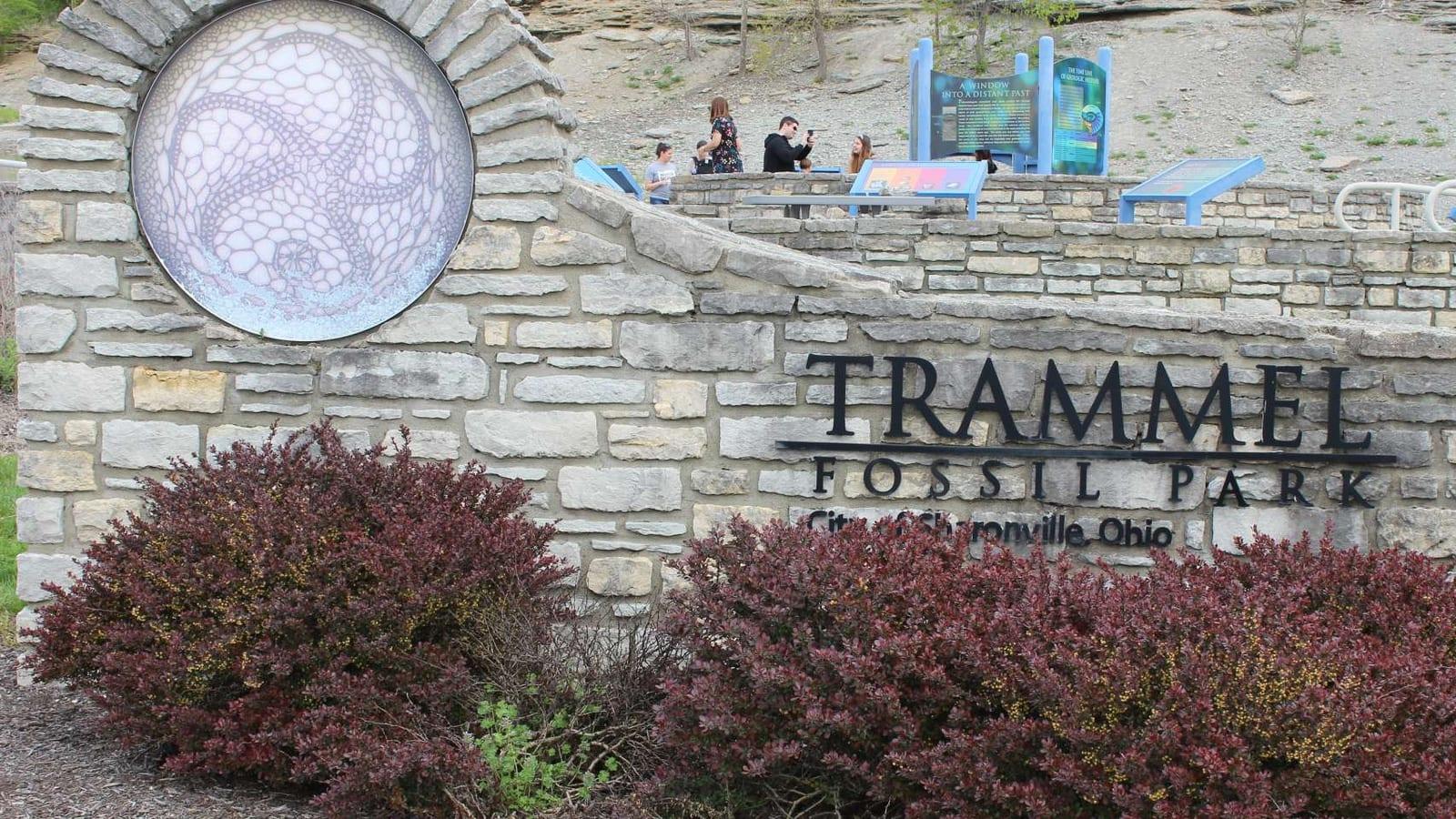 Trammel Fossil Park Fossil Hunting GuideTrilobites, Brachiopods