Haqel Fish Fossil Quarries Fossil Hunting Guide
Image: George, H., Bazzi, M., El Hossny, T., Ashraf, N., Abi Saad, P. and Clements, T. (CC BY 4.0)
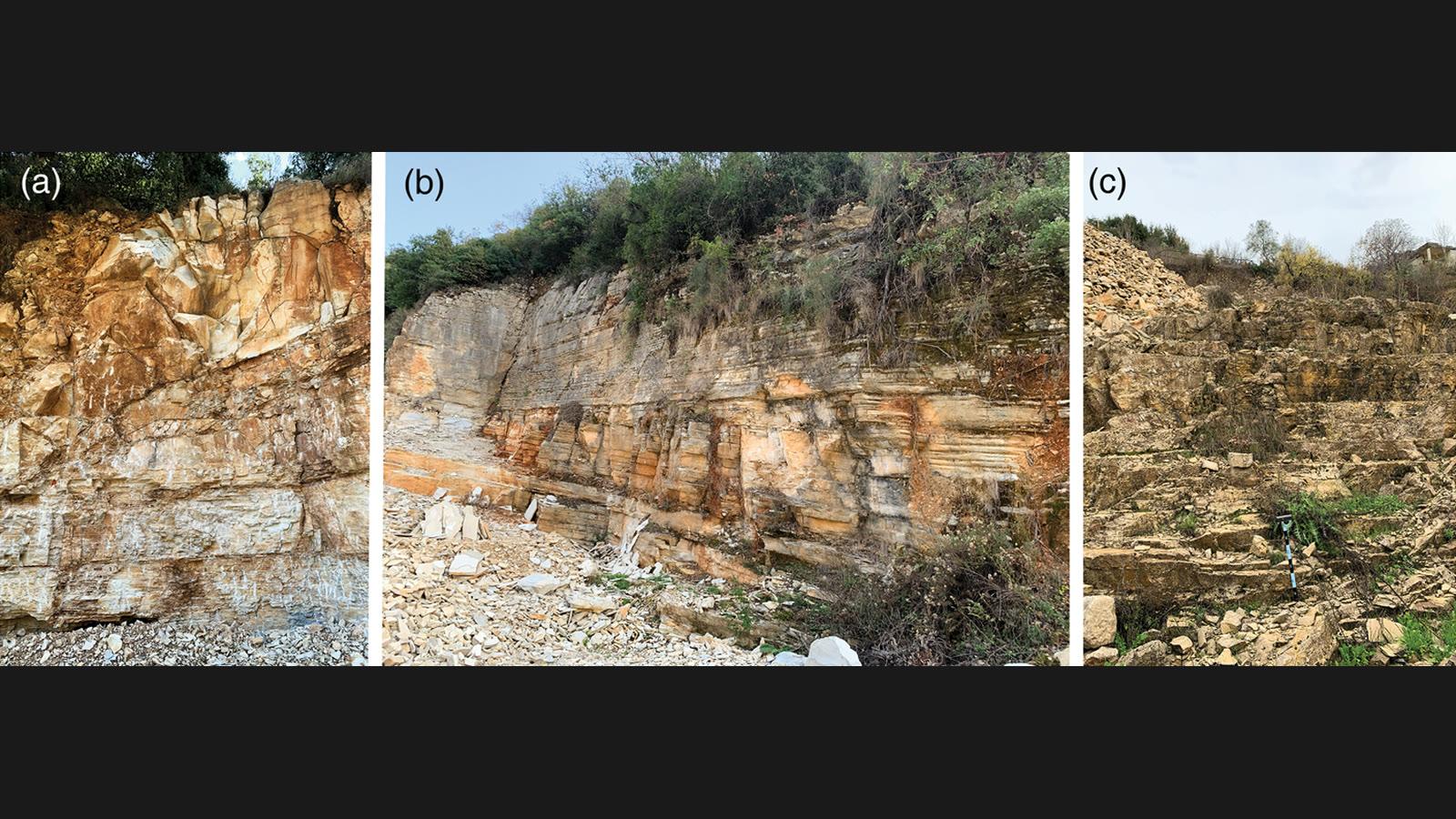
Cenomanian limestone quarries above the village of Haqel in Lebanon, in the Sannine Formation, where whole fish, shrimp and early octopods survive on single slabs. A village museum takes visitors up to the working face.
By Edward Chen · Published 12 October 2026
Introduction
Haqel is a mountain village in the Byblos District of Lebanon, and the limestone quarries above it produce whole, articulated Cretaceous fish. The rock belongs to the Sannine Formation. The fossil beds qualify as a Konservat-Lagerstaette, which means complete animals survive with soft parts, not scattered bones.
People have known about these fossils for centuries. Cornelis de Bruijn published an illustration of a Haqel fish in 1698, and Blainville made the first scientific study in 1818. A 2024 review in the Journal of the Geological Society treats Haqel alongside the three other Lebanese fish localities, Hjoula, Nammoura and Sahel Aalma.
Expo Hakel, a museum in the village, describes itself as the first natural history museum for marine fossils in Lebanon. Rizkallah Nohra founded it in 1991 inside a restored village house and filled it with material from his family's land.
The museum is also the way in. It runs quarry visits through the year, hands visitors the tools, and walks them up to the working face. You split limestone yourself and see what comes out.
 Figure: George, H., Bazzi, M., El Hossny, T., Ashraf, N., Abi Saad, P. and Clements, T., CC BY 4.0, via Wikimedia Commons. Panel (a) is the Haqel outcrop.

Location and Directions
Haqel sits at 34.1708°N, 35.7506°E, in the Byblos District of Lebanon. The village lies inland and uphill from the coast, and Byblos itself is the district town.
Expo Hakel opens seven days a week, 09:00 to 17:00. Book a quarry visit through the museum. The published numbers are +961 9 770012 and +961 3 708287 by phone, and +961 76 659371 on WhatsApp. School and group bookings need a phone call rather than a message.
The quarry lies above the village. A walk of roughly 15 minutes takes you from the museum to the face. Visits run all year, except in bad weather.
The museum publishes no admission price and no quarry visit price. Ask for both when you book.
A second family works at Haqel as well. The Abi Saad family keeps a public collection called Memory of Time at Byblos. The 2024 review names that collection as the home of several specimens it figures.
What Fossils You'll Find
Fish come first. A 2026 study in the Swiss Journal of Palaeontology calls the combined Lebanese fish fauna the most speciose Mesozoic assemblage on record.
Diplomystus birdi is one of the Haqel fish that collectors see most often, a deep-bodied clupeomorph. Prionolepis cataphractus is the Haqel species that de Bruijn illustrated in 1698. Specimens of the alepisauriform Eurypholis from Haqel sometimes keep their gut contents. Slabs from Haqel also carry death assemblages of the clupeomorph Armigatus, with many individuals on one surface.
Shrimp are the other staple. Carpopenaeus callirostris occurs at Haqel and Hjoula, and the Treatise Online decapod review calls it the most frequent shrimp in these beds. Other decapods from the Lebanese Cenomanian include the penaeid Hakelocaris vavassorii, named by Garassino in 1994.
 Photo: Kevmin, CC BY-SA 3.0, via Wikimedia Commons

Cephalopods are the reason specialists come. Fuchs, Bracchi and Weis described three octopods in 2009 from upper Cenomanian limestone at Haqel and Hjoula: Styletoctopus annae, Keuppia levante and Keuppia hyperbolaris. These rank among the earliest known octopods. Soft tissue survives in them, and octopus soft tissue almost never fossilizes.
Coelacanths occur in the Lebanese Cenomanian as well. Macropomoides orientalis is the only named Lebanese coelacanth genus. A 2023 master thesis at the University of Geneva reassessed the genus from new Hjoula material. It recognized two new species.
 Photo: Oilshale, CC0, via Wikimedia Commons

Geologic History
The fossil beds lie in the Sannine Formation. Walley applied that formation name in 1997 to the unit Dubertret had mapped as C4.
Every source places Haqel in the Cenomanian, the first stage of the Late Cretaceous. The International Commission on Stratigraphy dates that stage to 100.5 to 93.9 million years ago. The substage remains unsettled. Microfossils from Haqel point to the middle Cenomanian and ammonites point to the late Cenomanian. The 2026 Swiss Journal of Palaeontology study states plainly that the age is unresolved.
That study reads Haqel as a low-energy, muddy setting, and tentatively as a submerged sinkhole. Plankton and fish evidence put the water depth at no more than about 100 meters. Oxygen at the sea floor stayed low, so scavengers and bacteria did not destroy the carcasses before burial. That is the preservation mechanism behind every complete fish in the village museum.
Haqel and Hjoula share about half their fish species. Nammoura shares roughly a fifth with the other two, which fits its separate setting closer to shore. Sahel Aalma is the odd one out: Santonian rather than Cenomanian, a deepwater slope deposit, and according to the 2024 review no longer accessible.
 Artwork: Joschua Knueppe, in George, H., Bazzi, M., El Hossny, T., Ashraf, N., Abi Saad, P. and Clements, T., CC BY 4.0, via Wikimedia Commons

Collecting Rules and Regulations
The quarries are private ground. Access runs through the families who work them, and the museum is the booking route.
Expo Hakel provides the tools and takes visitors to the face. The museum publishes no rule on what a visitor may keep. Ask that question when you book, and get the answer before you travel. A Lebanese school published an account of a 2015 trip in which pupils took finds home. One school report is not a current policy statement from the operator.
The museum also sells fossils. Purchase is a separate route to a specimen, and the seller can tell you what the slab is.
Export out of Lebanon is an open question, and this guide will not pretend otherwise. Lebanese antiquities law starts from Order 166-LR of 1933, which defines antiquities as products of human activity. On that definition a fish fossil is not an antiquity. Lebanon banned antiquity exports in 1988 and froze sale and export licences in 1990. Law 37 of 2008 covers non-archaeological cultural property, and the published sources do not state whether natural specimens fall inside it. United States import restrictions on Lebanese cultural material run until 23 January 2029. They list no fossils at all, apart from fossilized human and hominin remains.
So treat the rule as unsettled. Ask Lebanese customs or the Directorate General of Antiquities before you carry material out of the country. Keep the receipt the museum gives you, and declare what you carry.
Safety
Wear eye protection when you split limestone. Chips fly from a hammer and chisel, and an eye injury ends the trip.
Wear gloves. A fresh limestone edge cuts skin.
Wear boots with ankle support. The approach climbs for about 15 minutes over mountain ground.
Stay clear of the foot of any quarry face. Worked faces shed loose blocks without warning.
Do not go to the quarry in bad weather. The museum cancels visits when the weather turns, and mountain rain and winter snow make the ground dangerous.
Carry water and sun protection. Shade at the face is limited.
Check your own government's current travel advice for Lebanon before you book. Conditions in the country change, and a museum booking does not cover that.
Sources
https://doi.org/10.1144/jgs2023-210 https://doi.org/10.3897/sjp.145.181847 https://doi.org/10.1111/j.1475-4983.2008.00828.x https://palass.org/publications/palaeontology-journal/archive/52/1/article_pp65-81 https://expo-hakel.com/ https://archive-ouverte.unige.ch/unige:171278 https://journals.ku.edu/treatiseonline/article/download/24073/21504/86663 https://cretaceous.stratigraphy.org https://www.govinfo.gov/content/pkg/FR-2025-05-14/html/2025-08615.htm https://commons.wikimedia.org/wiki/File:Sannine_Formation_outcrops.png
Nearby sites
 Ammonite Wall, Makhtesh Ramon Fossil Hunting GuideAmmonites
 Bahariya Oasis Fossil Safari Fossil Hunting GuideSpinosaurus aegyptiacus, Carcharodontosaurus saharicus
 Hațeg Country Dinosaurs Geopark Fossil Hunting GuideDinosaurs, Dinosaur eggs
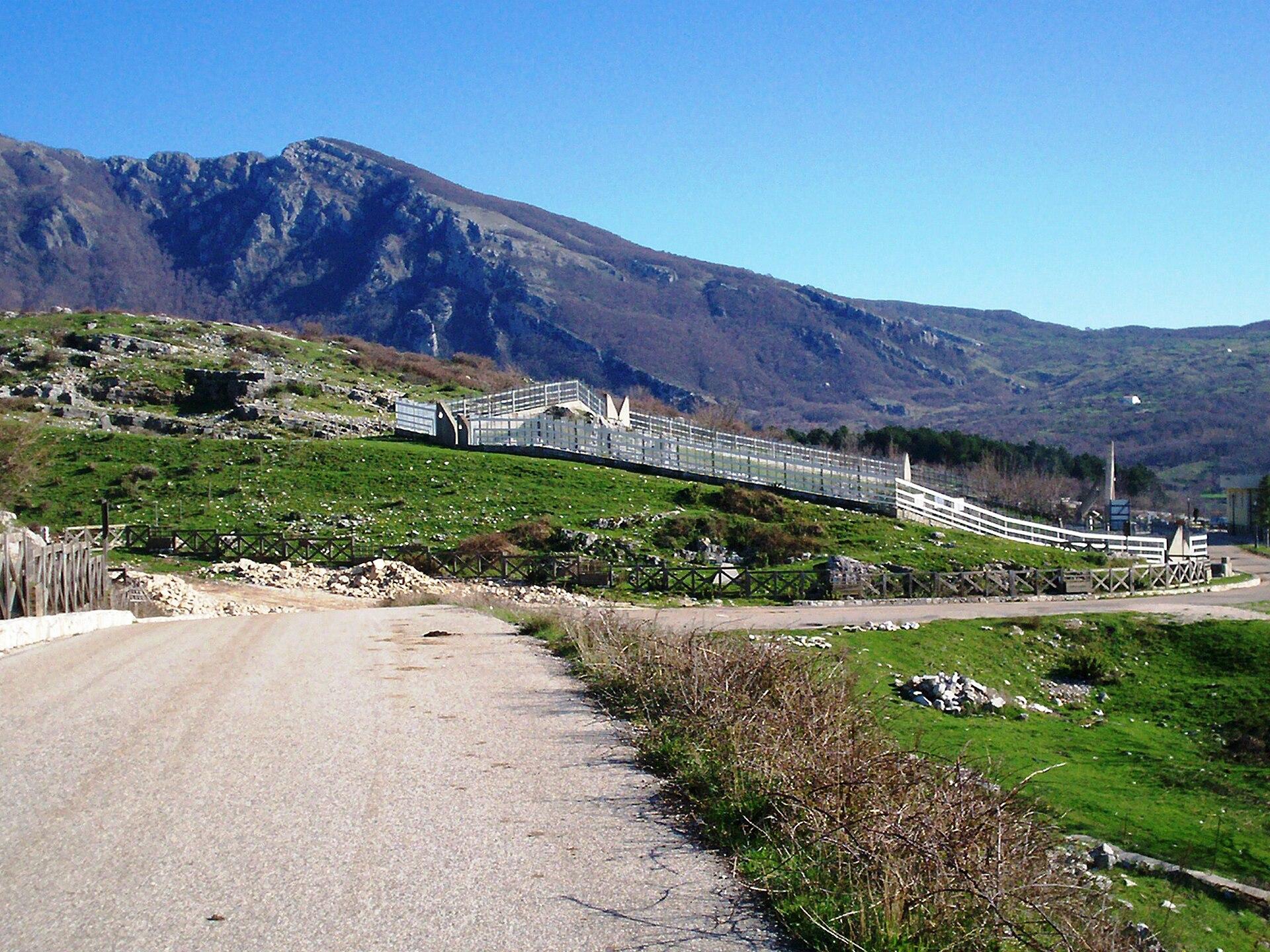 Pietraroja Plattenkalk Geosite Fossil Hunting GuideScipionyx samniticus (theropod), Notagogus parvus (fish)