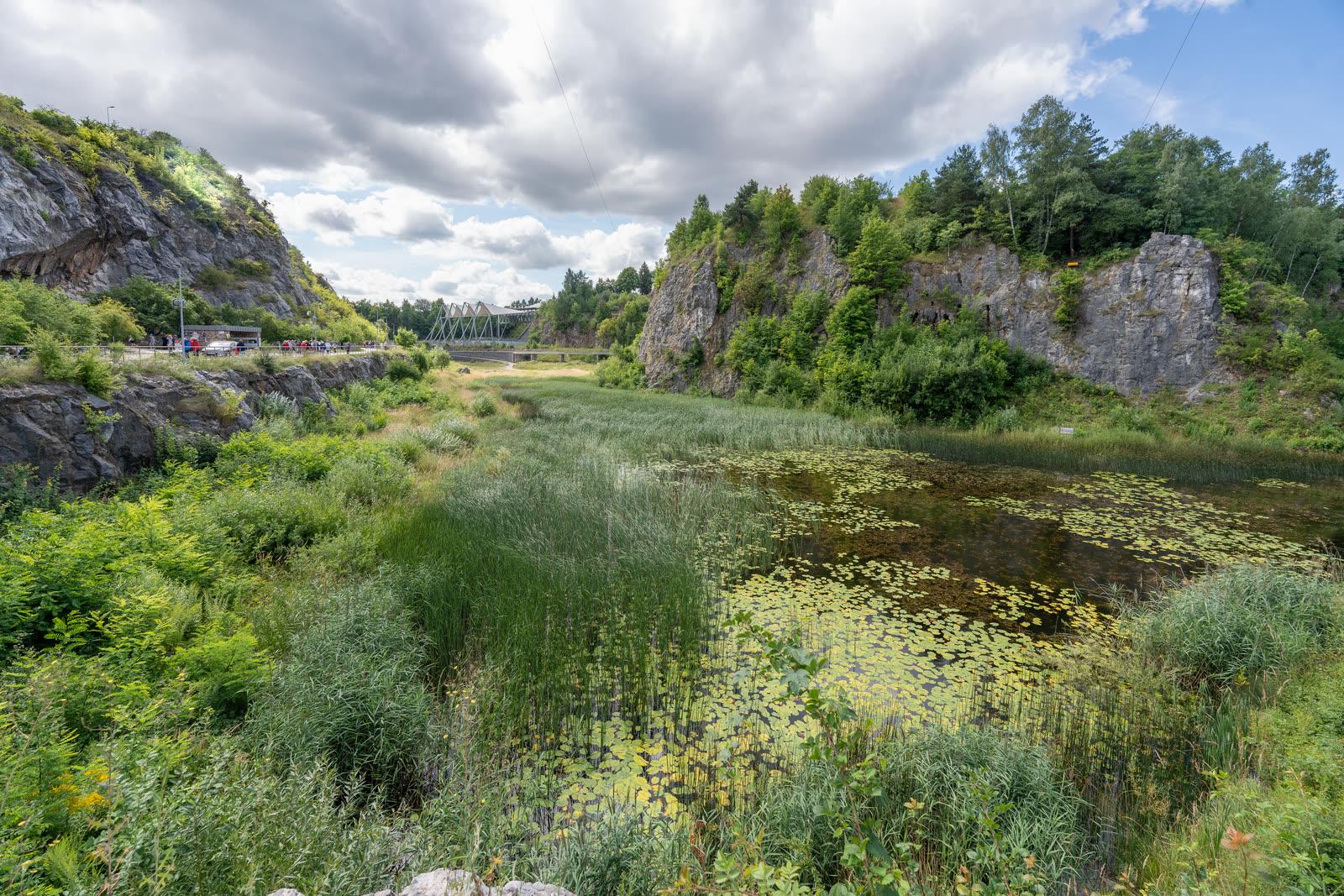
Kadzielnia Nature Reserve Fossil Hunting Guide
Image: Krzysztof Popławski (CC BY 4.0)
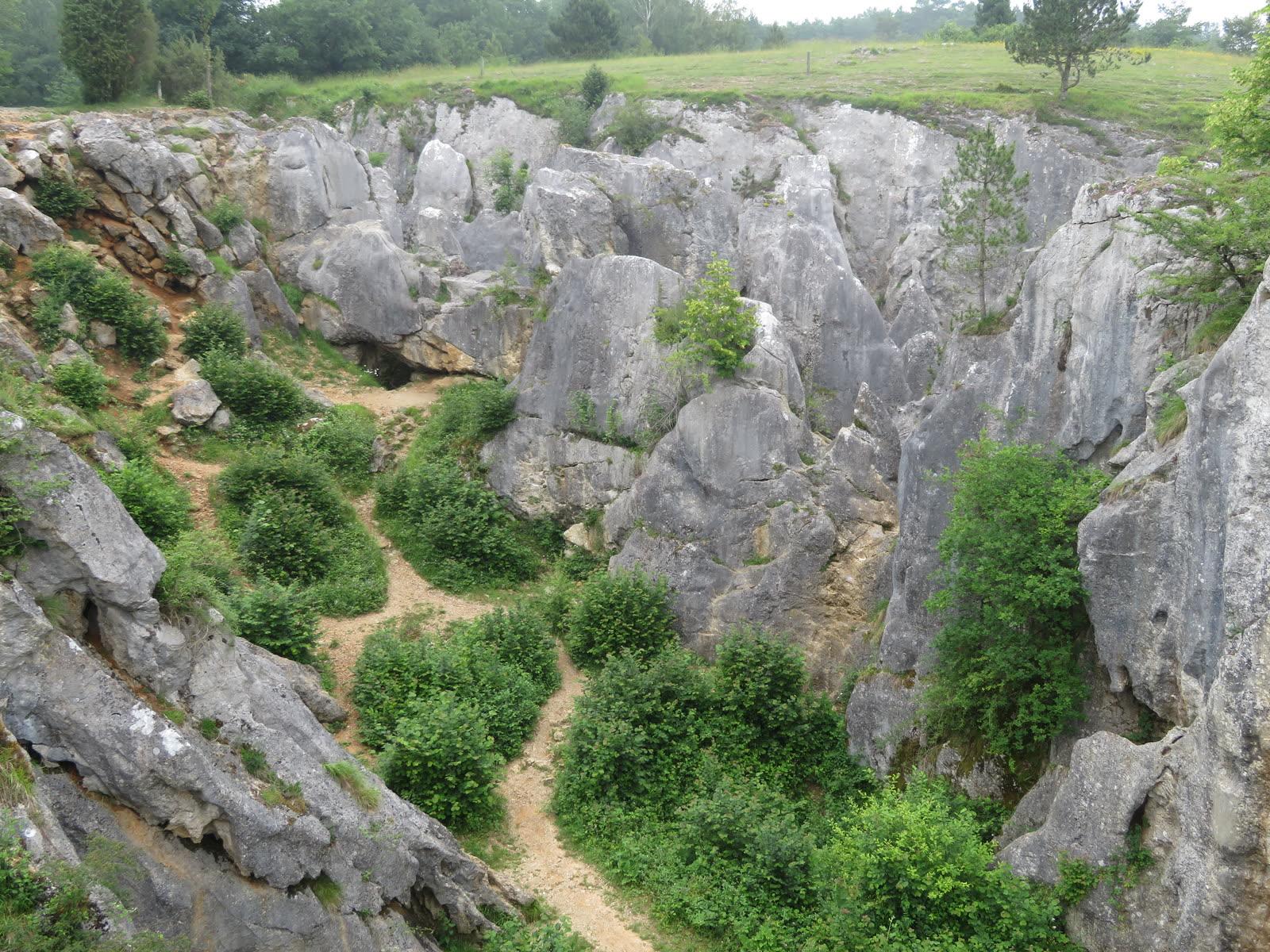
A disused limestone quarry in the middle of Kielce with a strict geological reserve at its center. The Frasnian reef limestone holds corals and stromatoporoids, and a ticketed underground route enters the caves.
By Edward Chen · Published 1 October 2026
Introduction
Kadzielnia is a disused limestone quarry in the middle of Kielce. A strict geological reserve of 0.6 hectares protects its central rock, the Skałka Geologów or Geologists' Rock. The rock is Late Devonian reef limestone from the Frasnian age.
Poland made it a reserve on 26 January 1962. The order protects limestone with calcite veins, rare plants and valuable paleontological finds. The hill is 295 meters high. Quarrying began in the 18th century, and the first lime kiln dates from about 1770. The last quarry work stopped in 1962.
Kadzielnia sits inside the Holy Cross Mountains UNESCO Global Geopark, which gained that status in April 2021. Geonatura Kielce, a city unit, manages it. The same unit runs the Geoeducation Center at Wietrznia.
Access has two parts, and this page lists it as fee because of the second part. The park paths and viewing platforms around the reserve are public. The operator's pages that this guide read list no admission charge for them.
The fossil-bearing rock inside the strict reserve is another matter. The reserve limits movement to designated trails. The ticketed underground route is the documented way into the rock itself.
Location and Directions
The reserve lies between Krakowska, Gagarina and Legionów streets and Pakosz. Its address is Krakowska Street in Kielce. The center of the reserve is at about 50.8627°N, 20.6160°E.
The underground route enters the eastern part of the quarry, at about 50.8623°N, 20.6184°E. The rest of the quarry is a city park. Its amphitheater dates from 1971 and seats about 5,500 people.
Three bus stops serve the site. Krakowska Kadzielnia has lines 4, 19, 27 and Z. Osiedle Chęcińskie has line 36. Legionów Kadzielnia has line 54 and line Z. The walk from the Sienkiewicza promenade is about one kilometer.
By car, park along Legionów Avenue. A second car park opens off Krakowska Street, and the football stadium car park is close by.
Viewing platforms stand on the eastern rim. The operator says you can admire the reserve from the paths and platforms.
Geonatura Kielce runs the underground route. It runs through three linked caves: Jaskinia Odkrywców, Prochownia and Szczelina na Kadzielni. The operator gives the route as about 160 meters long and open to visitors since 6 November 2012. Press reports give 140 and 145 meters.
A tour takes 30 minutes for groups of 2 to 12 people. The guide gives you a helmet, and the cave stays at about 10 °C. Book by telephone on 695 213 381 or by email.
Prices and hours changed between press reports from 2016 and 2020. Geonatura Kielce also invited bids on 19 November 2025 to lease the route to an operator. Confirm the price, hours and booking terms with Geonatura Kielce before you travel.
What Fossils You'll Find
 Photo: Robert Niedźwiedzki, CC BY 4.0, via Wikimedia Commons
The Kadzielnia Limestone is a reef rock, so the fossils are reef builders. Racki (1993) describes mounds bound by stromatoporoids, alveolitid corals and microbes. A trail guide says fossils show in the limestone along the cave route.
Nowiński (1993) names the tabulate corals Alveolites maillieuxi and Alveolites tenuissimus from the Frasnian reef complex of the mountains. Rugose corals of the Macgeea-Thamnophyllum group come from the Kadzielnia Member (Wrzołek 1993). Coral beds of Thamnopora and Thamnophyllum lay beside the mounds, and Hexagonaria occurs in places.
Other animals leave fewer traces. Racki lists nautiloids of the pseudorthoceratid group, the bryozoan Penniretepora and echinoid plates of Lepidocentrotus and Aptilechinus. A trail guide for the cave route also reports brachiopods, crinoids, bivalves, trilobites and gastropods in the coral and stromatoporoid limestone.
Armored fish also occur. Kulczycka (1933) recorded the placoderms Ptyctodus and Rhynchodus from the Frasnian of the Wietrznia and Kadzielnia quarries. Visitors cannot collect any of this material.
The cave sediments hold a younger story. The operator describes Kadzielnia as a classic site of fossil karst from the Late Permian, the Early Triassic and the Cenozoic.
Geologic History
The Kadzielnia Limestone Member belongs to the Kowala Formation, which is 330 to more than 800 meters thick. The member is early Frasnian. The Frasnian lasted from about 382 to 372 million years ago.
The rock formed as mud mounds on a mid-slope. The mounds grew quickly and hardened early, in water 10 to 20 meters deep. Stromatoporoids, alveolitid corals and microbes bound the mud.
Coral beds lay beside the mounds. Above the mound limestone, detrital beds grade up into the Manticoceras Limestone, a bed full of cephalopods.
The quarry cut through this reef. Work stopped in 1962, and the cut faces and the central rock remained. Caves and fissures opened in the limestone over a long span that starts in the Late Permian.
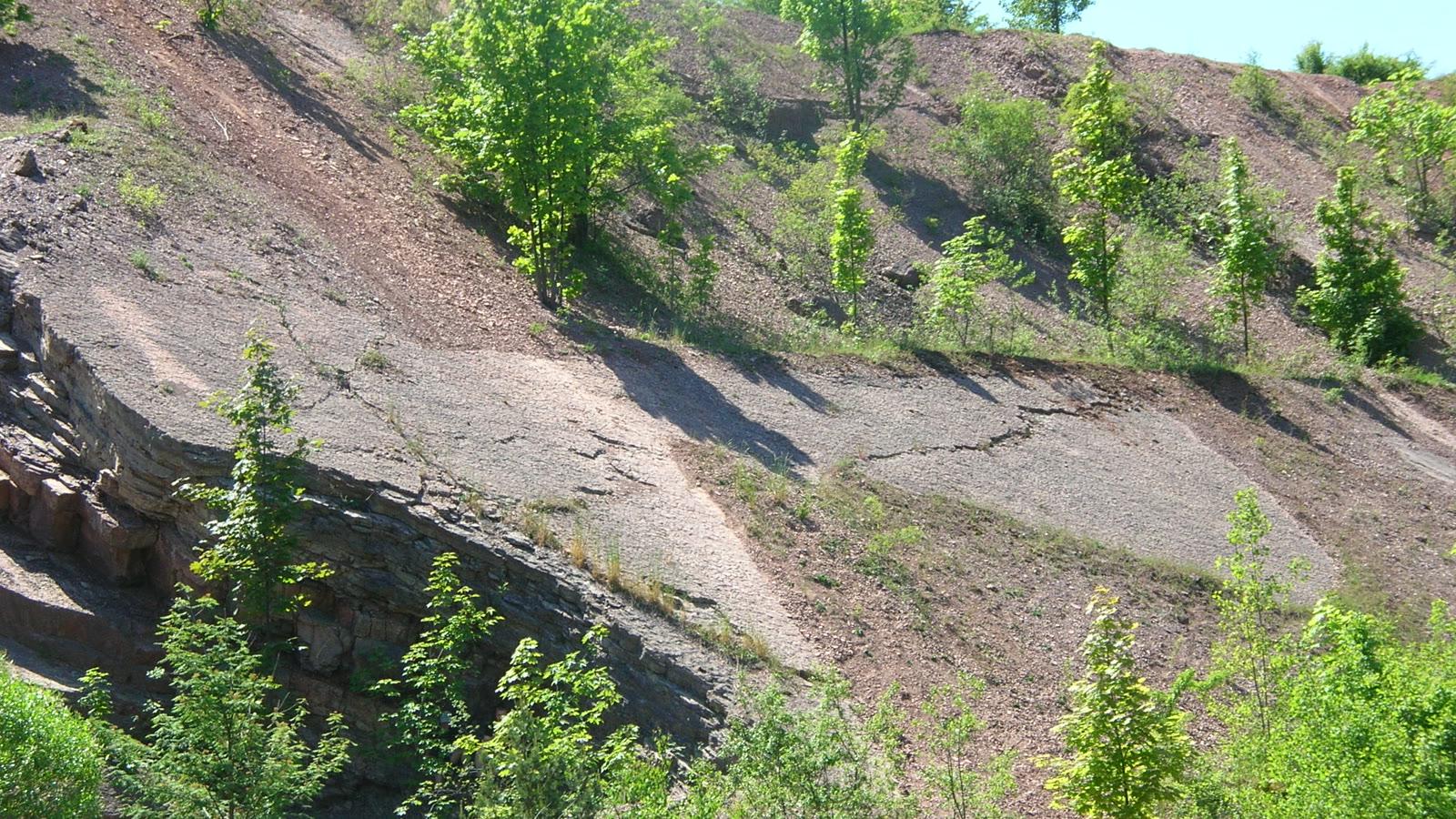
The Holy Cross Mountains also hold the Zachełmie tetrapod tracks, about 12 kilometers north of Kielce. That site is Middle Devonian and a different story from this reef.
Collecting Rules and Regulations
Do not collect at Kadzielnia. The Nature Protection Act bans extraction of rocks and fossils in nature reserves. This includes fossil remains of plants and animals, minerals and amber.
The same law bars movement on foot, by bicycle, on skis or on horseback outside designated trails. Offences fall under article 127 of the Act.
The Skałka Geologów lies inside the strict reserve. Stay on the public paths and look from there. Take photographs and notes, not samples.
The underground tour does not change the rule. Touch nothing and take nothing from the cave walls.
Safety
The reserve has quarry slopes about 30 meters high. Keep to the paths and keep back from the quarry edge. Do not climb the faces.
On the underground tour, wear the helmet the guide gives you. The cave stays at about 10 °C, so dress warmly.
Follow the guide's instructions at all times. Groups stay together and enter only on a booked tour.
Sources
https://geonatura-kielce.pl/rezerwat/ https://geonatura-kielce.pl/park/ https://geonatura-kielce.pl/podziemna-trasa-turystyczna/ https://swietokrzyskie.szlaki.pttk.pl/en/192-swietokrzyskie-underground-tourist-route-in-kadzielnia-nature-reserve-kadzielnia-cave https://swietokrzyskie.travel/en/informator_turystyczny/natura/kadzielnia_reserve https://app.pan.pl/archive/published/app37/app37-087.pdf https://app.pan.pl/archive/published/app37/app37-217.pdf https://www.gov.pl/web/rdos-rzeszow/zakazy-obowiazujace-w-rezerwatach-przyrody2 https://radiokielce.pl/423363/niezwykla-podroz-w-glab-ziemi-jaskinie-na-kadzielni-znow-sa-108198