Khorat Fossil Museum and Petrified Wood Fossil Hunting Guide
Image: Wickanet (CC BY 3.0)
A ticketed museum campus in Nakhon Ratchasima holding petrified wood, ancient elephants and dinosaurs from a geopark that spans 16 million years to 10,000 years. Northeastern Thailand's richest Cenozoic fossil record.
By Edward Chen · Published 12 September 2026
Introduction
Khorat Geopark calls itself Paleontopolis, the city of ancient life, and the label does real work. Most fossil destinations cover one interval. This one runs from about 16 million years ago to roughly 10,000 years ago, which takes in the whole later Cenozoic.
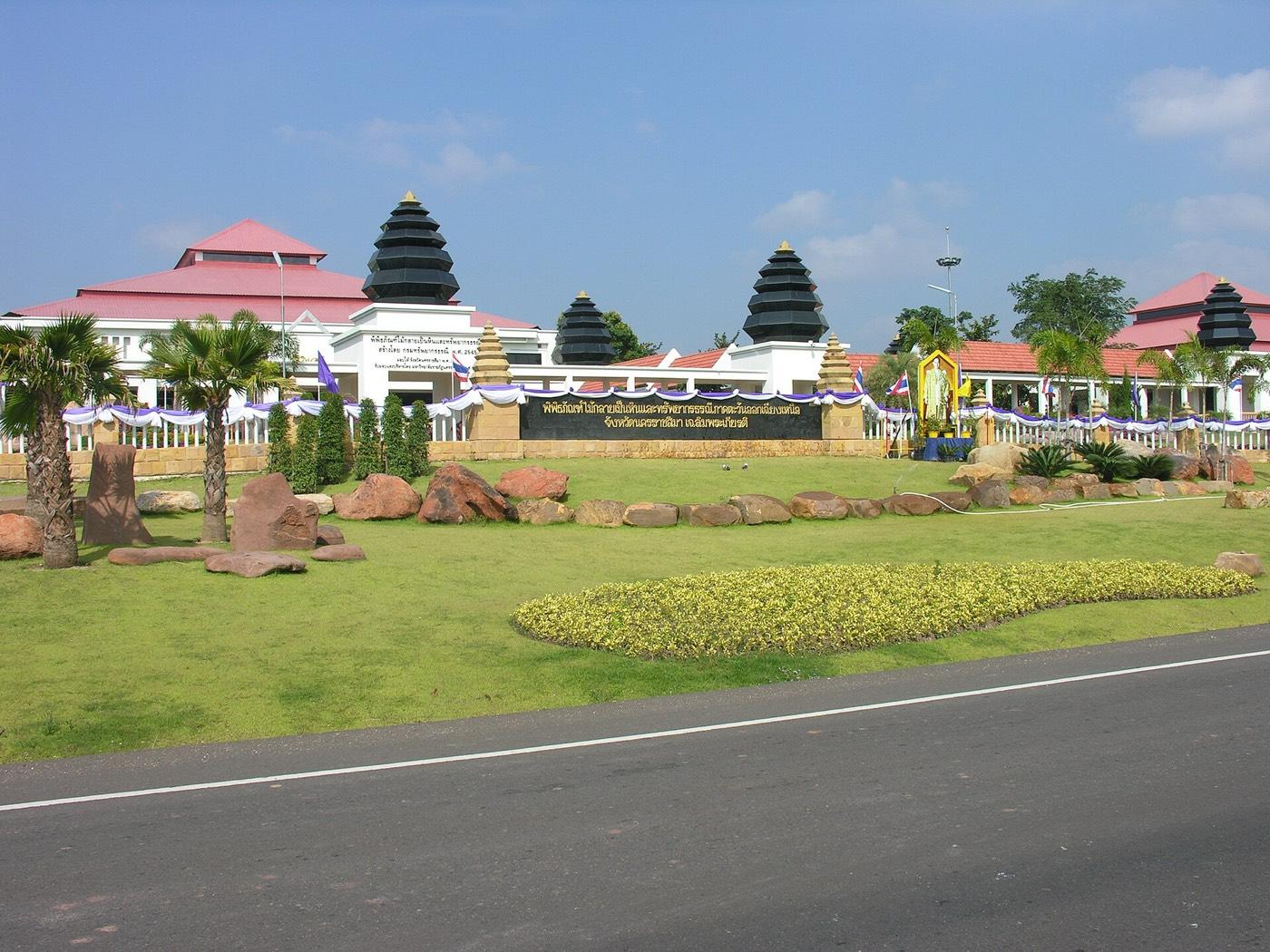
That span is why the museums here are plural. The campus in Mueang district houses the Petrified Wood Museum, the Ancient Elephant Museum and a Dinosaur Museum under one institution, the Northeastern Research Institute of Petrified Wood and Mineral Resources.
The elephant record is the strongest scientific claim. Nakhon Ratchasima has produced a long sequence of proboscidean fossils, covering multiple genera across millions of years. It is one of the better places in the world to see how that group changed through time.
UNESCO designated Khorat a Global Geopark in 2023, making it one of the more recent additions to the network.
Location and Directions
The museum campus is in Mueang district, Nakhon Ratchasima, in north-east Thailand.
GPS: 14.8585°N, 102.0271°E.
Nakhon Ratchasima, often called Korat, is the gateway city to the Isan region, about 250 kilometres north-east of Bangkok, with good rail and road links.
Admission is charged. Thai provincial museums generally close one day a week, so confirm before you travel.
The wider geopark takes in cuesta landforms, caves and river terraces across several districts. So the museums are the interpretive centre for a much larger area.
What Fossils You'll Find
Nothing is collectable. The museums hold prepared material, and the geopark's geosites are protected.
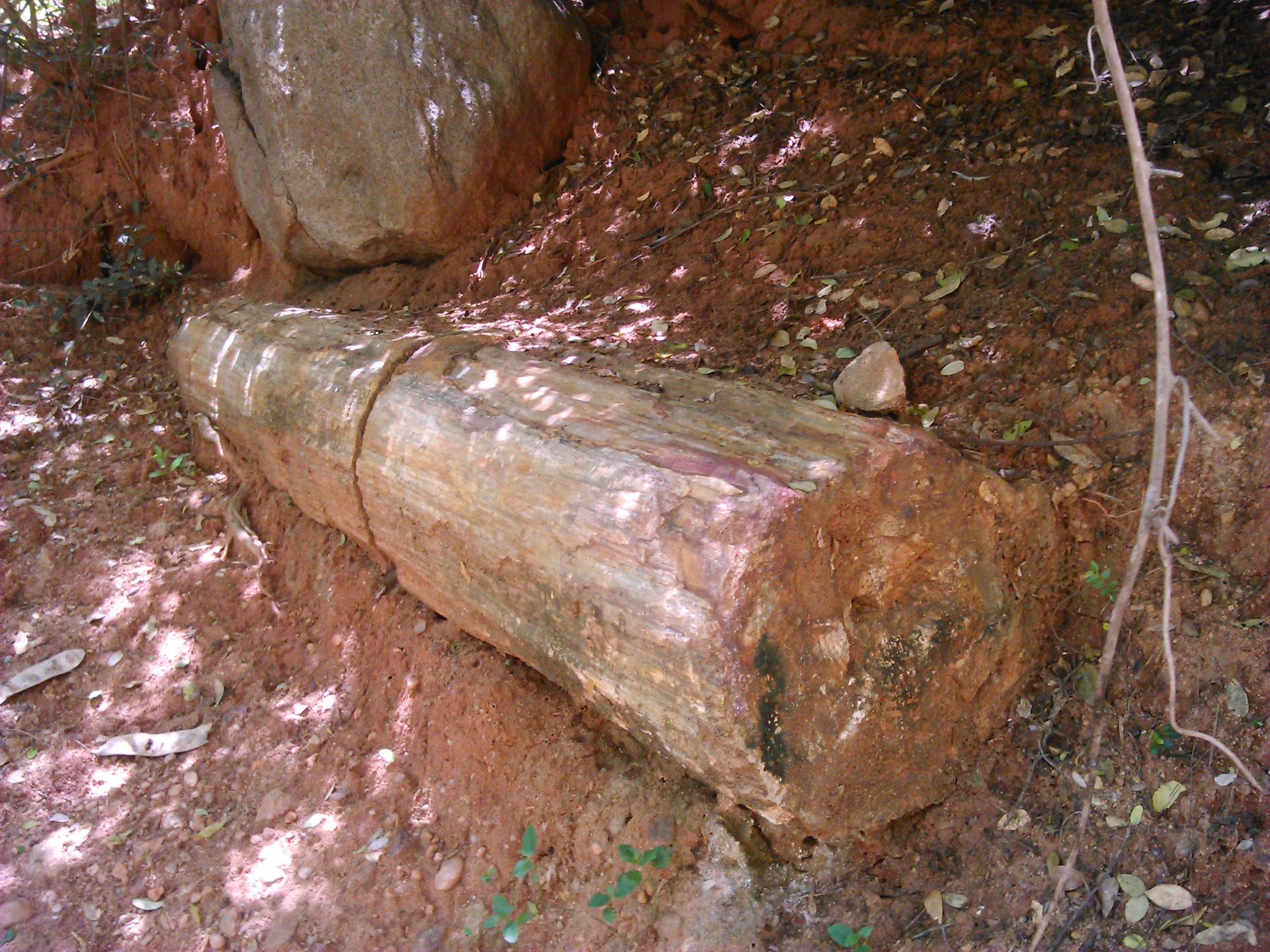
Petrified wood is the signature. Nakhon Ratchasima's silicified trunks are large and well preserved, and some are displayed in the open air on the museum grounds.
Proboscideans are the other main draw, with fossil elephants and their relatives spanning a long sequence. Other Cenozoic mammals occur alongside them.
Dinosaur material comes from the Khok Kruat Formation, the youngest unit of the Khorat Group. Phu Wiang and Phu Kum Khao further north work the older Sao Khua Formation of the same group.
The petrified wood here is unusual for its size. Complete silicified trunks of substantial length have been recovered from the terrace gravels. Several are displayed in the open air where their scale registers properly.
 Photo: Witaya nimngam, CC BY-SA 4.0, via Wikimedia Commons

Geologic History
Two very different chapters sit on top of one another here.
The Mesozoic Khorat Group forms the plateau bedrock, a thick continental red-bed sequence of Jurassic and Cretaceous river and floodplain deposits. That is the dinosaur-bearing part.
Above and cut into it are Cenozoic terrace and river deposits, far younger, which hold the petrified wood and the mammal record. These accumulated as rivers shifted across the plateau through the Neogene and Quaternary.
The cuesta landscape that defines the geopark is an erosional result. Resistant sandstone forms escarpments while softer units strip back, and the long asymmetric ridges the area is known for are what remain.
Korat is also the gateway to Khao Yai National Park, Thailand's oldest, and to the Khmer temple complex at Phimai. Visitors rarely come for the fossils alone, and the museums fit easily into a wider itinerary through Isan.
Collecting Rules and Regulations
Collecting is prohibited. The geosites are protected within a UNESCO Global Geopark and Thai law protects fossils.
Petrified wood in particular has been heavily collected in the past, and the institute was established in part to conserve it.
Do not buy petrified wood in Thailand. It is frequently sold to tourists, the trade has depleted the resource, and export is restricted.
The operative law is the Fossil Protection Act B.E. 2551, of 2008, which the Department of Mineral Resources administers. Section 25 requires anyone who finds something that could reasonably be a fossil to notify the local competent officer within seven days. Section 28 makes trading in fossils an offence without a licence from the Director-General. Taking a fossil out of the Kingdom needs its own licence.
Korat is one of the few places where the two halves of Thai palaeontology meet in one institution. The Mesozoic dinosaur record that Phu Wiang and Phu Kum Khao represent, and the Cenozoic mammal and plant record that dominates the terraces here, are usually studied and displayed separately. Seeing them under one roof makes the scale of the gap between them obvious.
Safety
The museums are managed indoor facilities with outdoor grounds.
Nakhon Ratchasima is hot year-round and extremely hot from March to May.
The rainy season runs roughly May to October.
Outdoor geosites in the wider geopark involve rough ground and limited shade, so treat those as separate trips with their own preparation.
Allow half a day for the campus. Three museums under one institution is more than most visitors expect, and the elephant sequence in particular rewards time.
Khorat Geopark completed a Thai hat-trick when it was designated. Nakhon Ratchasima now holds three UNESCO designations at once. The Sakaerat Biosphere Reserve dates from 1976, the Dong Phayayen-Khao Yai forest complex was inscribed as World Heritage in 2005, and the geopark followed in 2023. Thailand describes the combination as a triple crown, and only a handful of places anywhere hold all three.
Silicified wood forms when groundwater carrying dissolved silica moves through buried timber and precipitates it inside and around the cell walls. The organic material goes and the structure stays, which is why a polished section still shows rings and vessels.
Sources
https://www.unesco.org/en/iggp/khorat-unesco-global-geopark http://www.khoratfossil.org/khoratfossil/index.php/en/about-us/origin-of-the-museum https://www.khoratgeopark.com/index.php/en/geological-site-en https://www.nationthailand.com/thailand/tourism/40028052
Nearby sites
 Phu Wiang Dinosaur Park Fossil Hunting GuideDinosaurs, Sauropods
 Phu Kum Khao and the Sirindhorn Museum Fossil Hunting GuideDinosaurs, Sauropods
 Tarutao Trilobite Site, Satun Geopark Fossil Hunting GuideTrilobites, Brachiopods
 National Fossil Wood Park at Tiruvakkarai Fossil Hunting GuidePetrified Wood, Plants