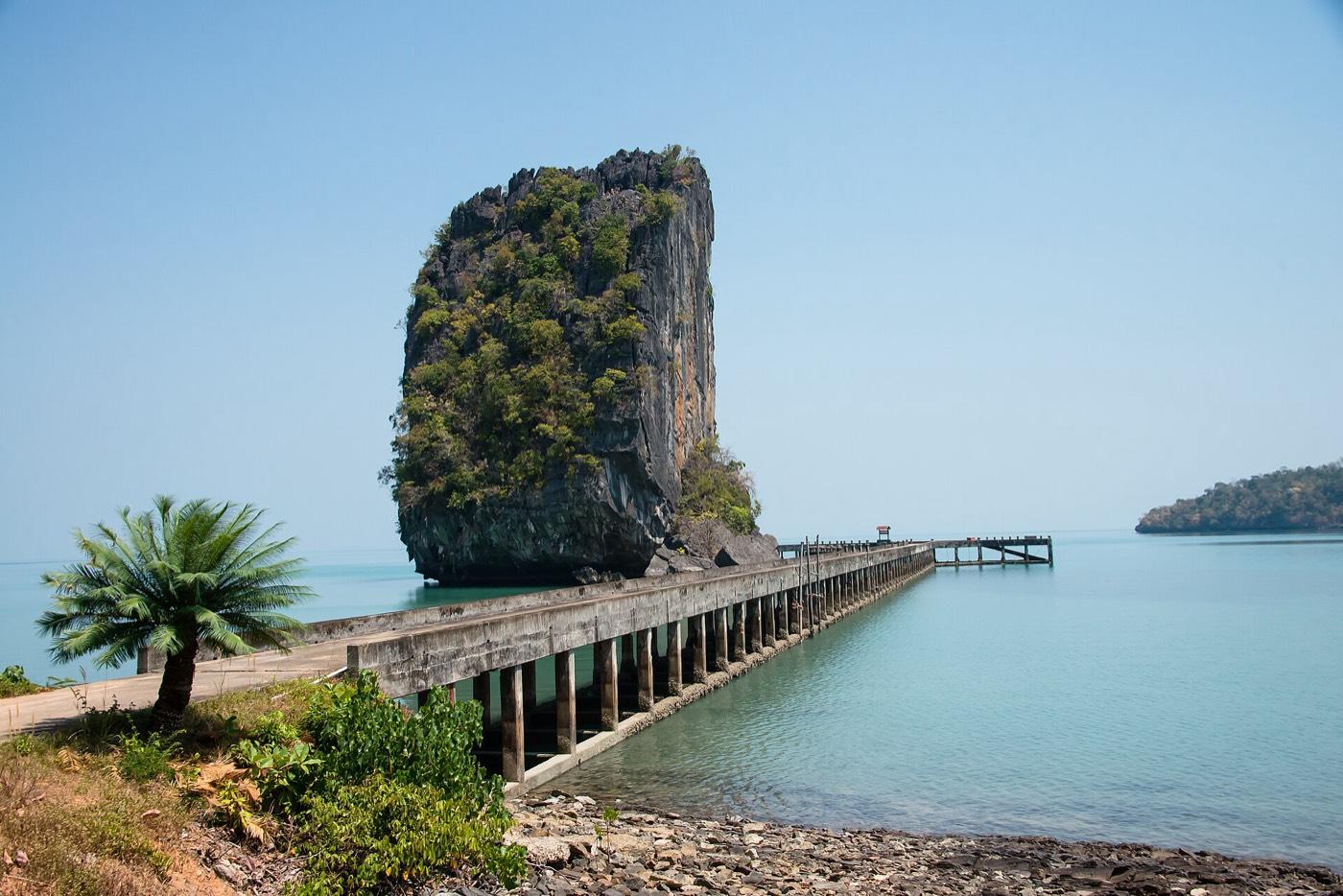
Tarutao Trilobite Site, Satun Geopark Fossil Hunting Guide
Image: Rushen, via Thai National Parks (CC BY-SA 2.0)
Cambrian trilobites on Tarutao Island in southern Thailand, the oldest recorded in the Thai-Malay peninsula. The island sits inside a national marine park within the Satun UNESCO Global Geopark, so the fossils are protected.
By Edward Chen · Published 12 September 2026
Introduction
Satun province calls itself the land of Palaeozoic fossils, and Tarutao Island is the oldest part of that claim. The Cambrian trilobites found in the Tarutao Group are the oldest recorded anywhere in the Thai-Malay peninsula.
That matters for a reason beyond age. The peninsula is built from continental fragments that rifted off Gondwana. The fossils in these rocks are the evidence for where those fragments sat and when. Trilobite faunas are used as regional correlation tools, so Tarutao's animals tie southern Thailand into a much larger palaeogeographic argument.
The island is a national marine park, and the geopark that contains it was designated by UNESCO in 2018. Between them, those two designations mean the fossils stay where they are.
Location and Directions
Tarutao Island is the largest in the Mu Ko Tarutao National Marine Park, off the coast of Satun province in southern Thailand near the Malaysian border.
GPS: 6.5953°N, 99.6447°E.
Access is by boat from Pak Bara pier in Satun province. The crossing takes roughly an hour and a half, and services are seasonal.
The park usually closes to visitors during the monsoon, from 1 June to 30 September, when sea conditions make the crossing unsafe. Confirm before you plan a trip.
National park admission is charged, with a higher rate for foreign visitors. Accommodation on the island is limited to park bungalows and camping, and it books out.
What Fossils You'll Find
Nothing is collectable. This is a national marine park inside a UNESCO Global Geopark.
Cambrian trilobites occur in the Tarutao Group sandstones and shales. They are the headline fossils and the reason the geosite exists.
Across the wider geopark the Palaeozoic sequence runs from Cambrian to Permian and yields brachiopods, stromatolites, conodonts, graptolites, tentaculites and nautiloids. The sequence is close to complete, which is unusual and is the basis of the geopark's scientific case.
Interpretation is available through the geopark, which publishes material on the individual geosites and runs guided visits.
Tarutao has a second history that visitors often meet first. The island held a penal colony from the 1930s, running from 1938 to 1948 with as many as 3,000 convicts at a time. Rations were cut during the Second World War and the prisoners turned to armed piracy in the strait. Thai and British forces raided the island in March 1946 with three warships and more than 300 troops. The prison ruins are interpreted on the island.
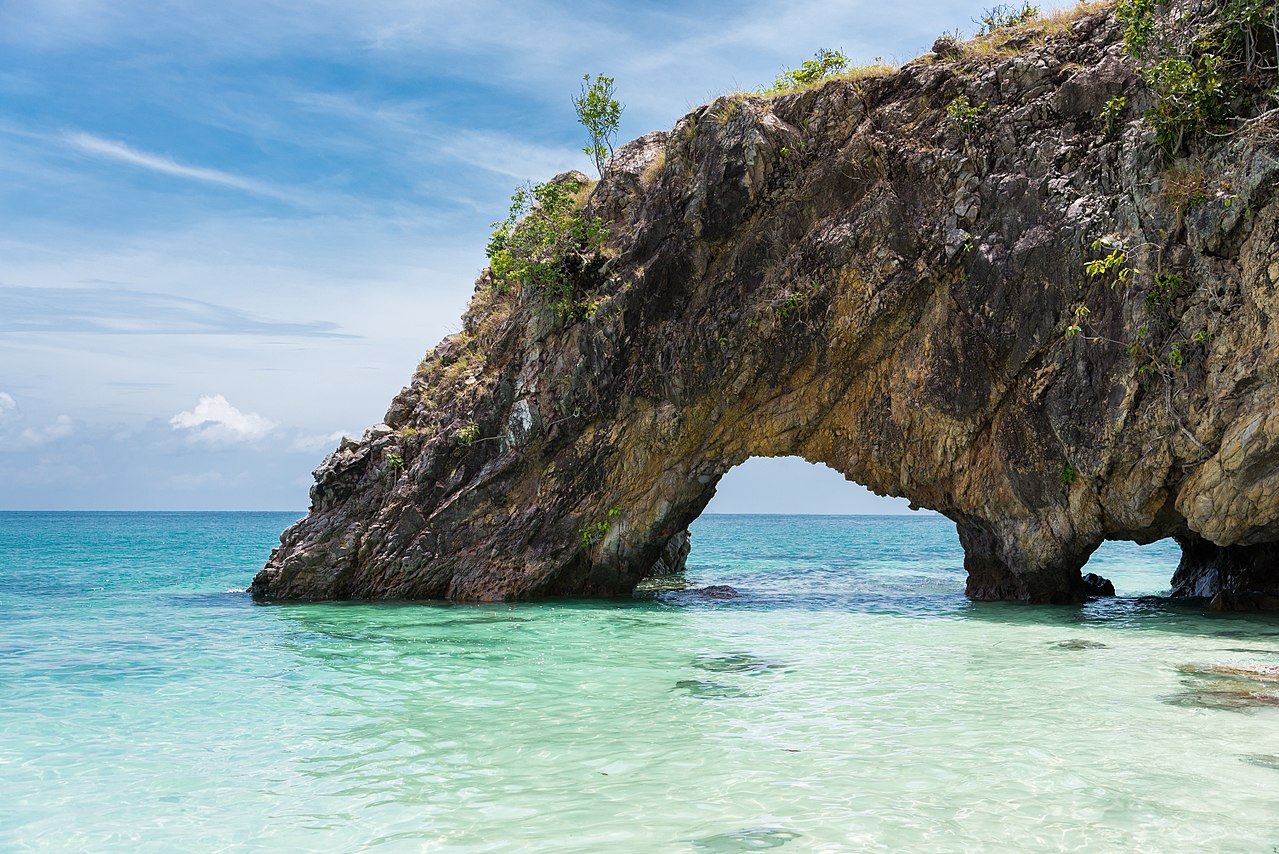 Photo: Yothind, CC BY-SA 4.0, via Wikimedia Commons

Geologic History
The Tarutao Group is a thick sequence of sandstone, siltstone and shale. It was laid down in shallow marine and near-shore settings in the late Cambrian and into the Ordovician, broadly 497 to 485 million years ago.
The setting was the northern margin of Gondwana. Sediment shed from the continent accumulated on a shallow shelf, and trilobites lived on and in that sediment.
Later tectonics carried these rocks north as the Sibumasu terrane rifted away and eventually collided with Asia. The limestone karst towers that dominate the modern Satun landscape belong to younger parts of the same long sequence.
Satun's geopark status rests on the completeness of its Palaeozoic sequence rather than on any single showpiece fossil. Cambrian through Permian rocks are present across the province, which lets researchers read a continuous record of the region's journey north from Gondwana.
 Photo: KOSIN SUKHUM, CC BY-SA 4.0, via Wikimedia Commons

Collecting Rules and Regulations
Collecting is prohibited. Removing anything from a Thai national park is an offence, and the geopark designation adds a further layer of protection.
Do not hammer rock and do not pick up loose fossil material, including on beaches.
Marine park staff enforce park rules actively.
The operative law is the Fossil Protection Act B.E. 2551, of 2008, which the Department of Mineral Resources administers. Section 25 requires anyone who finds something that could reasonably be a fossil to notify the local competent officer within seven days. Section 28 makes trading in fossils an offence without a licence from the Director-General. Taking a fossil out of the Kingdom needs its own licence.
Photograph what you find and report anything unusual to park or geopark staff.
Trilobites work as index fossils because they evolved fast and spread widely, so a given species occupies a narrow slice of time. That is what lets a handful of specimens from Tarutao anchor the age of a whole sequence. Why the fauna matters beyond the island itself.
Safety
The crossing is by open-sea boat and is weather dependent. Do not travel in poor conditions.
The island is tropical and largely undeveloped, with limited medical facilities. Carry what you need.
Sun exposure and heat are the main hazards, along with dehydration.
Snakes, monitor lizards and biting insects are present. Mosquito-borne disease is a risk, so use repellent.
Coastal rocks are sharp and slippery, and currents around the island can be strong.
Most visitors combine Tarutao with Ko Lipe further out in the same marine park, which has the beaches and the diving. The geology is on Tarutao.
Sibumasu is the terrane name to know. It covers the continental fragment that carries Langkawi, southern Thailand and parts of Myanmar. It rifted from Gondwana in the Palaeozoic before it docked with Asia. The Cambrian rocks at Tarutao were laid down before that journey began.
The UNESCO Executive Board endorsed Satun on 17 April 2018, making it Thailand's first geopark. Its case rested on a near-complete Palaeozoic sequence rather than on a single showpiece, which is an unusual basis for designation and a good one.
Sources
https://www.unesco.org/en/iggp/satun-unesco-global-geopark https://onlinelibrary.wiley.com/doi/full/10.1002/spp2.1516 http://www.satun-geopark.com/en/ https://www.tourismthailand.org/Articles/satun-geopark-thailand-s-amazing-geology
Nearby sites
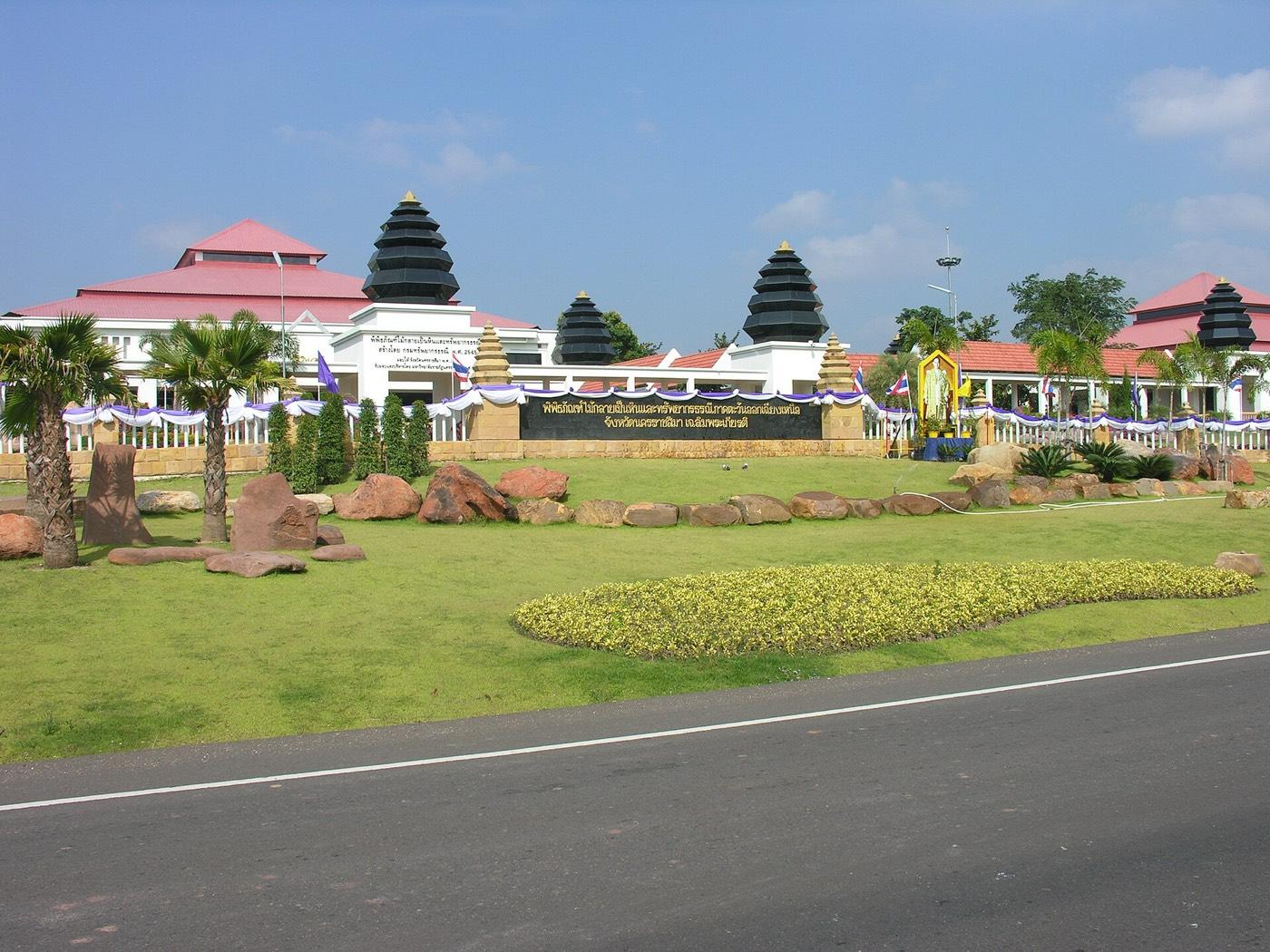 Khorat Fossil Museum and Petrified Wood Fossil Hunting GuidePetrified wood, Mammals
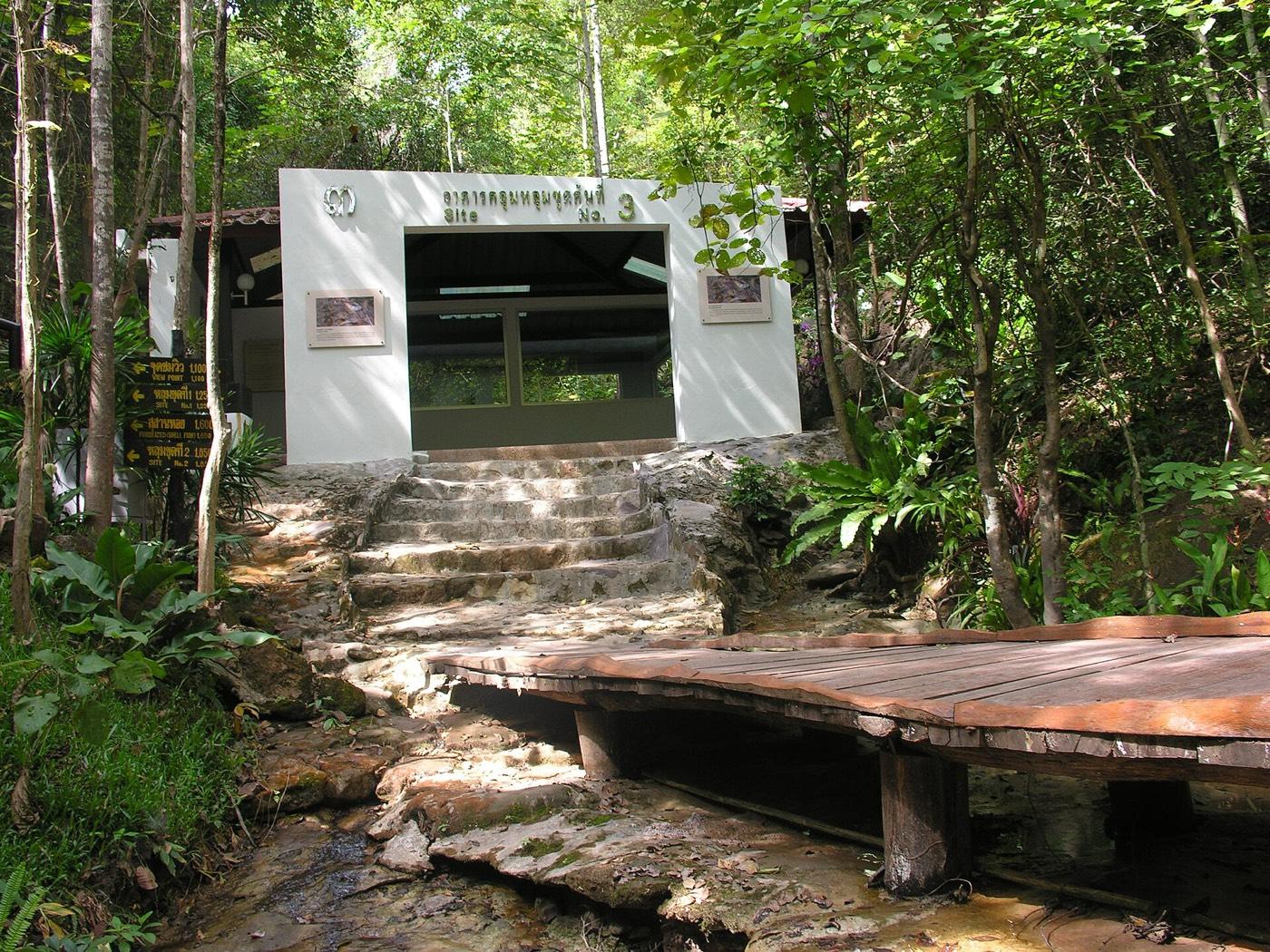 Phu Wiang Dinosaur Park Fossil Hunting GuideDinosaurs, Sauropods
 Phu Kum Khao and the Sirindhorn Museum Fossil Hunting GuideDinosaurs, Sauropods
 Machinchang Cambrian Geoforest Park Fossil Hunting GuideTrilobites, Trace fossils