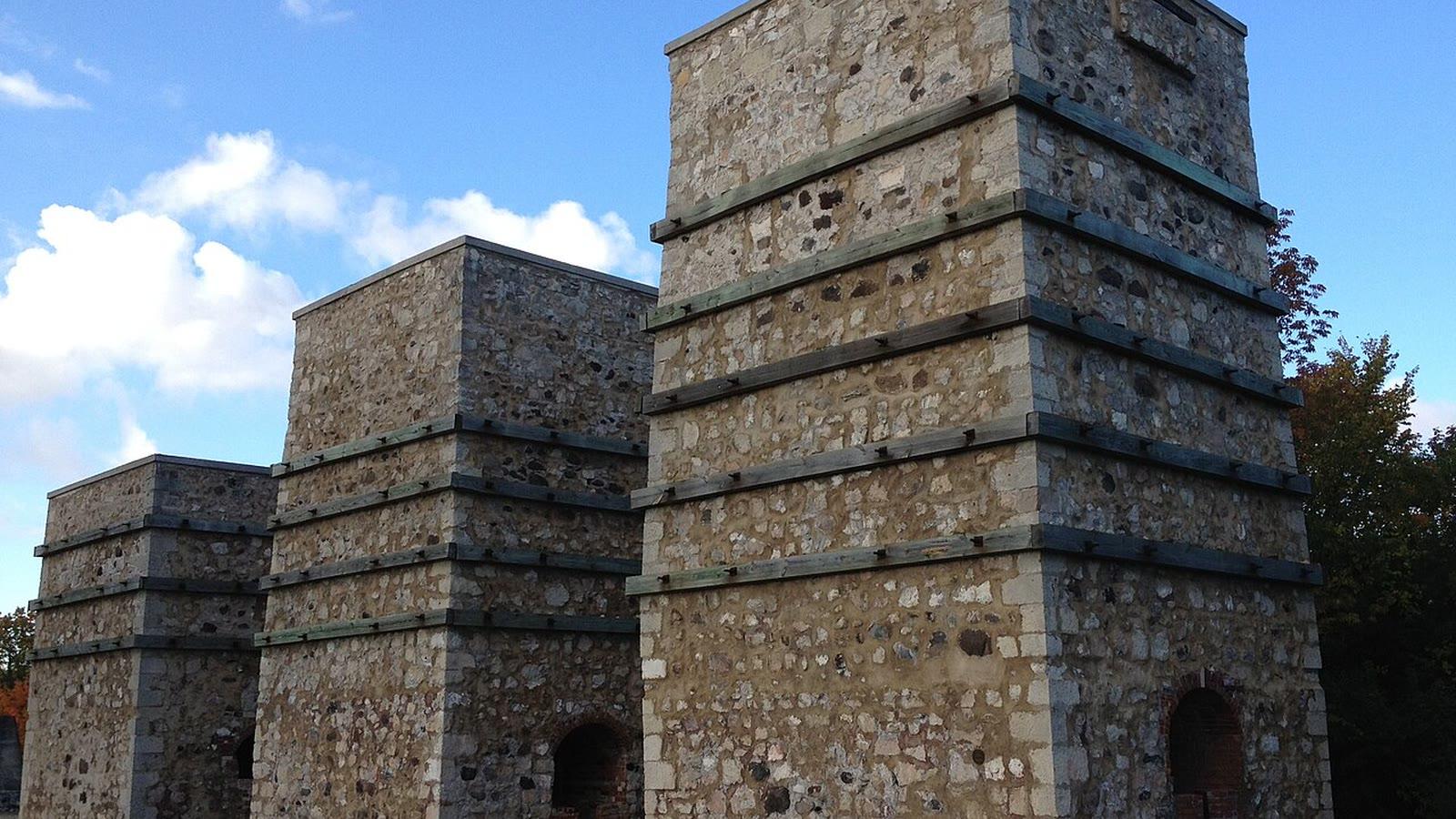
Lime Kiln Park Silurian Reef Fossil Guide
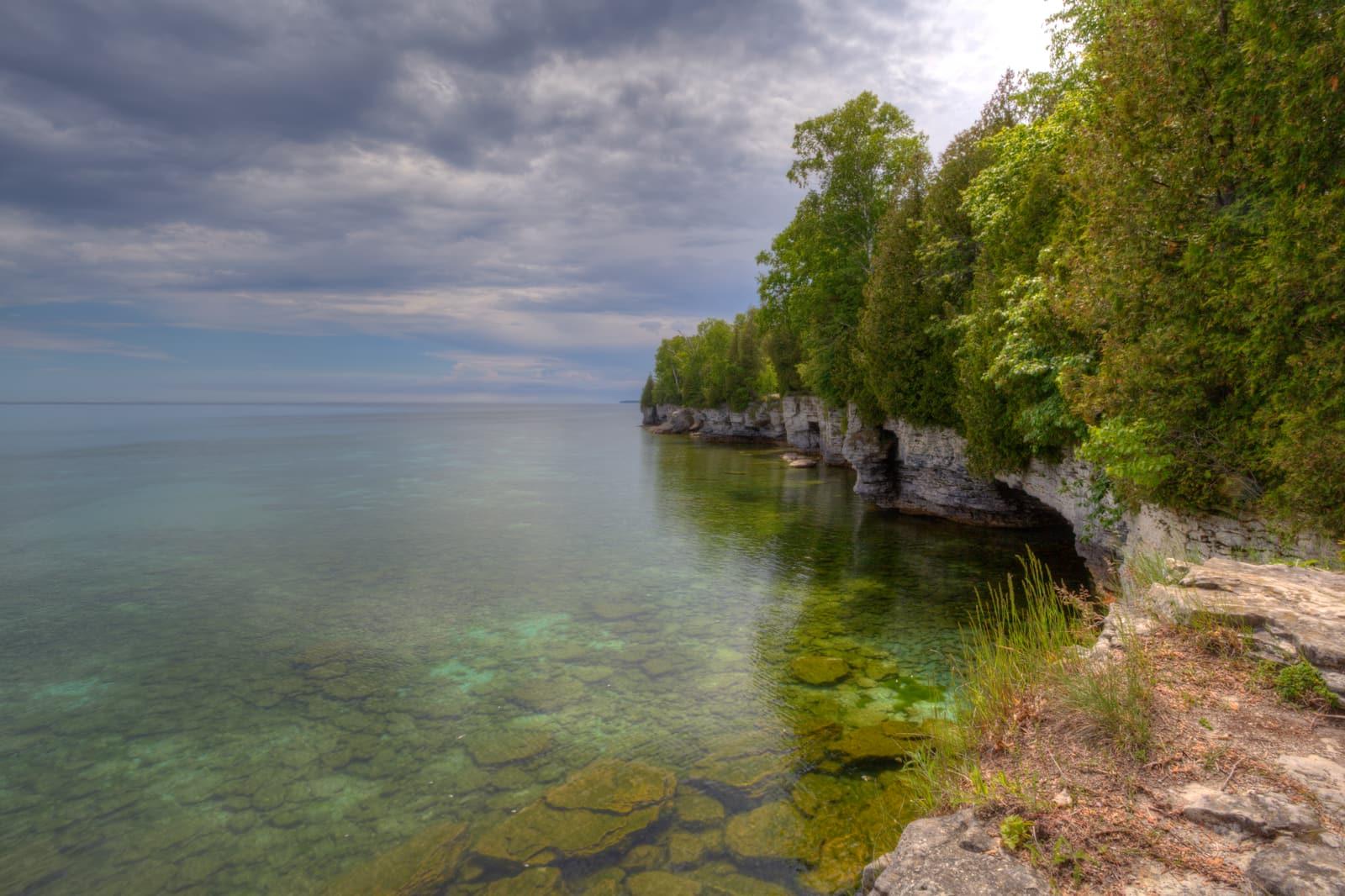
Image: Sallyajackson (CC BY-SA 3.0)
Lime Kiln Park in Grafton, Wisconsin occupies the quarry of the Milwaukee Falls Lime Company. The Field Museum maps two small Silurian reefs in the Racine Formation in the old quarry walls, with crinoids, tabulate corals, stromatoporoids and orthoceratid nautiloids.
By Edward Chen · Published 12 October 2026
Introduction
The southwestern walls of the old quarry at Lime Kiln Park expose two small Silurian reefs. The Field Museum of Natural History measured them as part of its Silurian Reef project. It gives their size as up to 5 m thick and 60 m across.
The rock belongs to the Racine Formation. The Field Museum places that unit above the Waukesha Formation and below the Waubakee Formation. It dates the rock by its fossil content to the Silurian.
This is a village park, not a scientific reserve. Grafton owns it and entry costs nothing. The quarry walls sit a short walk from a car park, a disc golf course and three restored lime kilns.
The practical point comes first. The Village of Grafton prohibits digging in its parks, and no village rule grants permission to collect fossils. Treat the quarry as a place to look and photograph until the Parks and Recreation Department tells you otherwise. The number to call is at the end of the collecting section.
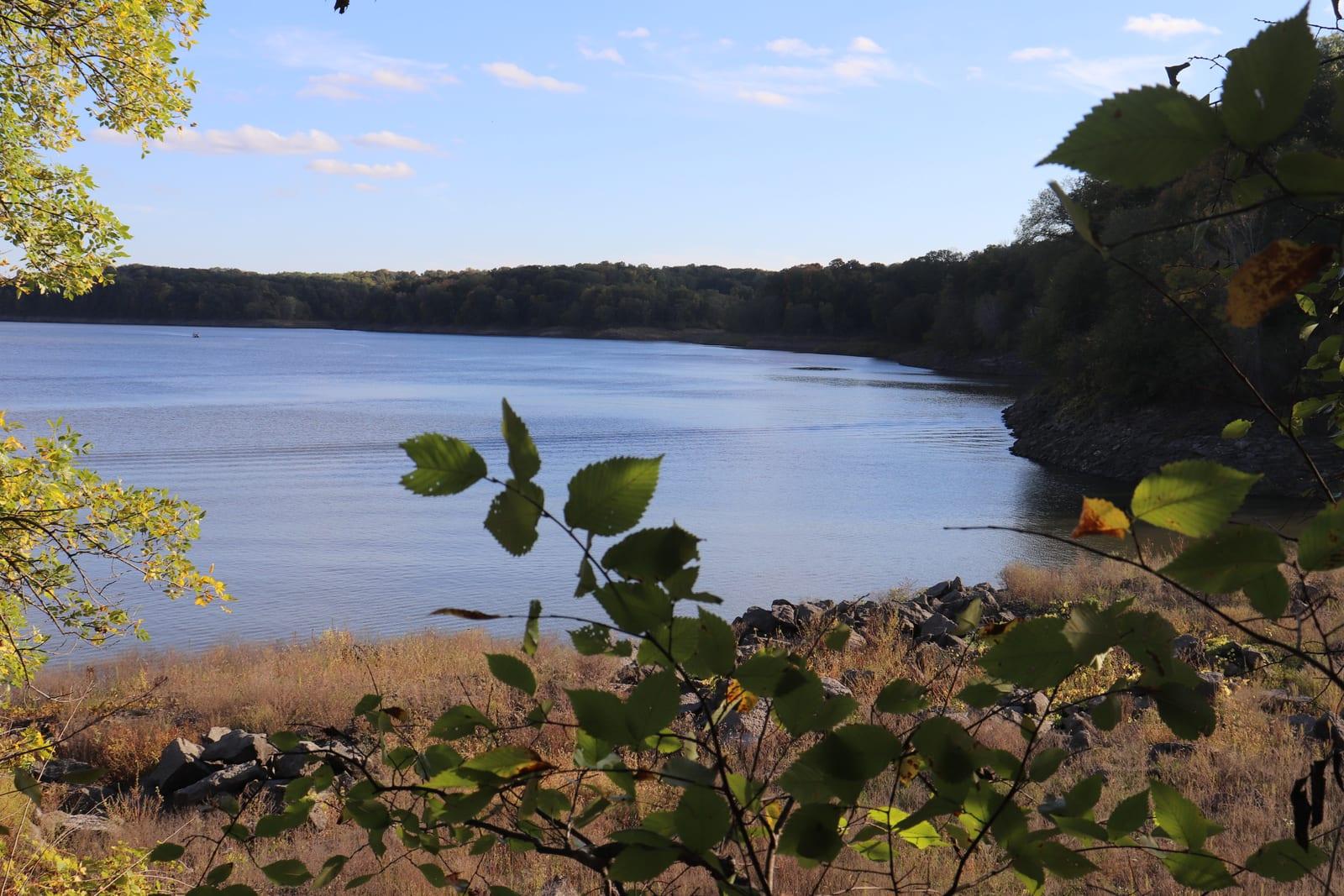
 Photo: Sallyajackson, CC BY-SA 3.0, via Wikimedia Commons
Location and Directions
Lime Kiln Park sits on the west bank of the Milwaukee River in the Village of Grafton, Ozaukee County. Grafton lies about 30 km north of Milwaukee. GPS: 43.3049°N, 87.9561°W.
The Milwaukee Falls Lime Company site lies largely inside the park. The Wisconsin Historical Society gives its address as 2020 Green Bay Road, Grafton. Interstate 43 runs past the village and carries traffic from both Milwaukee and Chicago. That is the approach the Field Museum describes for its study quarry.
The village lists the park at 28 acres. Parking comes in three lots. The lighted main-level lot holds more than 38 vehicles, and the upper and lower lots hold about 30 each. The park also has restrooms, one year-round building and one open-air shelter. A nine-hole disc golf course, sand volleyball courts, a canoe ramp and an archery range share the grounds.
Park hours run from 6:00 a.m. to 10:00 p.m. unless the Grafton Parks and Recreation Board approves special hours. Those hours come from the village's own Shelter Rental Guidelines and Park Rules document, revised November 2025.
The quarry walls are the reason to come. The Field Museum photographed its measured sections and cross sections at lettered points across these faces, including a measured section at point C. Allow time to walk the whole exposure rather than stopping at the first rock face you reach.
What Fossils You'll Find
Nothing here is confirmed as collectable, so read this section as a guide to what you can identify in place.
The Field Museum names six kinds of fossil material from this quarry. Crinoid stems, favositid tabulate corals, stromatoporoids, gastropods, orthoceratid nautiloid cephalopods and microbial oncolites all appear in its captions for the site. The gastropods in the museum's photographs come from pre-reef deposits at Lime Kiln Park.
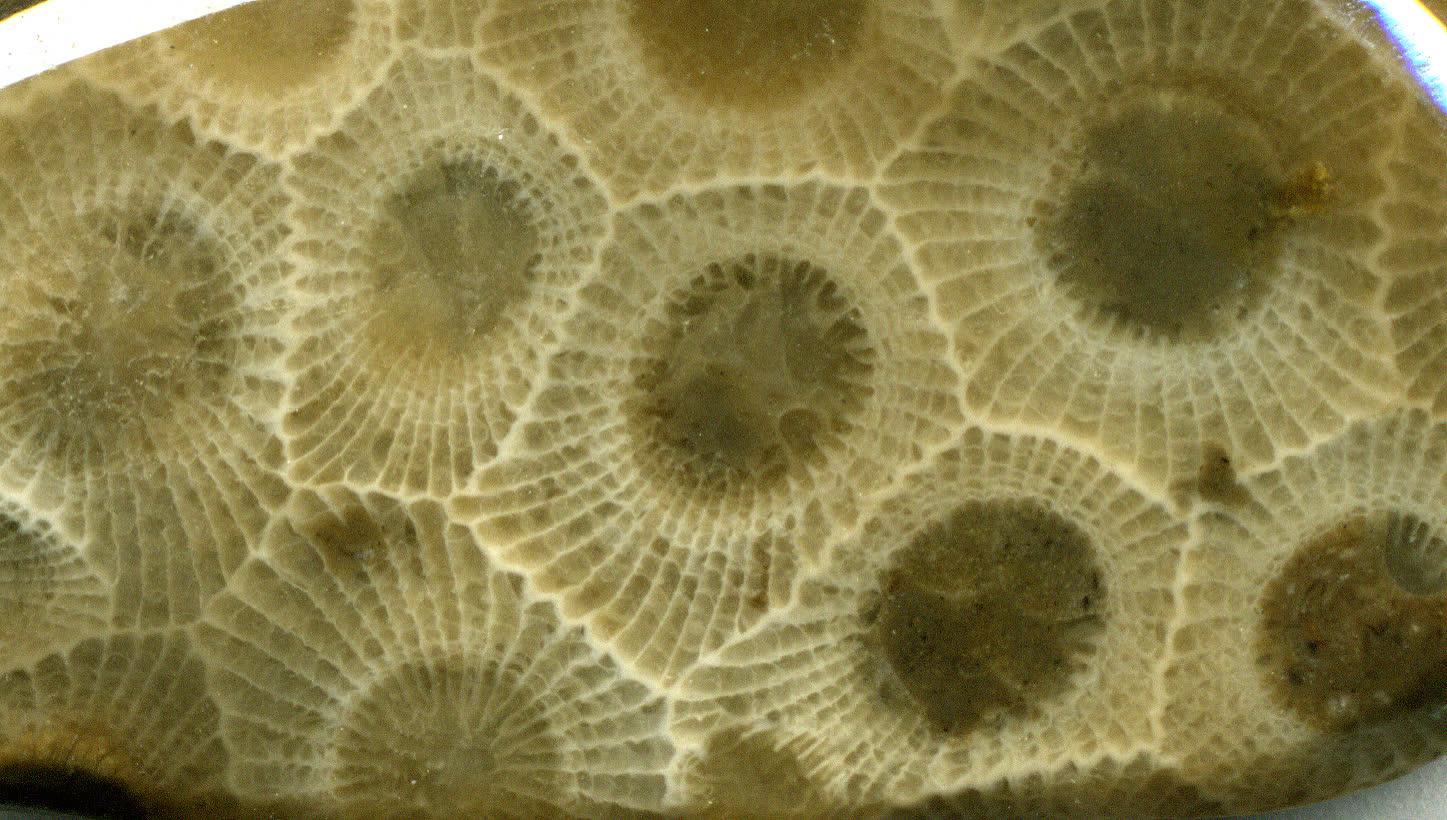
Crinoid columnals are the easiest thing to spot. Look for small circular discs, often stacked into short lengths, standing out on a weathered surface. Favositid corals form honeycomb-patterned masses. Stromatoporoids form rounded, layered domes, and they built much of the reef framework.
Orthoceratid nautiloids are the showpiece. These are straight, cone-shaped shells divided by internal walls, and the Field Museum records them from this quarry. The museum describes orthoconic nautiloids in these reefs as swimming hunters.
Oncolites deserve a second look. They are rounded, concentrically layered grains built by microbes, and they form their own facies in the quarry wall. A bed packed with them looks like coarse gravel cemented into rock.
Trilobites belong to the wider Racine fauna rather than to any published list for this quarry. The Field Museum counts at least 19 trilobite species from the Silurian reefs of Wisconsin. It lists the Wisconsin state fossil under the name Gravicalymene celebra (Raymond, 1916). Wisconsin law names the same animal Calymene celebra in section 1.10(3)(m) of the state statutes.
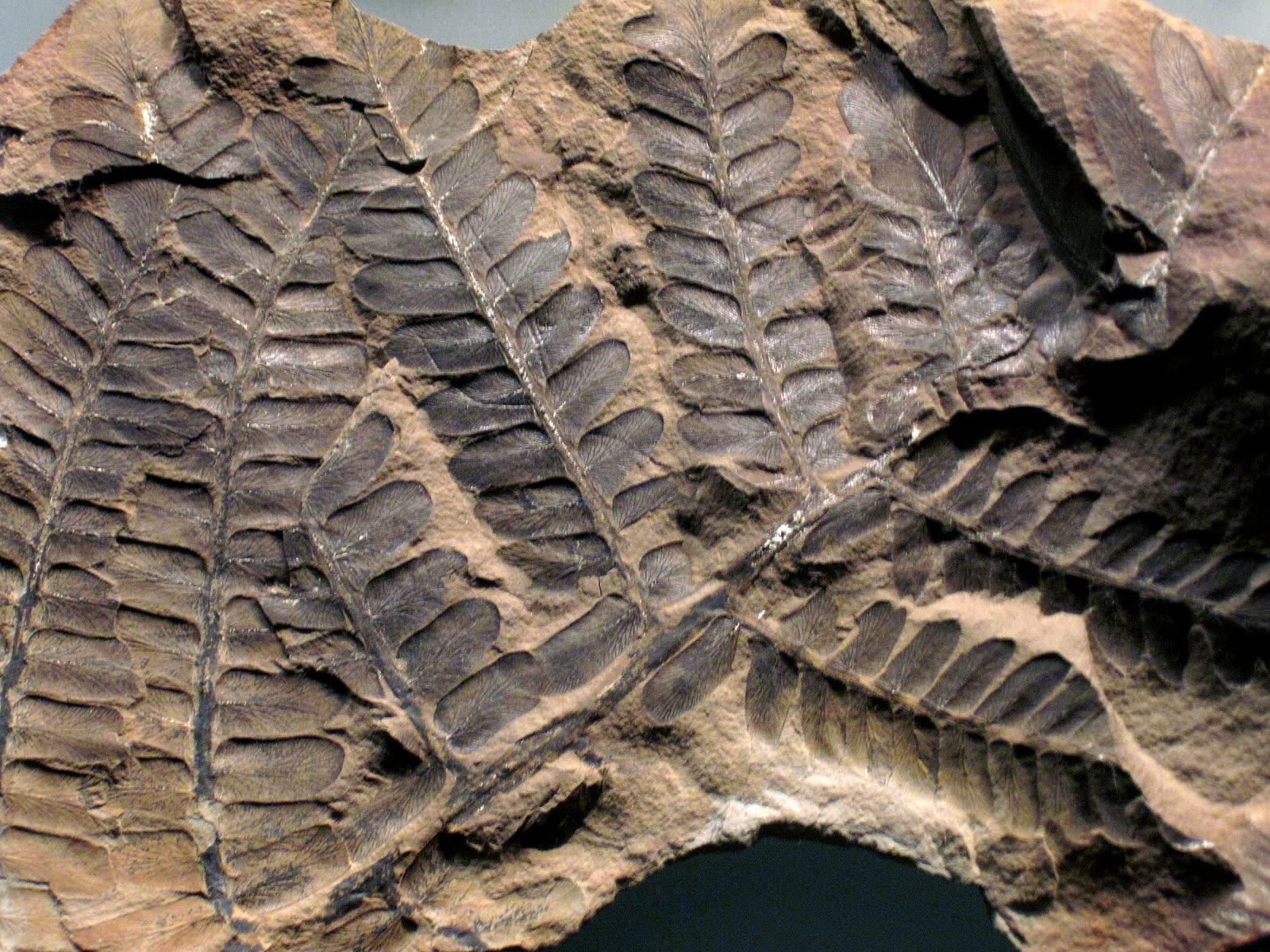
 Photo: Kennethgass, CC BY-SA 4.0, via Wikimedia Commons
Geologic History
Southeastern Wisconsin lay in warm, shallow tropical water during the Silurian. Stromatoporoid sponges and tabulate corals built mounds on the seafloor, and the sediment around them later turned to dolostone.
Watkins, Mayer and Coorough of the Milwaukee Public Museum call the Racine Formation Wenlockian in their 2001 study of the overlying Waubakee Formation. The International Commission on Stratigraphy places the Wenlock between 432.9 Ma and 426.7 Ma, which gives the age range used on this page. The United States Geological Survey lexicon records a broader usage, Silurian from the Llandovery to the Ludlow. The figures here follow the narrower published assignment.
The quarry wall is worth reading as a sequence rather than as a single rock. The Field Museum's captions for this site name reef boundstone, skeletal mudstone and oncolite packstone and grainstone. They also name skeletal sand grainstone, cross-bedded grainstone, and both pre-reef and post-reef deposits. The reef boundstone shows no bedding at all and breaks into blocky, fractured faces. The beds around it do show bedding. That contrast is the clearest thing to look for on the walls.
The history of research here is older than the park. Donald Mikulic wrote the claim down in Geoscience Wisconsin in 2001, published by the Wisconsin Geological and Natural History Survey. He states that the Silurian reefs of the Milwaukee region were the first recognized fossil reefs in North America. He adds that they were among the first Paleozoic reefs described in the world. His account runs as follows. Increase A. Lapham found abundant fossils in reef-controlled rock hills around Milwaukee in the late 1830s. He sent a large collection to James Hall in 1846. Hall's later work in the area led him to recognize the reefal nature of those hills in 1862. T. C. Chamberlin extended Hall's observations in a paper published in 1877.
Mikulic also makes the point that quarrying is what made the science possible. Without the cut faces, nobody would have seen inside the reefs. Lime Kiln Park is a direct product of that process.
Collecting Rules and Regulations
Do not dig anywhere in this park. Rule 9 of the Village of Grafton park rules allows metal detecting in village parks but states that digging is not allowed. The rule applies to all village parks.
The village rules contain no statement about fossils, rocks or natural objects. That silence is not permission. The conservative reading, and the one this page uses, is that Lime Kiln Park is a viewing and photography site.
Treat the park as viewing-only unless the village tells you otherwise. The village publishes no rule on surface material one way or the other, and this guide could not find one. Contact the Grafton Parks and Recreation Department on (262) 375-5310 and put the question to them before you travel. Take the answer from the department rather than from a sign or a forum post, and do not treat silence as permission.
Other village park rules that matter to a visitor:
- Park hours are 6:00 a.m. to 10:00 p.m. unless the Parks and Recreation Board approves other hours.
- Camping is prohibited.
- Fires are allowed only in grills provided for the purpose. Portable fire pits are prohibited in all village parks.
- Wading, swimming and bathing in the Milwaukee River are prohibited.
- Firearms and bows are prohibited except in the designated area under licensed supervision. The park has an archery range.
- Dogs are allowed only on pass-through walkways, trails and the car parks that serve them, on a leash no longer than six feet. They are not allowed in park buildings, playground areas or picnic shelters.
- Glass containers are prohibited.
Safety
The quarry faces are old, weathered rock. Stay off them. The reef boundstone that the Field Museum describes at this site breaks into blocky, fractured masses. Loose blocks sit above head height in places. Keep well back from the base of any face, and do not climb.
Watch the ground near the kilns. Three of the five original kilns survive as historical structures. They are masonry over a century old, and the Wisconsin Historical Society lists the whole lime works as a historic site. Do not climb on them or enter the arched openings.
The Milwaukee River runs through the park. The village prohibits swimming, wading and bathing in it. Banks are steep in places and the water rises after rain.
Dress for Wisconsin weather. Winter brings ice on paths and on rock. Summer brings ticks, mosquitoes and poison ivy in the vegetation along the river. Wear long trousers, use repellent, and check yourself afterwards.
Mind the disc golf course. Nine holes cross the park, and a disc travels fast and silently. Look up and listen before crossing open ground.
Sources
https://silurian-reef.fieldmuseum.org/narrative/499 https://silurian-reef.fieldmuseum.org/narrative/400 https://silurian-reef.fieldmuseum.org/narrative/430 https://data.wgnhs.wisc.edu/pubshare/GS18-a02.pdf https://www.villageofgraftonwi.gov/DocumentCenter/View/30964/Shelter-and-park-rule-guidelines https://www.villageofgraftonwi.gov/387/Lime-Kiln-Park https://www.villageofgraftonwi.gov/77/Park-Rules-Regulations https://wisconsinhistory.org/Records/NationalRegister/NR2327 https://gsa.confex.com/gsa/2001NC/webprogram/Paper3098.html https://ngmdb.usgs.gov/Geolex/Units/Racine_3469.html https://docs.legis.wisconsin.gov/statutes/statutes/1/10 https://stratigraphy.org/ICSchart/ChronostratChart2024-12.pdf