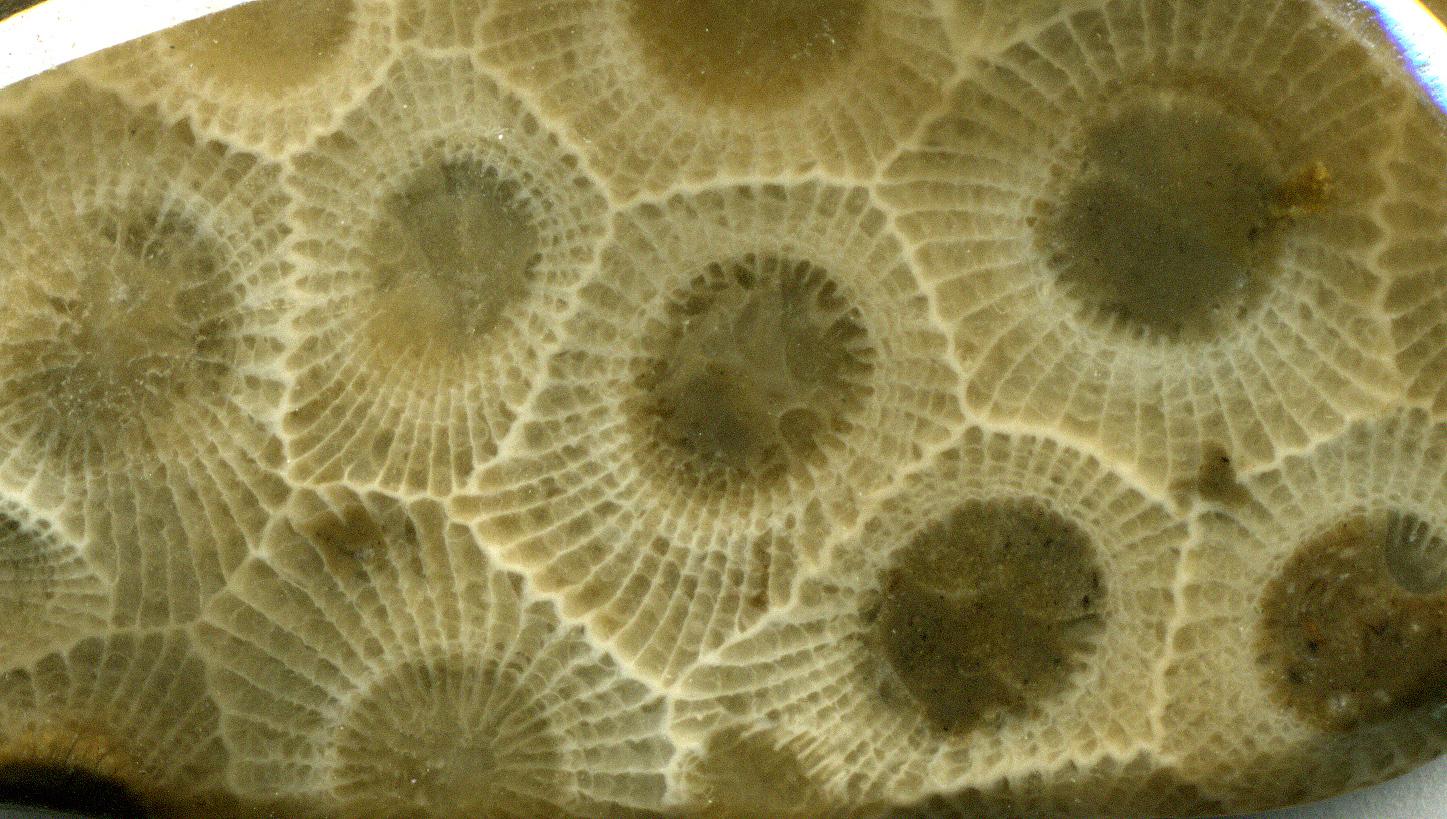
Petoskey State Park Fossil Hunting Guide
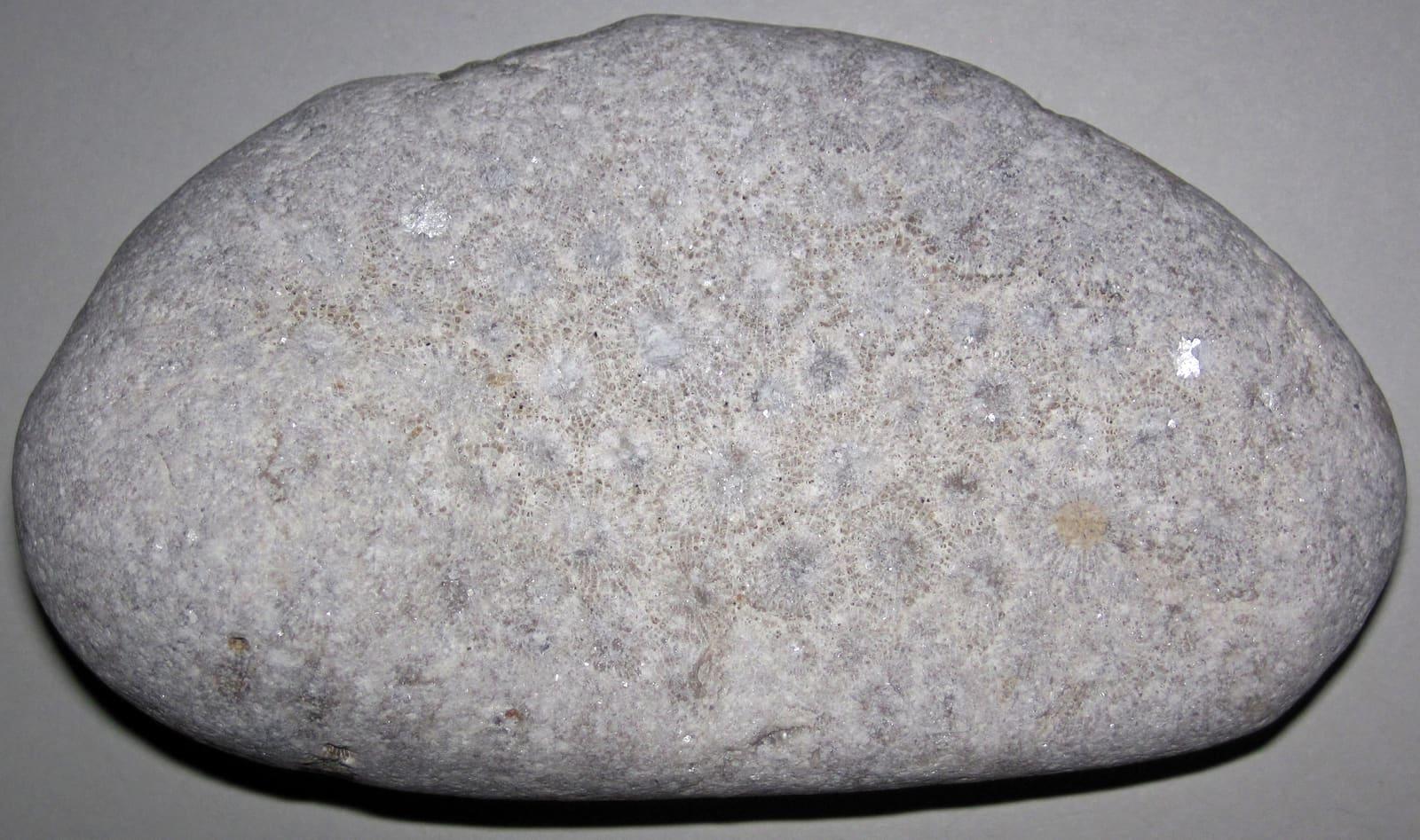
Image: James St. John (CC BY 2.0)
Petoskey State Park on Little Traverse Bay is the best-known public beach in Michigan for finding Petoskey stones, the fossil coral Hexagonaria percarinata weathered from Middle Devonian Traverse Group limestone. Collecting is allowed within a state limit.
By Edward Chen · Published 23 July 2026
Petoskey State Park sits on the shore of Little Traverse Bay, an arm of Lake Michigan, just northeast of the town of Petoskey. The beach here is the best-known public place in Michigan to find Petoskey stones, the state stone. A Petoskey stone is not a mineral pebble but a fossil. It is a piece of the colonial coral Hexagonaria percarinata that grew in a warm, shallow sea during the Middle Devonian and was later smoothed into a cobble by glaciers and waves. When the stone is wet, the coral shows its pattern of tightly packed six-sided cells, each with a dark center and radiating lines.
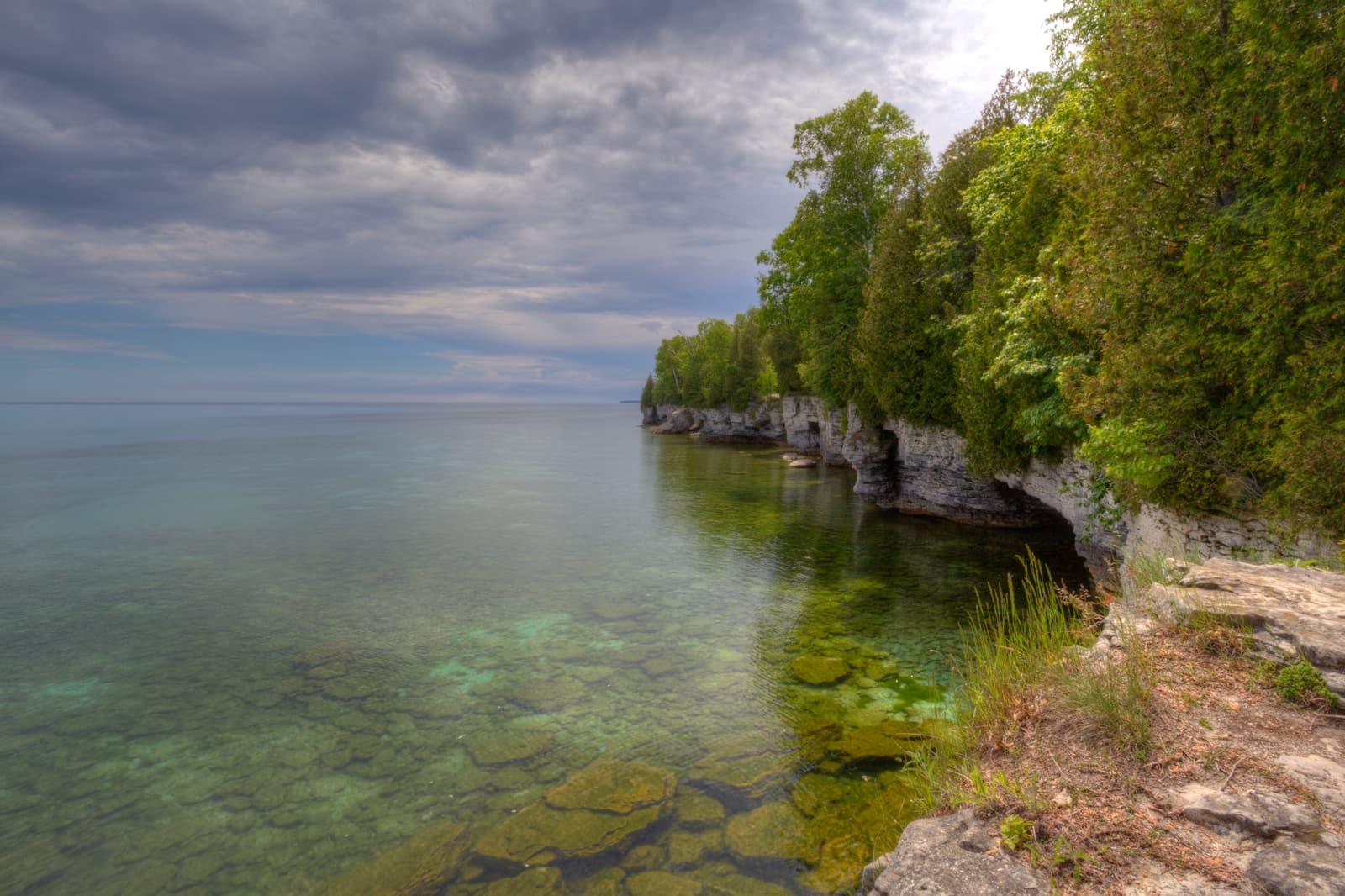
The coral weathers out of the Traverse Group limestone that underlies this part of Michigan and washes onto the beach, so collecting means walking the waterline and turning over the wet gravel rather than digging or hammering. This guide covers how to reach the park, what to look for, the geology that produced the stones, the state rules on collecting, and the practical details for a visit.
Location and Directions
Petoskey State Park is at 2475 M-119 in Emmet County, near 45.403 degrees north, 84.909 degrees west, on the northeast side of Little Traverse Bay between the towns of Petoskey and Harbor Springs.
From US-31 in Petoskey, follow the highway around the bay and turn onto M-119 toward Harbor Springs. The park entrance is a short distance along M-119 and is signed. A Michigan Recreation Passport is required on the vehicle for entry to the state park, and it can be bought at the gate or added when you renew your license plate.
The park has a large day-use parking area, two campgrounds, restrooms, and a swimming beach. The stone-hunting is best along the open beach and the gravel stretches at the waterline. Bring the Recreation Passport, and check current park status before a long drive, since sections of Michigan state parks occasionally close for maintenance.
What Fossils You'll Find
The signature find is the Petoskey stone itself, a fragment of the rugose coral Hexagonaria percarinata. Look for rounded grey cobbles with a faint honeycomb pattern. The pattern is hard to see on a dry stone and becomes clear when the stone is wet, so hunt along the damp waterline or dip candidates in the lake. Each cell of the colony is a former coral animal, and the dark spot at its center marks where the mouth sat.
A second fossil coral turns up on the same beach and is often confused with the Petoskey stone. This is Favosites, a honeycomb coral with smaller, more even cells and no dark centers, known locally as a Charlevoix stone. Both come from the same Devonian limestone. Along with the corals, the Traverse Group produces brachiopods, the two-shelled marine animals that lived on the same sea floor, and short sections of crinoid stems, which appear as small round or star-shaped discs. These are less sought after than the corals but are part of the same fossil assemblage.
The best collecting follows rough weather. Storms and strong onshore winds stir the lake bottom and throw fresh stones up the beach, and spring, after the winter ice clears, is the most productive season.
Geologic History
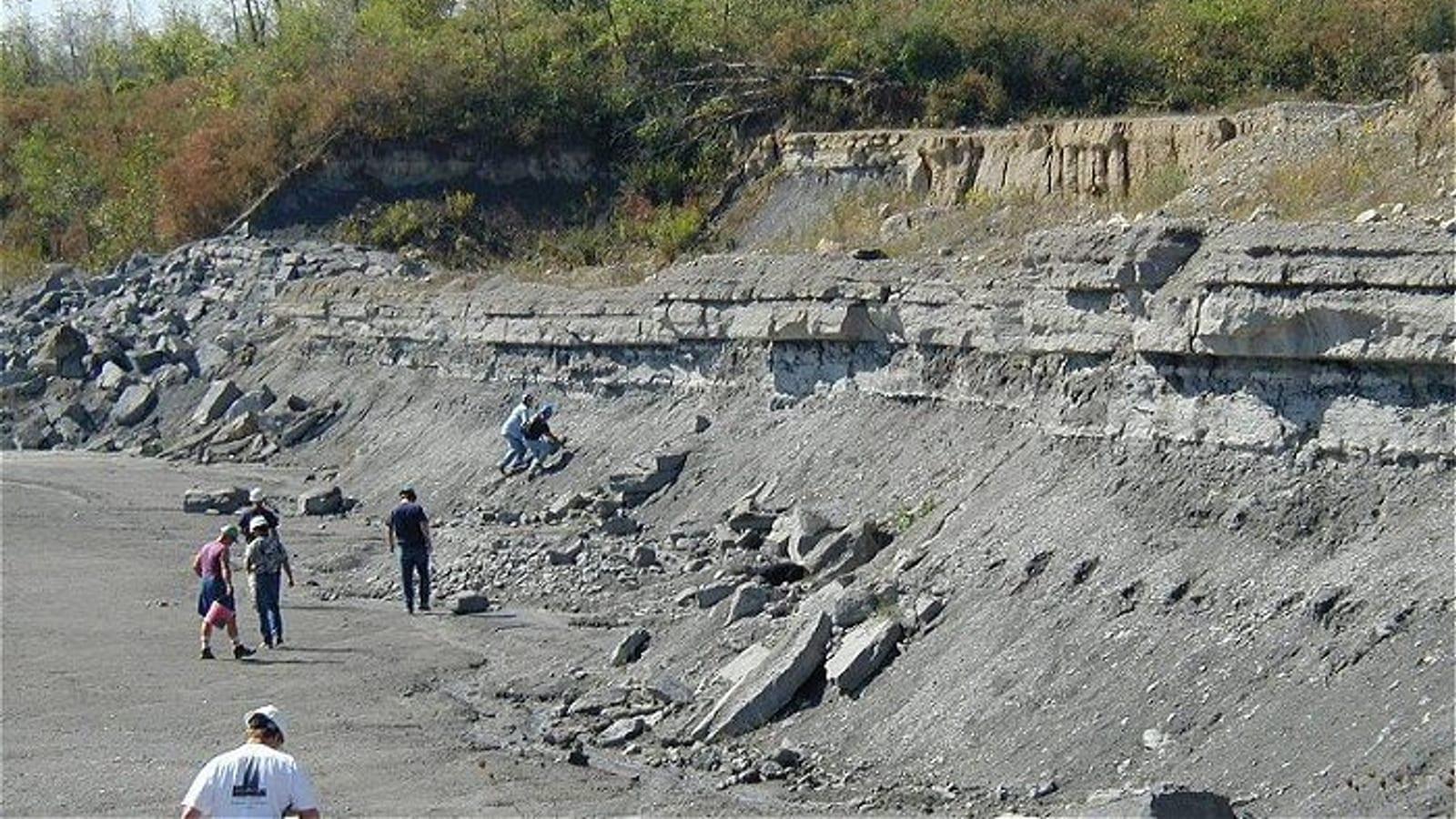
During the Middle Devonian, roughly 385 million years ago, Michigan lay near the equator and was covered by a warm, shallow tropical sea. Corals, including the colonies that became Petoskey stones, built reefs and grew across the sea floor. Their limestone skeletons accumulated to form the Traverse Group, a thick sequence of Devonian limestone and shale that underlies the northern Lower Peninsula.
The stones on the beach took a long journey to get there. The Devonian coral was buried and turned to stone, then hundreds of millions of years later the glaciers of the last ice age scraped across Michigan, broke up the limestone, and carried the fragments south. As the ice melted, it left the coral pieces in the glacial gravel around Little Traverse Bay. Lake Michigan waves have been rounding and polishing them ever since, which is why a Petoskey stone arrives as a smooth cobble rather than a sharp piece of rock.
Collecting Rules and Regulations
Collecting Petoskey stones from the beach at Petoskey State Park is allowed. Under Michigan law, a person may remove up to 25 pounds of rock, stone, or mineral, including Petoskey stones, from state land per year for personal use. Keep collecting to the loose stones on the beach surface. Do not use power tools, and do not dig into the bank or the lake bed with heavy equipment, which is not permitted in state parks.
The 25-pound limit is per person per year and covers state parks and other state land. Collecting for commercial sale is not allowed under the personal-use rule. If you are unsure whether a particular stretch of shoreline is inside the park boundary or on adjacent private land, ask at the park office, since collecting rules differ off state land.
Safety
The main hazards here are cold water and weather rather than cliffs or tides. Lake Michigan is cold well into summer, and the footing along a gravel waterline can be slippery, so wear closed shoes with good grip and watch your step on wet stones. Sudden storms can bring high winds and large waves to the bay, so keep clear of the water when the lake is rough, even though rough weather is when the hunting is best.
Dress for changeable conditions, since the shore is exposed and the wind off the lake can be cold even on a warm day. Keep a close eye on children near the water. There is no significant rockfall or unstable-ground hazard on the open beach.
Sources
https://www.michigan.gov/dnr/things-to-do/state-parks/parks/petoskey https://www.michigan.org/article/trip-idea/where-find-petoskey-stones-michigan https://www.michigan.gov/egle/newsroom/mi-environment/2026/05/21/how-to-find-fossils-on-michigan-beaches