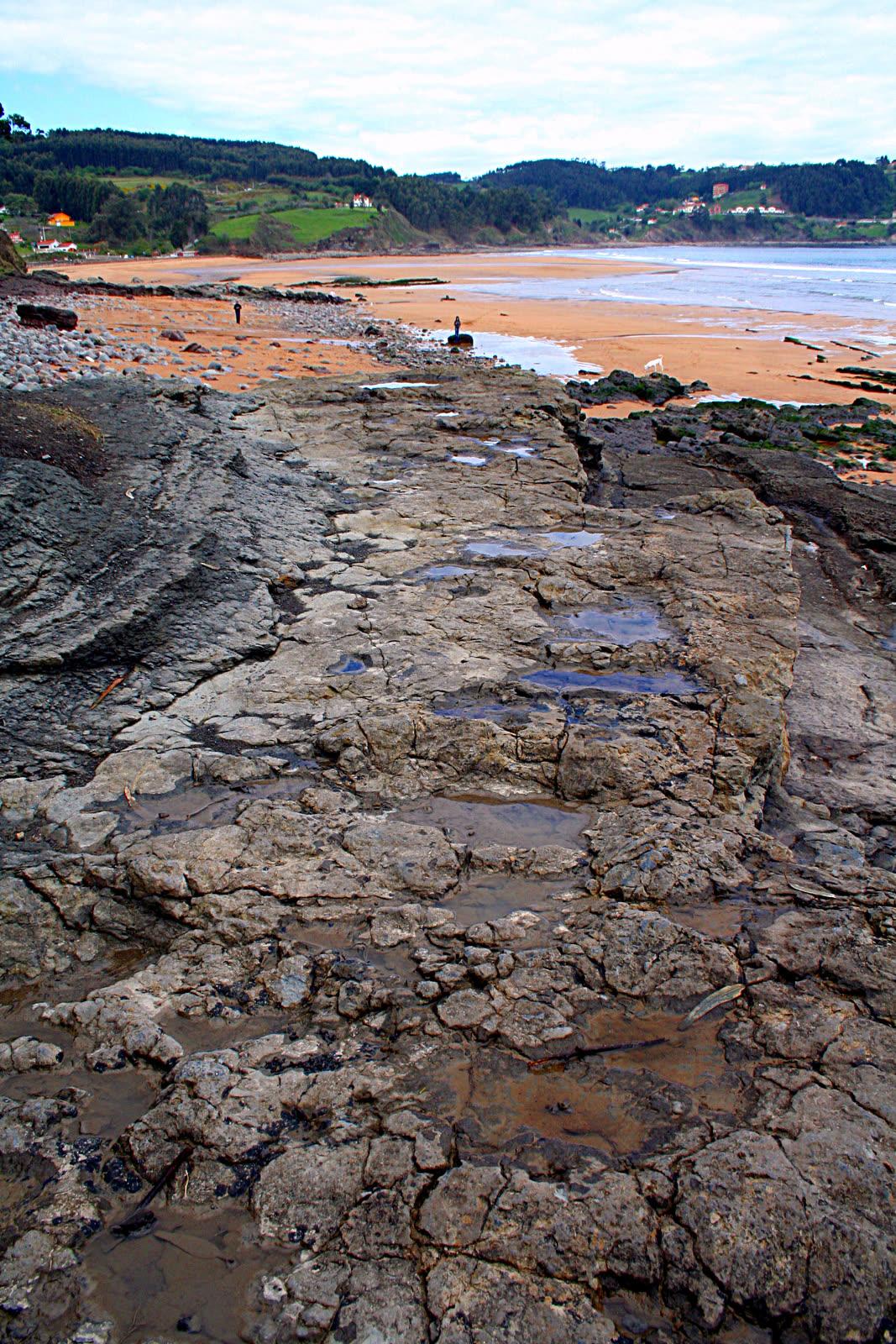
Playa de La Griega Fossil Hunting Guide
Image: Mario modesto (CC BY-SA 3.0)
Playa de La Griega is a beach in Colunga, Asturias, with Late Jurassic sauropod footprints up to 125 cm across in the Tereñes Formation limestone at its eastern end. The tracks are a protected Natural Monument, so the visit is for viewing only.
By Edward Chen · Published 1 October 2026
 Photo: David Perez, CC BY 4.0, via Wikimedia Commons

Introduction
Playa de La Griega in Colunga, Asturias, holds sauropod footprints up to 125 cm across. The tracks sit on a grey limestone surface at the east end of the beach. The rock belongs to the Late Jurassic Tereñes Formation. Spain's geological survey (IGME) calls these the largest Jurassic tracks found so far.
The site is a viewing site. The footprints are part of the Asturian dinosaur tracksites, which a 2001 decree declared a Natural Monument. You may look and photograph. You may not collect or dig.
The walk is short and easy. A municipal trail leads from the east side of the beach to a staircase above the tracks. The leaflet puts the whole route at 1.5 km and about 30 minutes. Tide timing matters for the return along the sand.
Location and Directions
La Griega lies at 43.5003°N, 5.2619°W, at the mouth of the Libardón river. The Spanish Wikipedia entry gives the beach as 820 m long and 82 m wide. From the center of Colunga, take the AS-257 toward Lastres. After about 1 km, turn off to the beach.
A car park holds more than 100 vehicles. The beach has showers, toilets, a bar and a campsite. A lifeguard service runs from 1 July to 8 September and on the last two weekends of June.
The IGME access description starts on the right-hand side of the beach, past the river. From there, a signposted path of about 650 m leads to the staircase down to the tracksite. The municipal leaflet describes the same walk as a loop that starts on the east side of the beach. It gives 1.5 km, a 125 m ascent and an easy grade.
The Museo del Jurásico de Asturias (MUJA) stands on the Rasa de San Telmo in Colunga. It is the natural companion visit. Published adult admission is 7.21 euros, reduced admission is 4.75 euros, and Wednesdays are free. In July and August the museum opens daily from 10:30 to 19:30. In other months it closes on Mondays and Tuesdays. Check the museum site before you go, because prices and hours change.
What Fossils You'll Find
 Photo: Falconaumanni, CC BY-SA 3.0, via Wikimedia Commons

The main surface is a grey limestone full of dinosaur footprints. The large rounded depressions are the pes prints of a giant sauropod. Some reach 125 cm across. A bulged rim around each print is mud that the animal pushed outward as it stepped.
García-Ramos and colleagues (2007) measured the pes impressions. They range from 98 to 125 cm, with a mean of 110.75 cm. They found that the type trackway of Gigantosauropus asturiensis is a sauropod trackway. They also treated that name as a nomen dubium. Researchers named Hispanosauropus hauboldi from the beach too. Later work no longer treats Hispanosauropus as a valid ichnogenus.
Two German researchers first read the giant prints as the work of a bipedal dinosaur in 1984. Later studies showed that a giant sauropod made them.
The same surface carries a trackway of eight prints about 5 m long. Six are pes prints. Two are manus prints with a crescent shape. The municipal leaflet calls it a small sauropod of the Brontopodus type. IGME records a later reading as a stegosaur (Piñuela Suárez 2015). Both readings appear in the sources, so treat the maker as debated.
Below the tracks, the limestone holds small shells. The freshwater gastropod Viviparus and ostracods lie fossilized in the rock. On the beach, a loose block of red sandstone from the Vega Formation carries two counter-mold tracks of quadrupedal dinosaurs. A nearby cliff wall of the same red sandstone shows pale vertical root traces from Jurassic soils.
Across the three formations, the Asturian sequence has also yielded dinosaur bones, crocodile and turtle bones, plesiosaur and crocodile teeth, and fish teeth and scales. You will not find these on a casual walk. They come from research collecting and sit in the museum.
Geologic History
 Photo: frankblacknoir, CC BY-SA 3.0, via Wikimedia Commons

The Tereñes limestone began as calcareous mud on the floor of a coastal lagoon. IGME dates it to 154 million years ago. The Vega, Tereñes and Lastres formations of Asturias are all Kimmeridgian in age. That stage runs from about 155 to 149 mya on the current International Commission on Stratigraphy scale.
Dinosaurs crossed the lagoon margin while the mud was soft. Their feet pressed deep, and mud squeezed out around each print. Later sediment buried the surface, and the mud hardened to limestone. Freshwater snails and ostracods lived in the same lagoon.
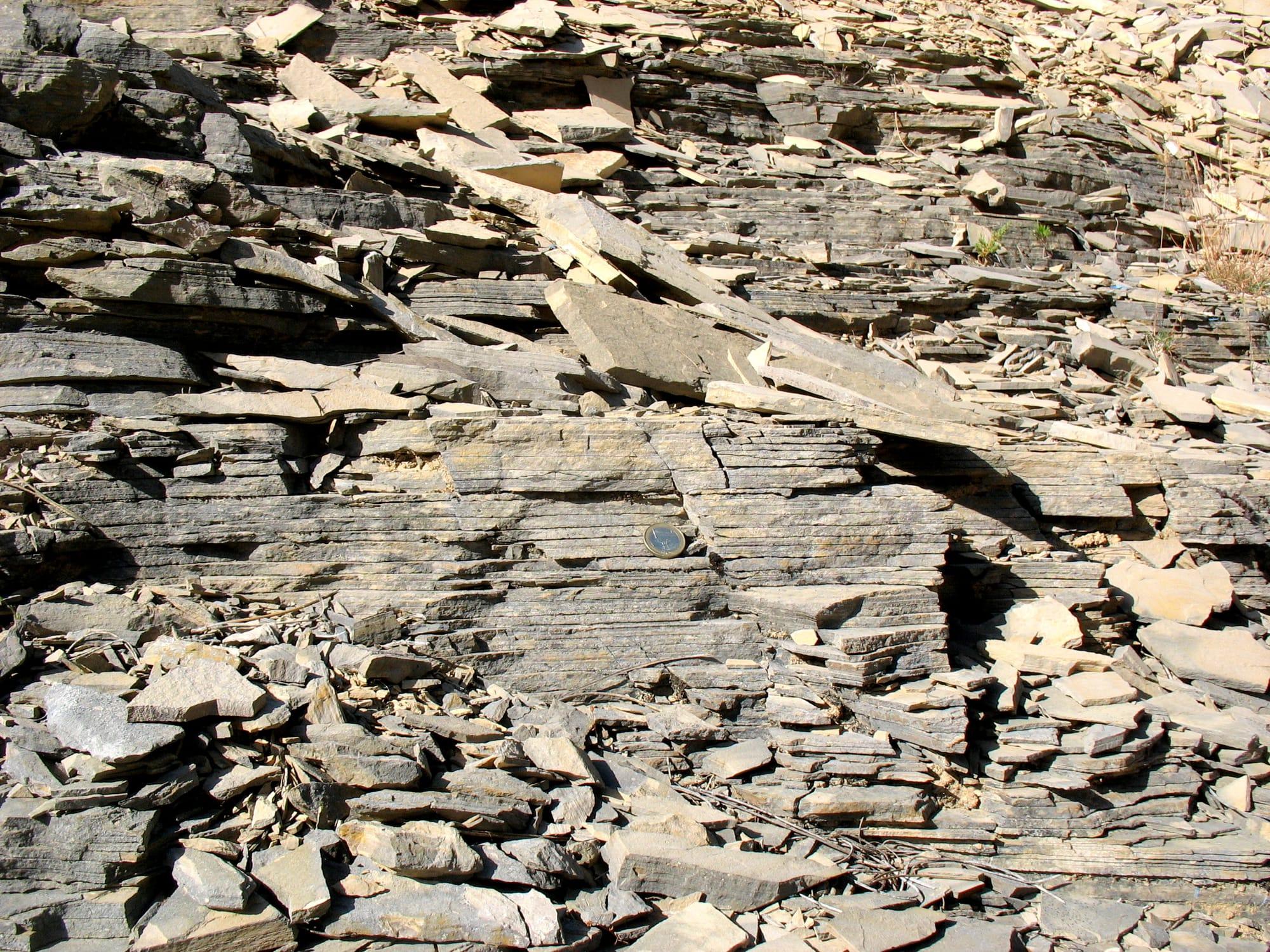
An inclined sandstone bed lies immediately below the tracked limestone. The surface of that sandstone is cut by joints in several directions. Red sandstone of the Vega Formation crops out nearby, and its root traces mark old Jurassic soils.
The tracks are the reason the area has protected status. The protected Asturian ichnite sites in Gijón, Villaviciosa, Colunga and Ribadesella cover nine sites and 446 tracks.
Collecting Rules and Regulations
Collecting is not allowed. Decree 45/2001 of 19 April declared the Asturian ichnite sites a Natural Monument. A later decree, 170/2014, made them a Special Area of Conservation.
Under the Natural Monument decree, prospecting, excavation, scientific investigation and any removal of tracks at risk of loss need express authorization. The applicant must file a detailed program of action. A casual visitor has no route to such a permit.
Key Points:
- Do not remove, dig or mark any footprint or rock.
- Do not take the loose Vega Formation block from the beach.
- Photography is fine.
- The sources list no fee for the beach or the trail.
- The Spanish Wikipedia entry reports a cultural-heritage listing. This guide found no primary decree for it, so it does not rely on that claim.
Safety
Check a tide table before you go down. The municipal leaflet says the return along the sand depends on the tide. If the tide is high, go back by the path.
Many cross fractures cut the tracked surface, as the leaflet notes. Wear shoes with a firm grip and watch your footing. Wet limestone is slippery.
The tracks lie at the foot of the cliff. Do not stand under the cliff face, and keep children close. Stay on the signposted path and the staircase.
No source gives the exact tide level at which the tracks flood. No source describes the staircase rails. Treat the platform as a tidal site until you see it for yourself.
Take water and sun protection. The trail climbs about 125 m in total.
Sources
https://info.igme.es/ielig/LIGInfo.aspx?codigo=CA028 https://info.igme.es/ielig/documentacion/ca/ca028/documentos/d-ca028-01.pdf https://www.turismocolunga.es/media/folletos_descargas/1_huellas_EN.pdf https://www.tandfonline.com/doi/full/10.1080/10420940601050048 https://pmc.ncbi.nlm.nih.gov/articles/PMC6035862/ https://es.wikipedia.org/wiki/Yacimientos_de_icnitas_de_Asturias https://www.colunga.es/en/monumentos-naturales https://asturias.com/museo-del-jurasico-muja/
Nearby sites
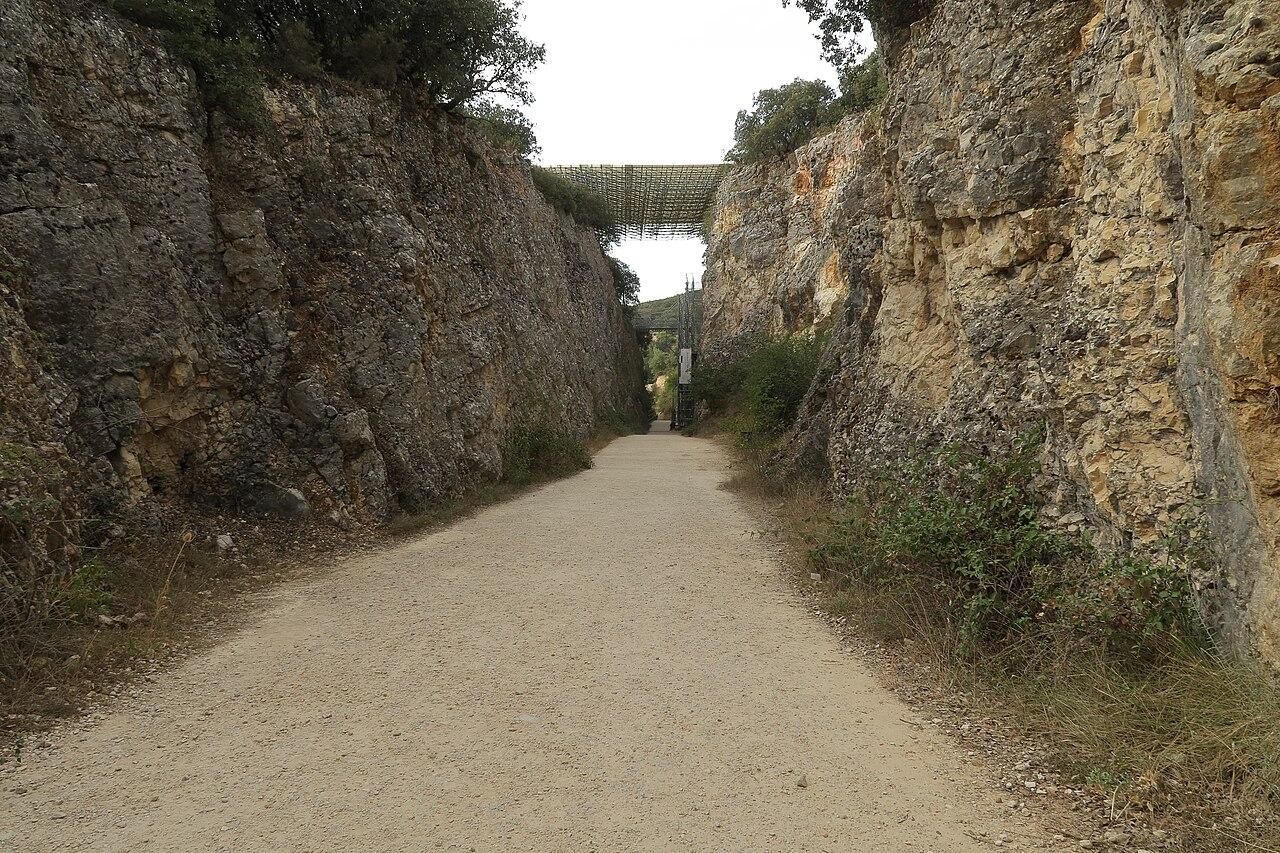 Atapuerca Archaeological Site Fossil GuideHominin remains, Homo antecessor
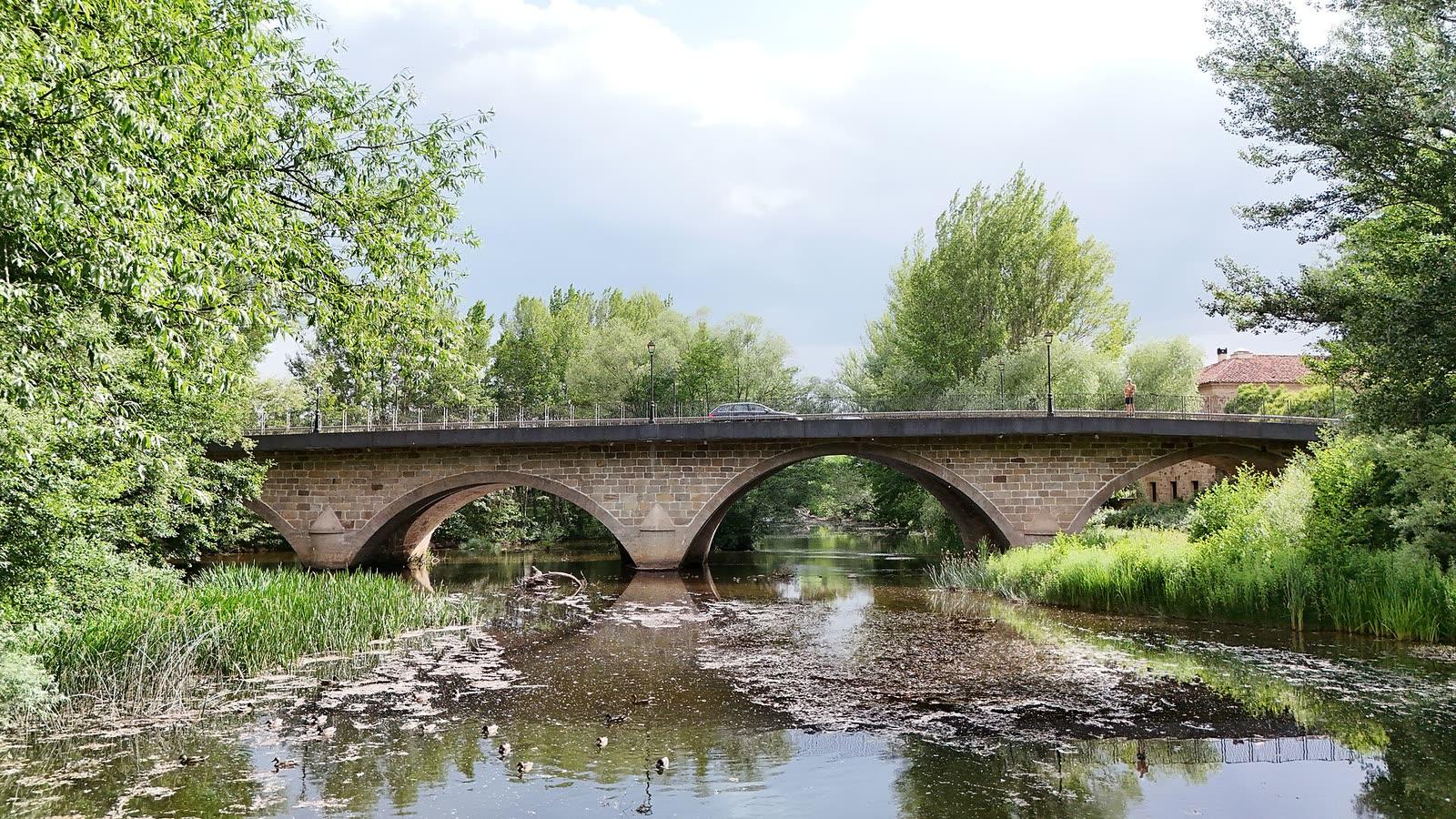 Salas de los Infantes Dinosaur Sites Fossil Hunting GuideDemandasaurus darwini (sauropod), Europatitan eastwoodi
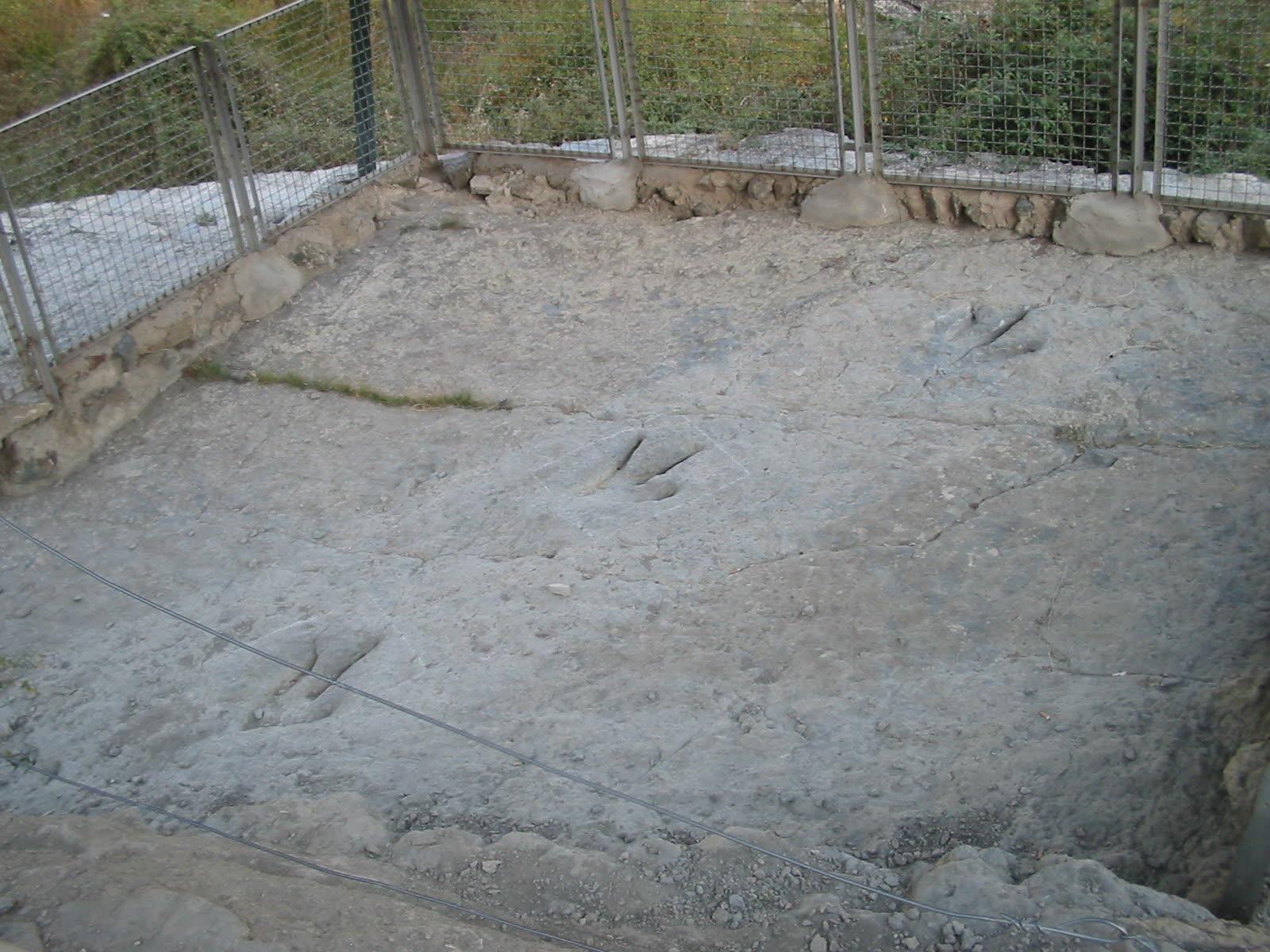 Valdecevillo and the Enciso Dinosaur Tracks Fossil Hunting GuideDinosaur tracks, Theropod tracks
 Las Hoyas Lagerstätte Fossil Hunting GuideConcavenator corcovatus (carcharodontosaurid), Iberomesornis romerali (early bird)