Shark Tooth Hill Fossil Hunting Guide
The Round Mountain Silt bone bed at Shark Tooth Hill near Bakersfield has yielded fossils of over 140 marine species. The Ernst Quarries run paid digs where participants keep most of what they find, including shark teeth.
By Edward Chen · Updated 14 July 2026
Introduction
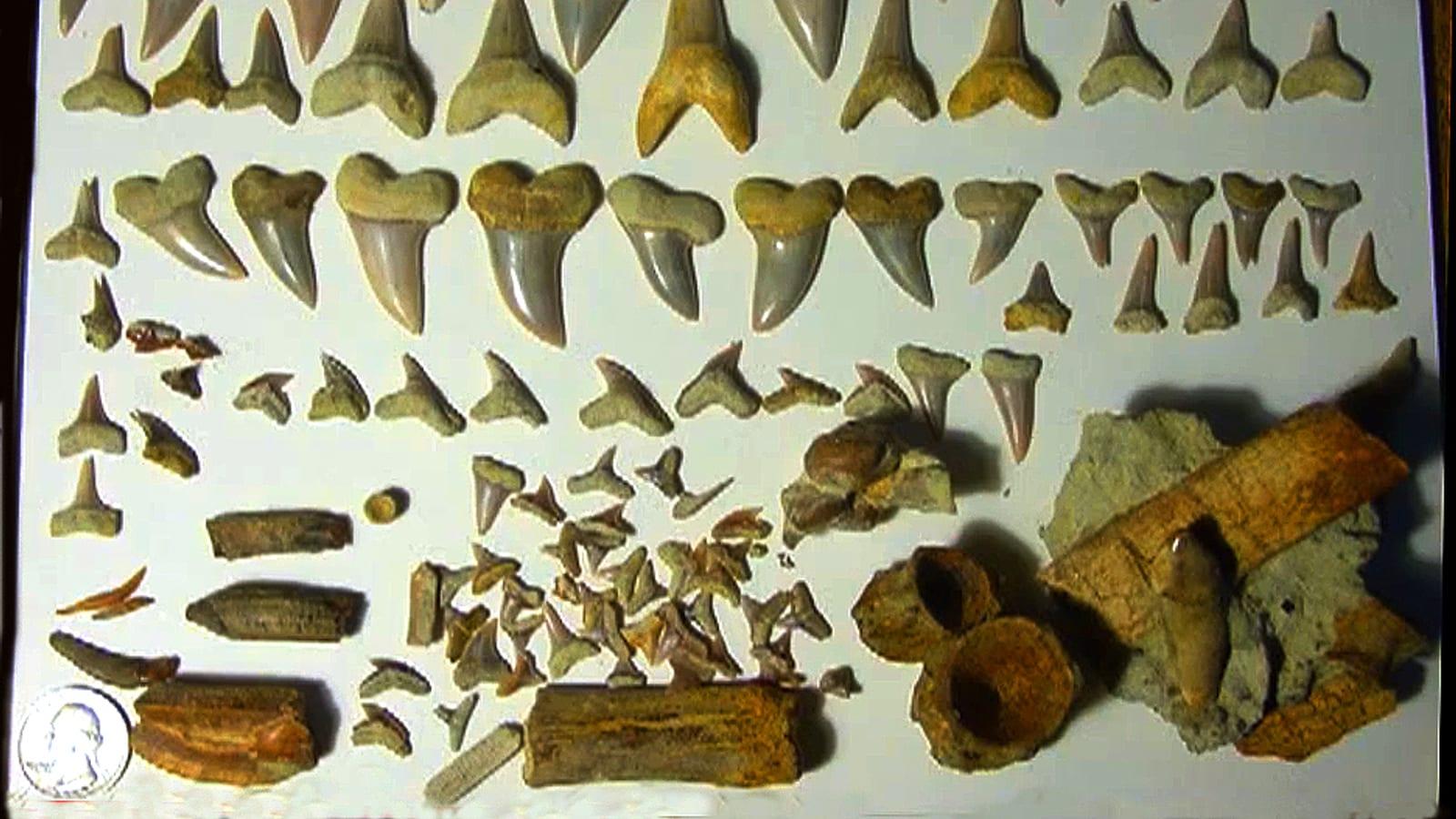
Shark Tooth Hill is a low ridge of eroding sedimentary rock in the foothills east of Bakersfield, California, and it is one of the most significant Miocene marine fossil localities in the world. The site exposes the Round Mountain Silt, a middle Miocene unit whose Bone Bed, a layer six inches to one foot thick, has yielded fossils of over 140 marine species. Mako shark teeth (Cosmopolitodus hastalis and Isurus planus) are the most common find. The bone bed also produces whale vertebrae, dolphin skulls, sea lion remains, ray dental plates, bony fish material, and occasional bird bone. Megalodon teeth turn up too, though they are a rare find rather than the typical one.
Sharktooth Hill itself was declared a National Natural Landmark in 1976, and the core Bone Bed outcrop is now owned by Bakersfield College. The surrounding fossil-bearing property is privately held by the Ernst family, who run supervised, paid digs through their business, The Ernst Quarries. Participants keep most of what they find, which makes this one of the few places in California where a member of the public can legally dig for marine fossils in the field.
Location and Directions
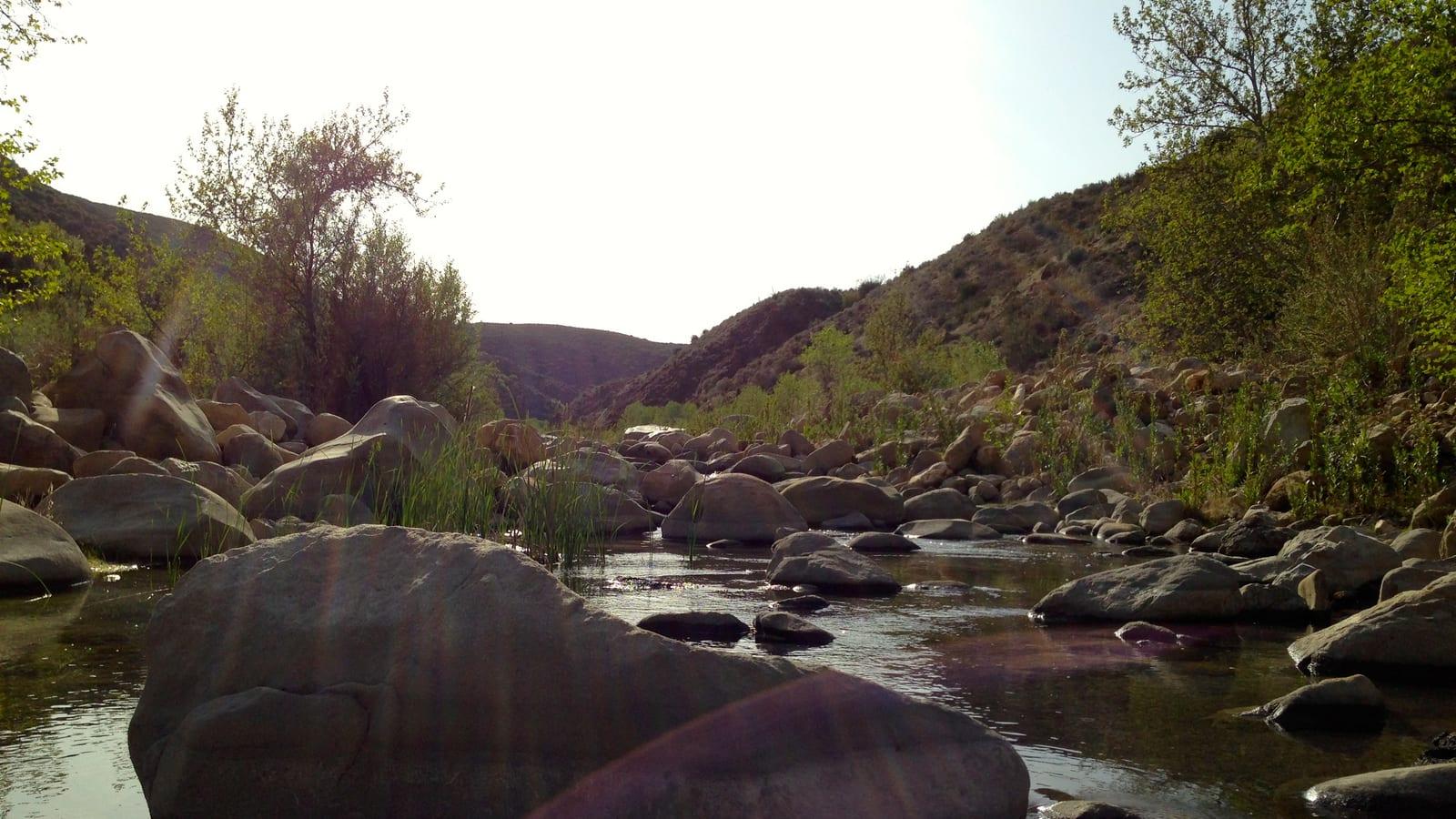
Shark Tooth Hill sits on the south side of the Kern River near Hart Park, roughly 5 miles (8 km) northeast of central Bakersfield, in Kern County.
Public digs are not run at the National Natural Landmark itself. They take place on the adjacent Ernst family property and are arranged through The Ernst Quarries (sharktoothhillproperty.com), or by texting (661) 319-7080. The Ernst Quarries publish their open dates on a calendar on their website. As of the last check, they do not operate during summer months.
The Buena Vista Museum of Natural History, at 2018 Chester Avenue, Bakersfield, CA 93301 (phone: 661-324-6350), is a separate organisation. It does not arrange dig access, but its exhibits include articulated skeletons recovered from the Ernst property, and it is worth visiting if the quarry is closed when you are in town.
Bakersfield is approximately 110 miles (177 km) north of Los Angeles via I-5 and Highway 99, and approximately 300 miles (483 km) south of San Francisco. The nearest major airport is Meadows Field (BFL) in Bakersfield. There is no public transport to the dig site, and a vehicle is required. The Ernst Quarries do not permit walk-ins or drop-offs, and low-profile vehicles cannot reach the site.
What Fossils You'll Find
The Round Mountain Silt bone bed is a concentrated accumulation rather than a thin scatter, and the density of material is immediately visible once you begin surface-scratching the soft silt.
- Mako shark teeth (Cosmopolitodus hastalis and Isurus planus). The smooth-edged, laterally curved teeth of C. hastalis are the most common find and are often complete. Isurus planus teeth are flatter and less common.
- Megalodon teeth (Otodus megalodon). A rare but documented find. Complete teeth exceed 15 centimetres in length. Most finds are partial or worn, but even fragments are recognisable by the coarse serrations and characteristic cross-section.
- Ray dental plates. Flat, hexagonal crushing plates from myliobatid rays are scattered throughout the bone bed and are easy to identify by their smooth, enamel-capped surface.
- Whale vertebrae and ribs. Large cetacean material occurs throughout the unit. Vertebral centra can be football-sized.
- Dolphin skulls and teeth. Several odontocete species have been described from the site. Teeth and skull fragments are found on dig days.
- Sea lion and fur seal bones. Pinniped material including limb bones and isolated teeth.
- Bony fish vertebrae and otoliths. Small vertebrae and ear stones from schooling fish are common in the silt matrix.
Tiger, six-gill, porpoise, whale, and requiem shark teeth also turn up regularly, along with rare finds such as Hemipristis teeth. Land animal remains, including horse, tapir, deer, gomphothere, and camel, have been documented from the wider Sharktooth Hill area, along with rare plant fossils such as gymnosperm and angiosperm seeds.
Geologic History
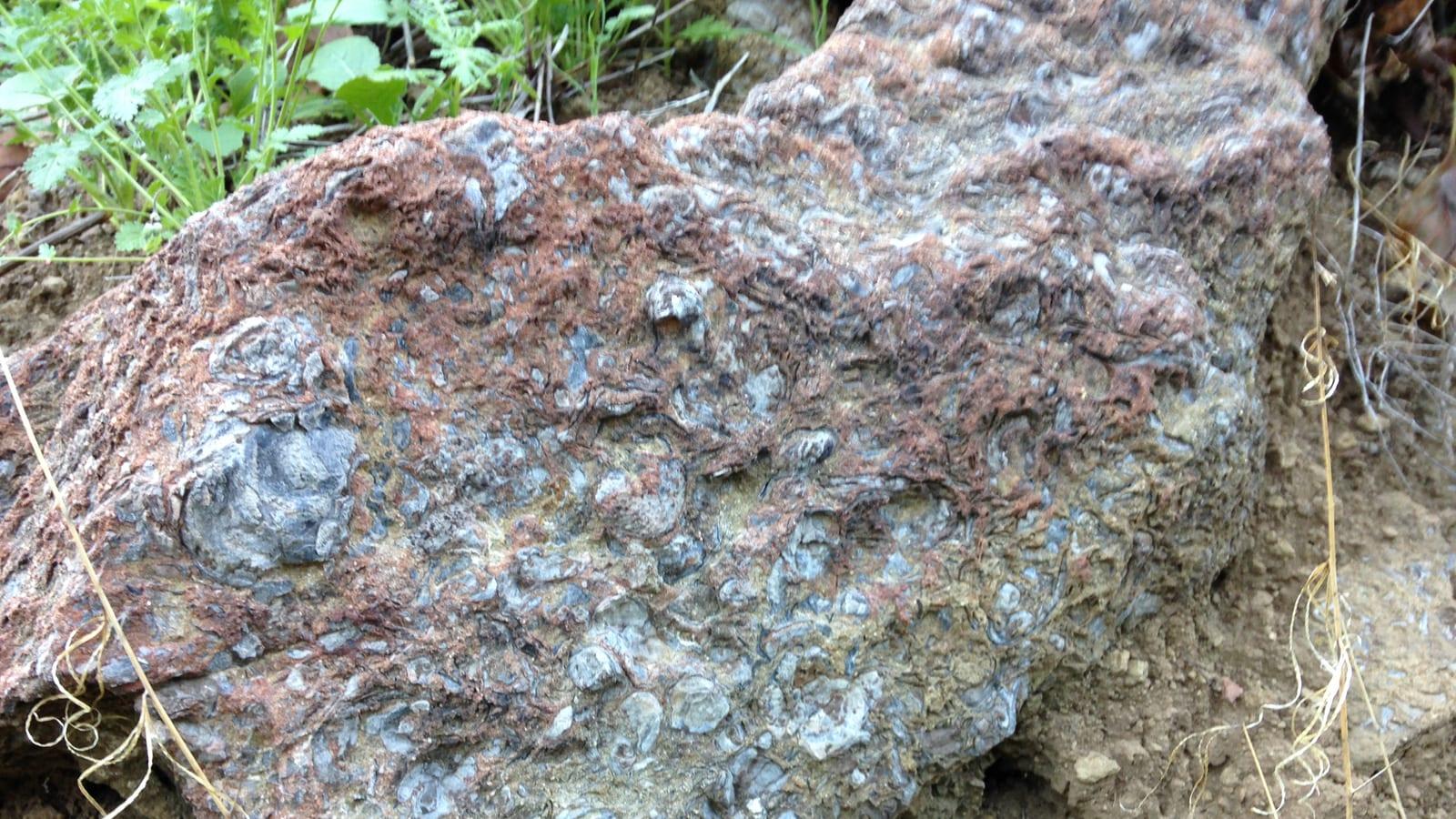
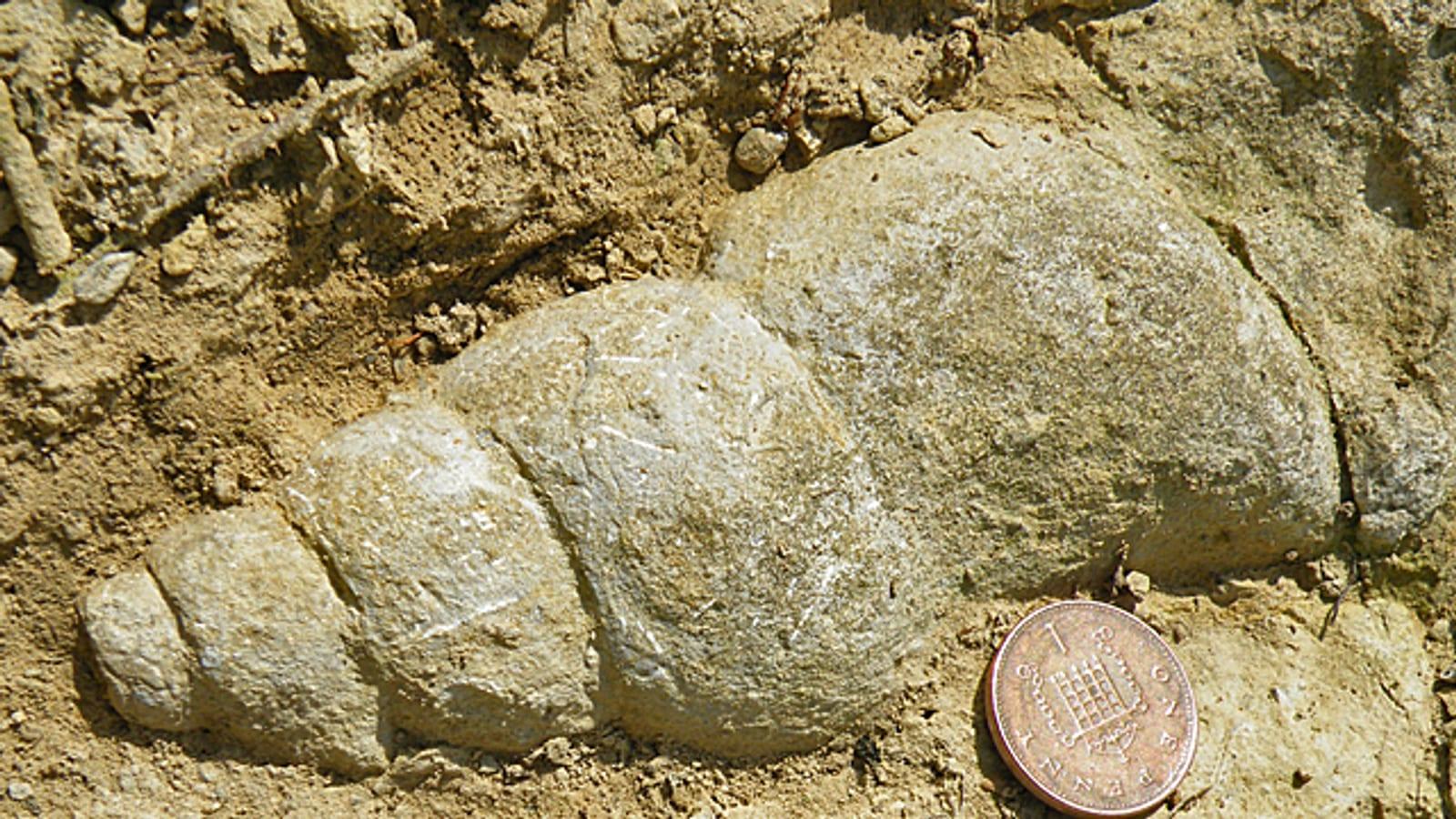
The Round Mountain Silt was deposited during the middle Miocene, approximately 16 to 15 million years ago, in a Pacific Ocean embayment that occupied the southern San Joaquin Valley. Kern County at this time sat at the northeastern margin of a productive subtropical sea. The Bone Bed, the thin, fossil-rich layer within the Round Mountain Silt, is a reworked assemblage, so most fossils in it are disarticulated. Larger, articulated specimens have come from siltstone layers two to twenty feet above the Bone Bed, where calcareous concretions often formed around large bones such as vertebrae and skulls.
Fossils at Sharktooth Hill were first documented in 1853 by William P. Blake while surveying rail routes for the federal government. Naturalist Louis Agassiz examined some of Blake's finds and identified nine new species from them in 1856, making Sharktooth Hill the first studied and documented fossil locality west of the Rocky Mountains. That history, combined with the density and diversity of the fossil material, led to the site's 1976 designation as a National Natural Landmark.
After deposition, the sediments were buried under younger sequences, then uplifted along the Bakersfield Arch. Erosion of the overlying softer sediments has re-exposed the Bone Bed at the surface of the present ridge, where it continues to erode naturally and is excavated by researchers and paying dig participants on the adjacent Ernst property.
Collecting Rules and Regulations
The Sharktooth Hill National Natural Landmark itself is protected and not open to public digging. Public access to fossil-bearing ground is through The Ernst Quarries, on private land adjacent to the landmark.
As of the last check, admission is $40 per person, payable in cash or check only. All tools are provided. Check-in runs from roughly 7:30 to 8:15 am at the staging area, and the group leaves promptly for the site shortly after, so late arrivals should call or text ahead. A short orientation covers safety and identification before digging starts. Group rates are available for parties of 10 or more. Contact The Ernst Quarries in advance for current terms.
Children under 18 must be accompanied by an adult. Children under 8 must stay with an adult at all times, and children under 5 are not permitted to dig with tools. No dogs are allowed on site. No alcohol or controlled substances are permitted. A vehicle is required to reach the dig site, and it must stay with you throughout the visit.
Participants keep the fossils they find, with the exception of scientifically significant specimens such as an intact skull or an articulated skeleton, which are set aside for museum study.
Confirm current fees, open dates, and rules directly with The Ernst Quarries (sharktoothhillproperty.com) or by texting (661) 319-7080 before planning a visit, since schedules and terms can change season to season.
Safety
Wear sturdy closed-toe shoes, bring a hat, sunscreen, and at least 2 litres of water per person. The dig site is exposed hillside with no shade, and temperatures in the San Joaquin Valley regularly exceed 38°C (100°F) outside the winter months. All food and water must be brought with you, as none is available on site.
Sources
- The Ernst Quarries (sharktoothhillproperty.com), official booking site with pricing and FAQ. Note: the operator's certificate is self-signed, so some browsers show a security warning.
- National Park Service, National Natural Landmarks: Sharktooth Hill
- Buena Vista Museum of Natural History
- Elam, T.D., and Wilkerson, G. "The Round Mountain Silt Bone Bed of Sharktooth Hill, Kern County, California: recent research yields new answers to old questions." Desert Symposium, 2011.