T.rex Discovery Centre, Eastend Fossil Hunting Guide
Image: Joseph H. Hartman (CC0)
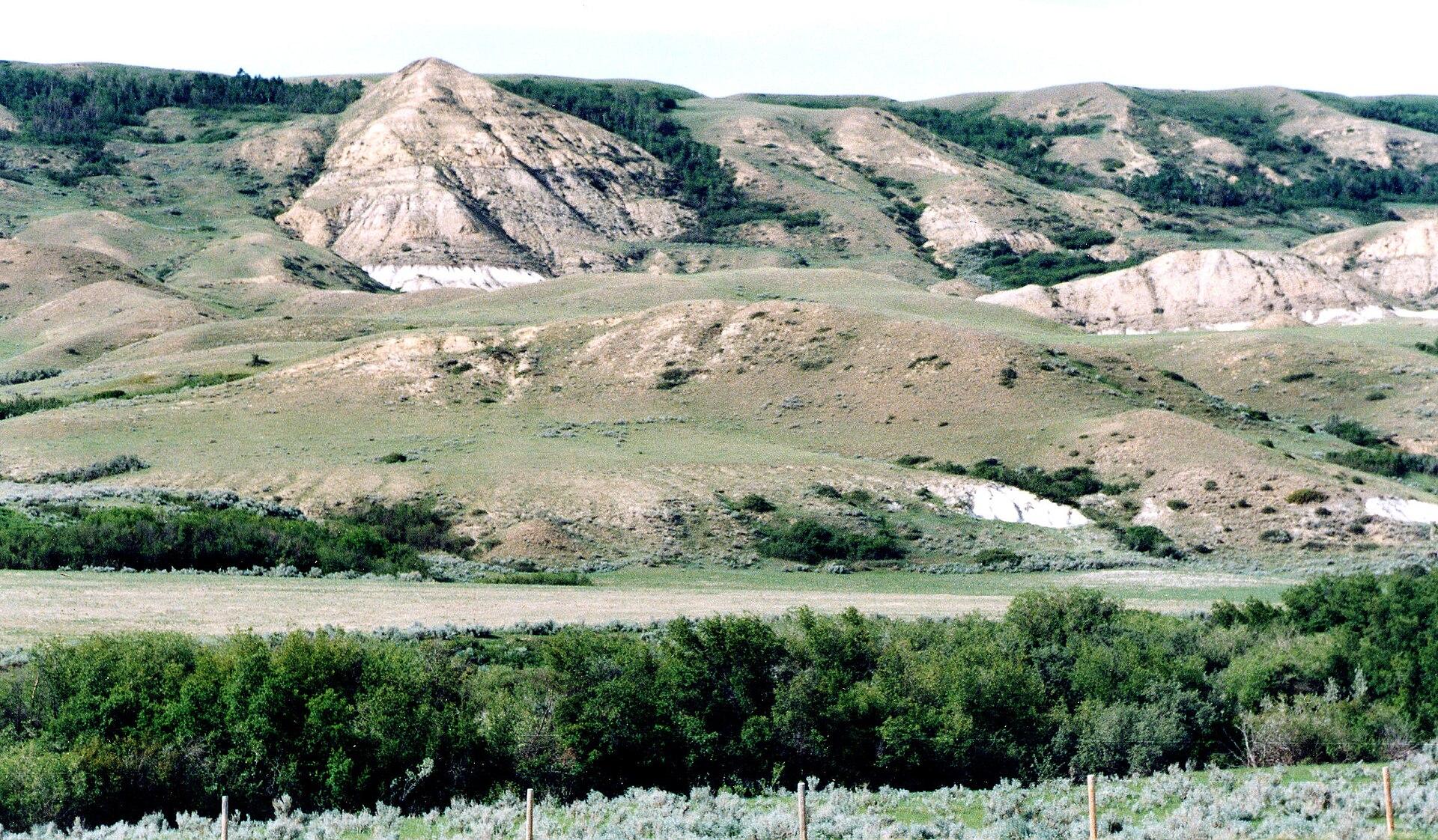
The Saskatchewan museum built on the valley where Scotty was found, one of the largest and most complete Tyrannosaurus rex skeletons known. Fossil quarry tours and day digs run through the summer in the Frenchman Formation.
By Edward Chen · Published 14 September 2026
Introduction
On 16 August 1991 a local high school teacher named Robert Gebhardt went out prospecting with palaeontologists from the Royal Saskatchewan Museum. Some accounts call him the principal. He found a tooth and a tailbone in the Frenchman River Valley near Eastend.
What followed was Scotty, among the largest and most complete Tyrannosaurus rex skeletons ever recovered. A 2019 study argued from bone dimensions that Scotty is the heaviest individual known. The specimen is the reason a town of a few hundred people has a research centre.
The T.rex Discovery Centre stands above the valley. It is a working facility of the Royal Saskatchewan Museum, not only an exhibition, and visitors can see preparation in progress through the laboratory windows.
The centre also covers the wider fossil record of the Frenchman River Valley and the Cypress Hills. That record spans the end of the Cretaceous and the start of the Palaeogene.
The specimen's nickname came from a bottle of Scotch the field crew opened to mark the find. Excavation did not begin until June 1994. The bone sat in sandstone so hard and iron-rich that the work ran for more than twenty years, and preparation finished in 2011.
Location and Directions
The centre is at Eastend in the south-west corner of Saskatchewan, close to the Montana border and about 130 kilometres south-west of Swift Current.
GPS: 49.5224°N, 108.8272°W.
Access is by road, and the drive across the prairie is long. Swift Current on the Trans-Canada Highway is the nearest substantial town.
The centre opens seasonally and is closed over winter. Check the Royal Saskatchewan Museum listing for this year's dates before you travel.
Admission is by donation rather than a fixed charge. A suggested amount is posted at the door.
An outdoor excavation sandpit lets younger visitors dig without a trip into the field.
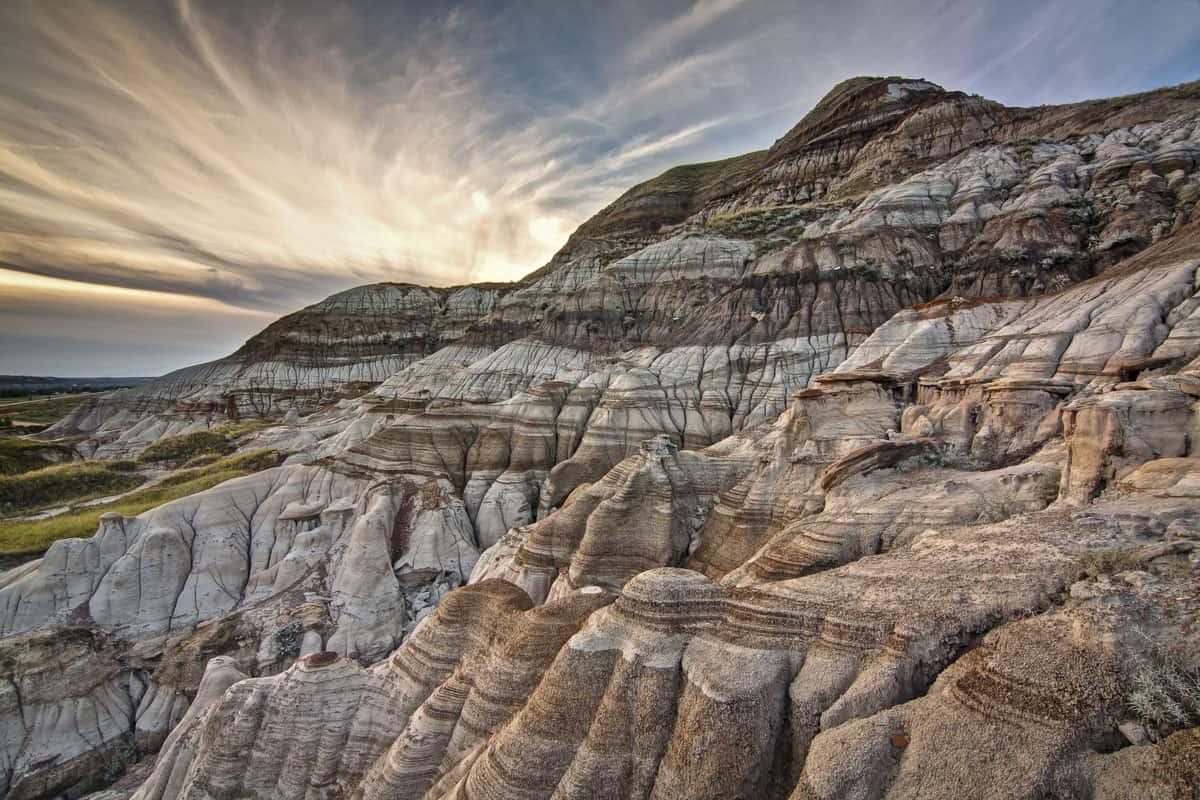
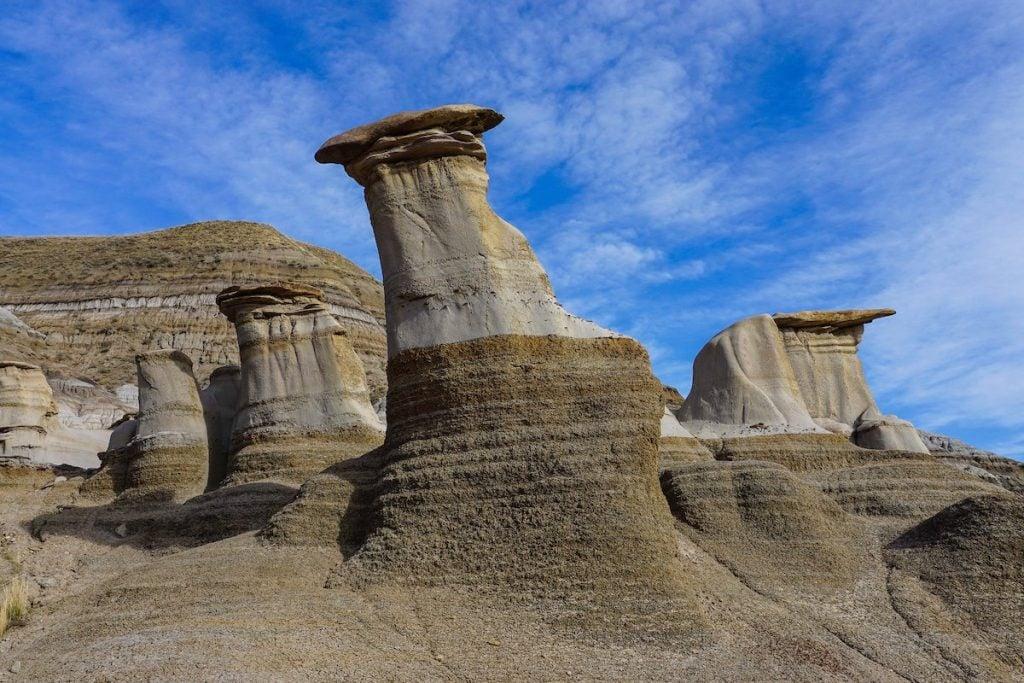
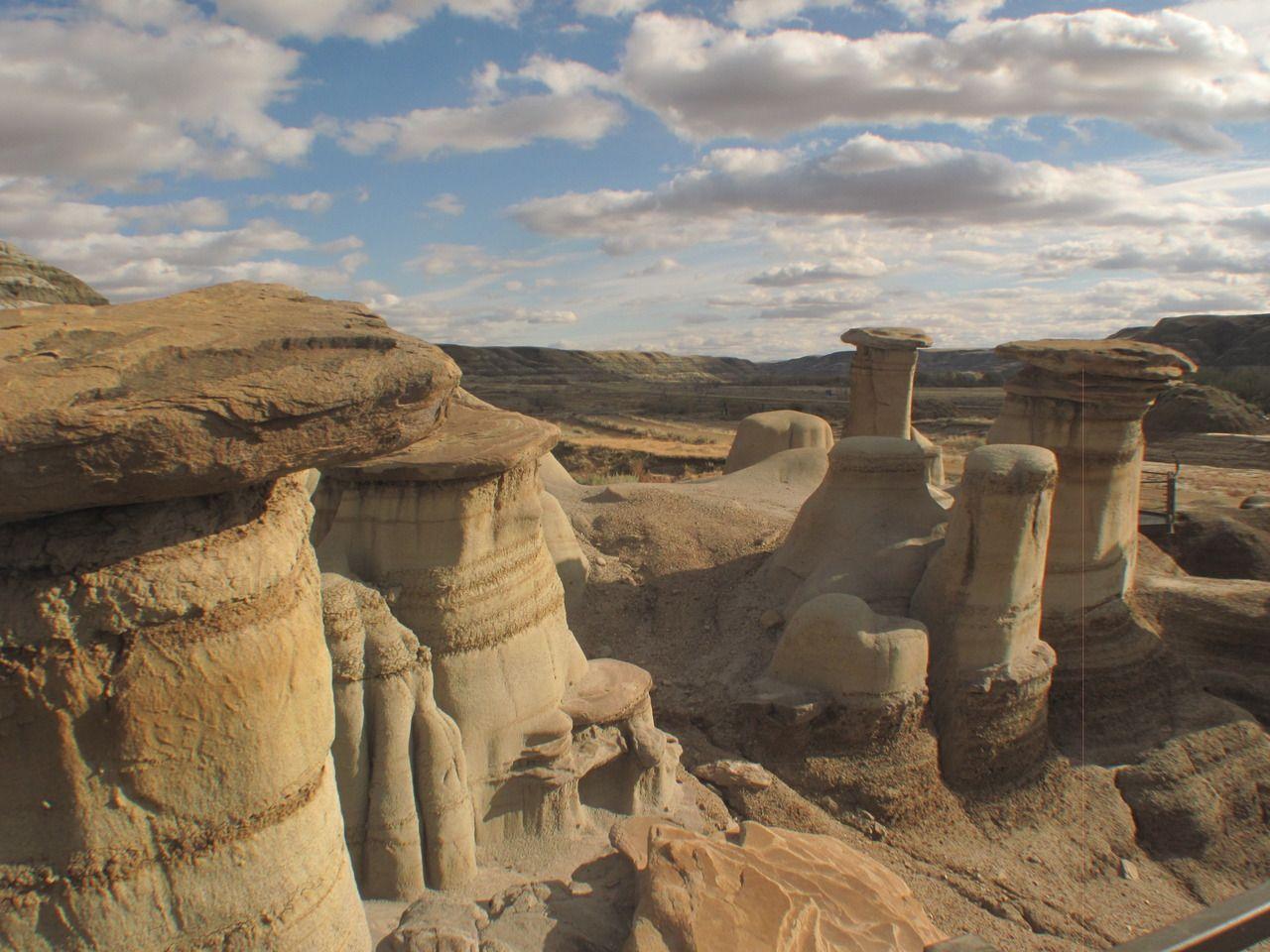
Eastend is a small town in a river valley, and the landscape around it is the draw as much as the museum. The Frenchman River has cut badlands into the prairie, and the exposures are visible from the road.
What Fossils You'll Find
Programming is centred on the building rather than on the quarry. Guided and self-guided tours, a theatre, the Paleo Lab, an indoor dig table, an outdoor sandpit and the trails are what is offered.
The Frenchman Formation is a latest Cretaceous unit and its fauna is the classic end-Cretaceous North American assemblage. Tyrannosaurus rex, Triceratops, Edmontosaurus, ankylosaurs and small theropods all occur.
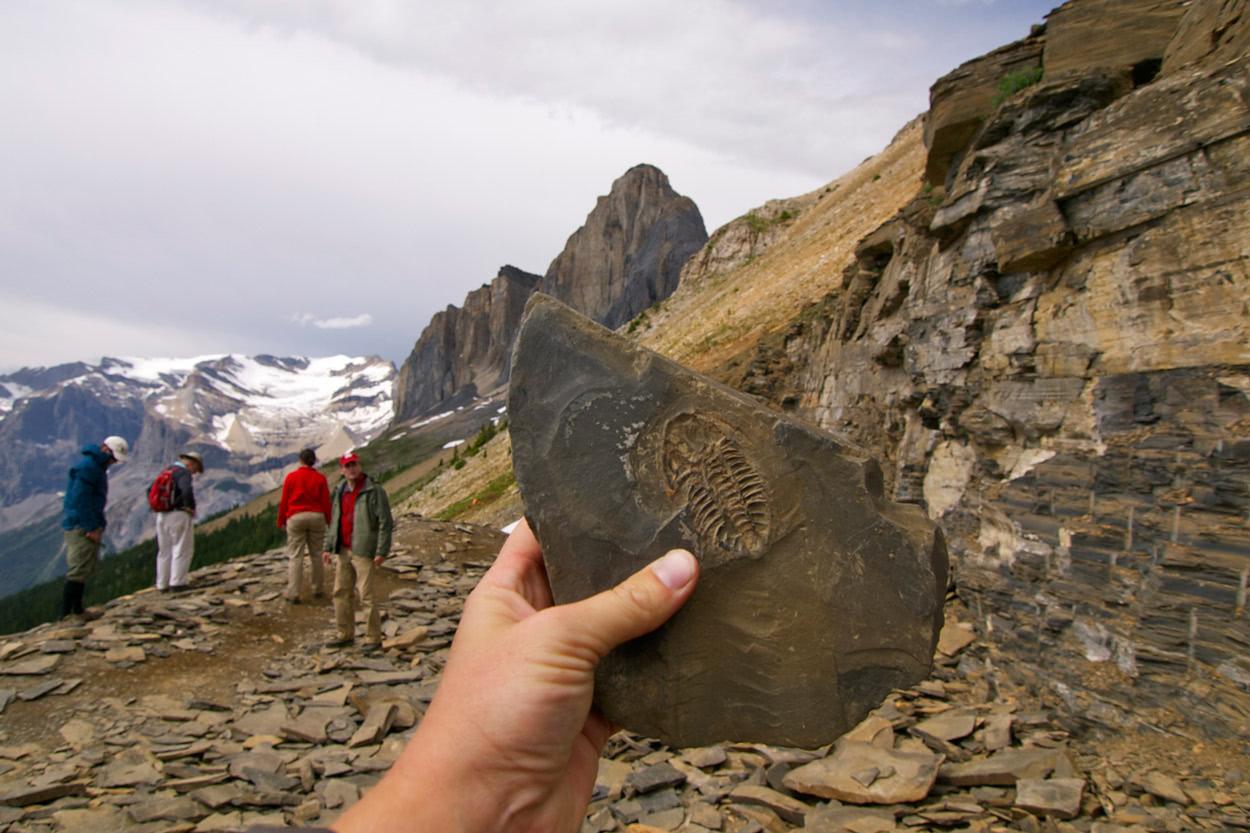
Turtles, champsosaurs, fish and plant material are common and are the realistic finds on a day dig.
Above the Frenchman sits the Ravenscrag Formation, which crosses the Cretaceous and Palaeogene boundary. The extinction horizon itself is present in this valley, which is a rare thing to be able to point at in the field.
The preparation laboratory is visible from inside the centre. Watching a technician remove rock from bone under a microscope conveys the scale of the work better than any label does.
Most of Scotty's original bones stayed in the ground for years while that work went on. What visitors see mounted is the product of decades of preparation.
A second mount went up at the Royal Saskatchewan Museum in Regina in May 2019. Eastend holds the specimen itself, and the Regina exhibit reflects later findings about it.
 Photo: Muhsatteb, CC BY-SA 4.0, via Wikimedia Commons
Geologic History
The Frenchman Formation dates to the very end of the Cretaceous, roughly 68 to 66 million years ago. It is the last chapter of the dinosaur record in Canada.
The environment was a coastal plain of rivers, floodplains and swamps near the retreating Western Interior Seaway. Sandstones and mudstones accumulated across it, and bone was buried in channel and overbank deposits.
The Cypress Hills nearby are unusual. They stood above the ice during the last glaciation as a nunatak. They escaped the scouring that flattened the rest of the prairie. They also preserve a much longer record of Cenozoic sediments than the surrounding country.
Erosion of the Frenchman River Valley since the ice retreated is what exposes the dinosaur-bearing beds.
Above the boundary, the Ravenscrag Formation records a world without dinosaurs. Coal seams in it show swamp forests, and the mammals that follow are small and unremarkable compared with what came before.
Collecting Rules and Regulations
Saskatchewan protects fossils under provincial heritage legislation. Fossils belong to the Crown, and collecting without a permit is not allowed.
That is not a technicality. Saskatchewan's rules are among the stricter in Canada, and the centre is the place to see the results rather than to dig for them.
Do not prospect independently in the valley. Much of the surrounding land is private ranchland.
Report anything unusual to the centre staff.
Safety
The badland exposures are steep and loose. Follow the crew's directions.
Prairie weather changes fast, with severe thunderstorms in summer and little shelter in the open. Lightning is a genuine risk on exposed ground.
Summer heat is considerable and there is no shade. Carry water.
The area is remote. Mobile coverage is patchy and the nearest hospital is some distance away.
Sources
https://en.wikipedia.org/wiki/T.rex_Discovery_Centre https://townofeastend.com/t-rex-discovery-centre https://www.saskatchewan.ca/government/news-and-media/2024/may/08/t-rex-discovery-centre-opens-for-2024-season https://chatnewstoday.ca/2026/08/14/t-rex-discovery-centre-in-eastend-celebrates-35-years-since-scottys-discovery/