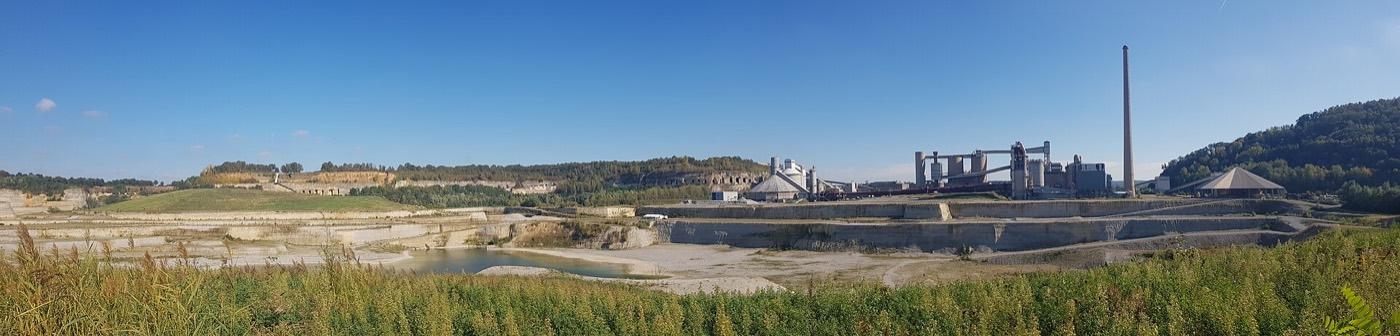
ENCI Quarry and Sint-Pietersberg Fossil Hunting Guide
Image: Romaine (CC0)
The type locality of the Maastrichtian, the final stage of the Cretaceous. Marl extraction stopped in 2018 and Natuurmonumenten now manages the pit as a nature reserve that is free to walk. Collecting happens through organised excursions rather than open access.
By Edward Chen · Published 11 September 2026
Introduction
A slice of geological time is named after this hill. The Maastrichtian stage takes its name from the chalk at Maastricht. It covers the last 6 million years of the Cretaceous, and it ends with the extinction of the non-avian dinosaurs. The ENCI quarry cuts through the type section.
The hill has a longer claim than that. In the 1770s a large reptile skull came out of the workings under Sint-Pietersberg. It was eventually named Mosasaurus, the Meuse lizard, after the river below, and it gave its name to an entire group of marine reptiles. The specimen was taken to Paris as spoils of war after the French invasion and remains there.
The quarry worked marl for cement for most of the twentieth century. Extraction stopped for good on 1 July 2018. The pit is now a nature reserve.
Location and Directions
The ENCI quarry lies on the Sint-Pietersberg immediately south of Maastricht city centre, and it is reachable on foot or by bicycle from the city.
GPS: 50.8222°N, 5.6839°E.
Natuurmonumenten manages the area and walking through the quarry is free. It states that the walking area is open between sunrise and sunset. The stairway down into the quarry has 215 steps.
The reserve takes in more than the pit. The walking route passes chalk faces, limestone grassland and water features, and the area supports dragonflies, butterflies, deer and eagle owls.
Walking access and collecting access are two different things. See the rules section below before you plan a trip around finding fossils.
What Fossils You'll Find
The Maastricht Formation is a soft, yellowish, coarse-grained limestone, quite unlike the hard white chalk of the English and French coasts, and it is full of shell material.
Shark teeth are the classic find. Echinoids, corals, belemnites, bivalves and bryozoans are all common. The formation is also the source of mosasaur material, though marine reptile bone is a rare find and not something to expect.
At organised events, participants search marl blocks and gravel that have been brought out for the purpose. That is a reliable way for children and first-time visitors to find something.
The hill is riddled with something else worth knowing about. Centuries of underground marl extraction left a vast network of man-made galleries beneath Sint-Pietersberg, parts of which are open on guided tours. Those tunnels are where the mosasaur skull was found, and they are a separate visit with their own arrangements.
 Photo: Romaine, CC0, via Wikimedia Commons
.jpg)
Geologic History
The chalk of Sint-Pietersberg formed during the Maastrichtian, roughly 72 to 66 million years ago, at the very end of the Cretaceous. A shallow, warm, tropical sea covered this part of north-west Europe.
The sediment is biogenic. It is made largely of the broken remains of shelled organisms. That is why it is so fossiliferous and why it is softer and more granular than the fine chalks laid down elsewhere.
The top of the sequence in this region reaches the Cretaceous and Palaeogene boundary, the horizon that records the end-Cretaceous extinction. That is part of why the section became the international reference for the stage.
 Photo: Kleon3, CC BY-SA 4.0, via Wikimedia Commons
.jpg)
Collecting Rules and Regulations
The quarry is not open ground for a hammer. Free walking access does not carry a right to collect.
Collecting happens through organised excursions. Natuurmonumenten schedules paid guided fossil events, including family sessions where children search marl blocks and gravel as researchers do. Those are the current route in, and the events calendar carries the dates and the ticket prices.
Older guidance points at Saturday trips run by the Limburg section of the Nederlandse Geologische Vereniging. The published record of those runs only to 2018 and they were for members. Confirm before you plan a trip around them.
Historically, access for amateur geologists ran through membership of the Limburg geological society, and joining a society trip remains the practical route.
Check the Natuurmonumenten events calendar for the Sint-Pietersberg and the NGV Limburg programme before you travel. Dates are limited and places are finite.
Report significant vertebrate finds. The Natuurhistorisch Museum Maastricht holds the regional collection and is the right first contact.
If you travel specifically to collect, book a Natuurmonumenten event before anything else. The programme is published in Dutch and dates are limited. A wasted trip to Maastricht is an expensive way to learn that nothing ran that weekend.
One thing to set expectations. This is not a site where you turn up with a bucket and fill it. The pit is a nature reserve first and a fossil locality second, and the collecting that happens does so under supervision on set dates. Visitors who arrive expecting open access are routinely disappointed.
 Photo: Romaine, CC0, via Wikimedia Commons
.jpg)
Safety
Quarry faces are unstable. Keep away from the base of the working faces and do not climb them. Loose material comes down without warning.
Stay on marked routes. Parts of the pit are closed for nature conservation and for safety, and those closures are not advisory.
The site includes water bodies with steep, unguarded edges. Keep children close.
Chalk and marl are slippery when wet. Wear boots with grip.
On organised excursions, follow the leader's instructions and wear any protective equipment provided.
 Photo: Romaine, CC0, via Wikimedia Commons
.jpg)
Sources
https://www.natuurmonumenten.nl/natuurgebieden/sint-pietersberg https://www.nhmmaastricht.nl/nieuws/nieuwe-zoektocht-naar-fossielen-in-de-enci-groeve/ https://www.paleontica.org/sites/fossil_site.php?plaats=137&language=en https://www.maastrichtuniversity.nl/news/students-hunting-fossils-enci-quarry
Nearby sites
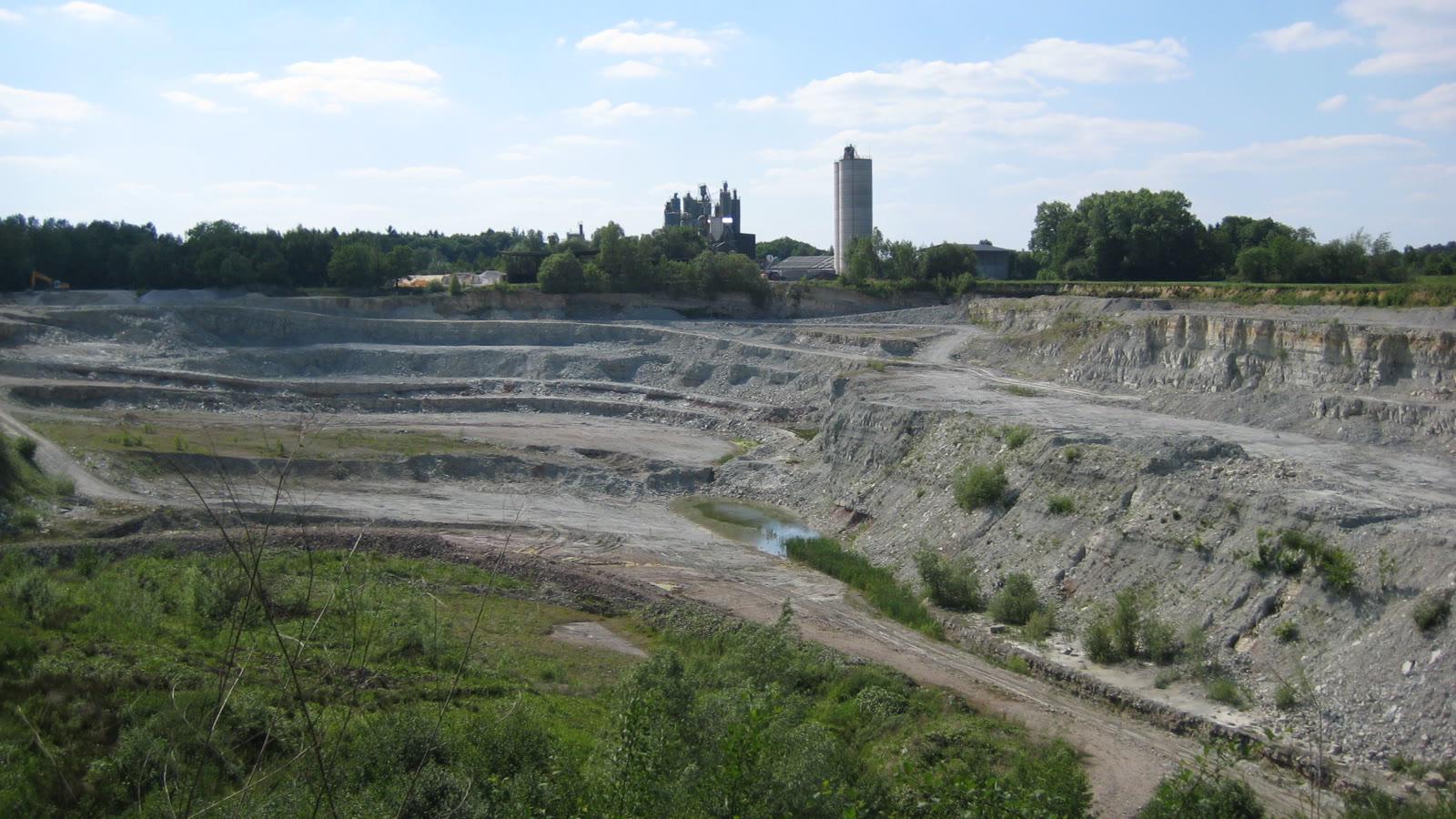 Winterswijk Quarry, Gelderland Fossil Hunting GuideMarine reptile bones, Reptile footprints
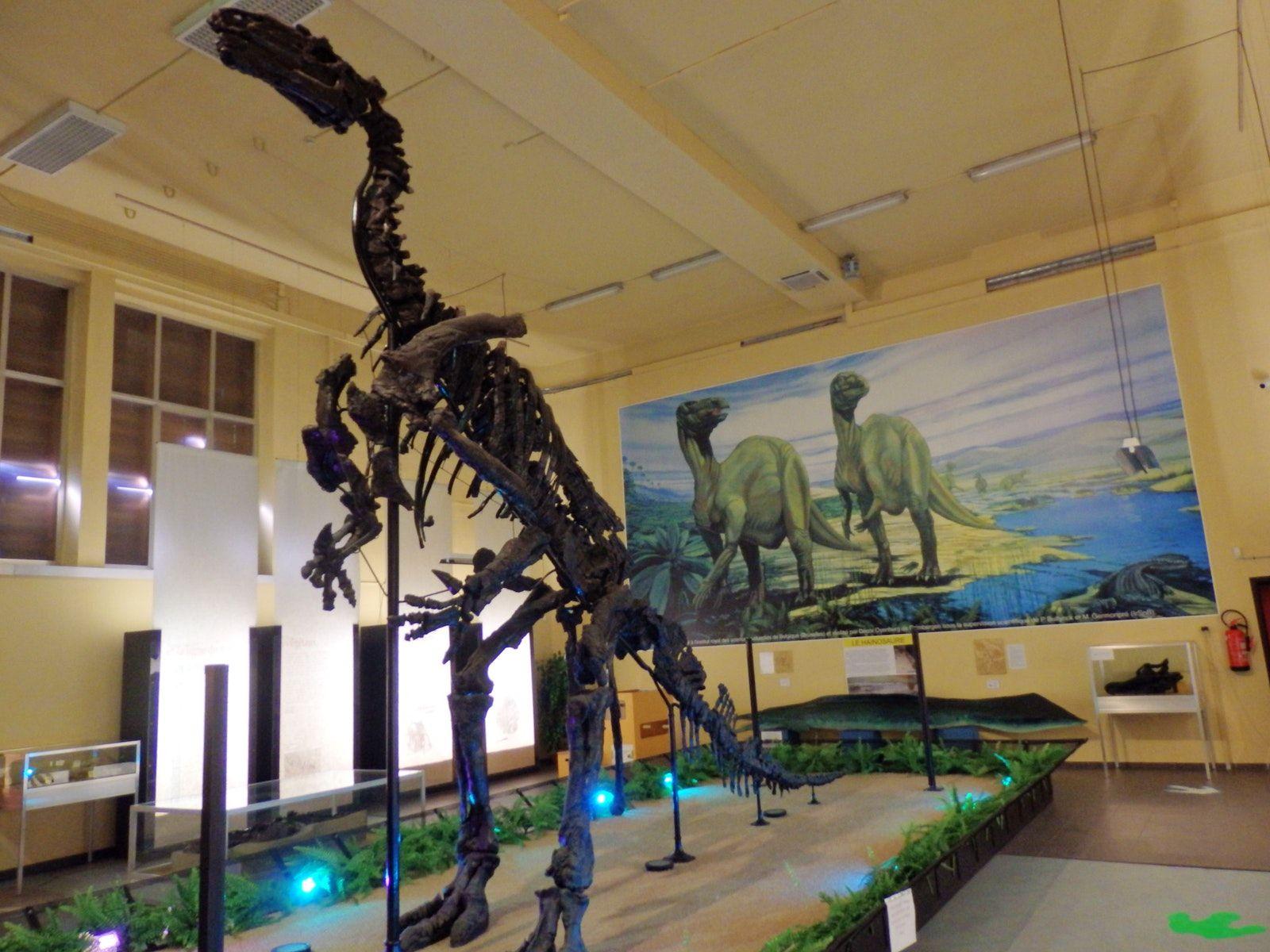 Bernissart Iguanodons (RBINS, Brussels) Fossil Hunting GuideIguanodon bernissartensis (articulated skeletons), Mantellisaurus atherfieldensis
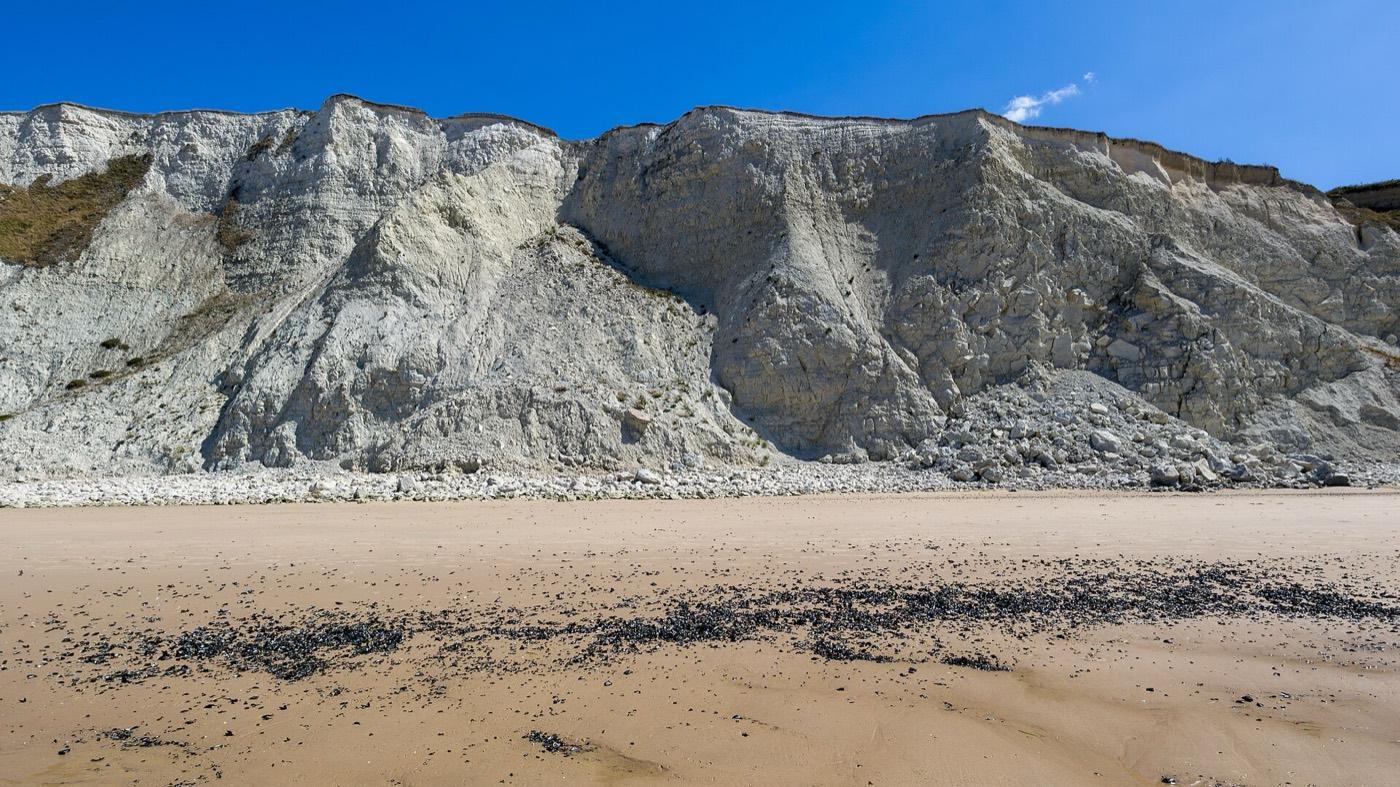 Cap Blanc-Nez Fossil Hunting GuideAmmonites, Belemnites
 Folkestone Warren and Copt Point Fossil Hunting GuideAmmonites, Crabs