Cap Blanc-Nez Fossil Hunting Guide
Image: JackyM59 (CC BY-SA 4.0)
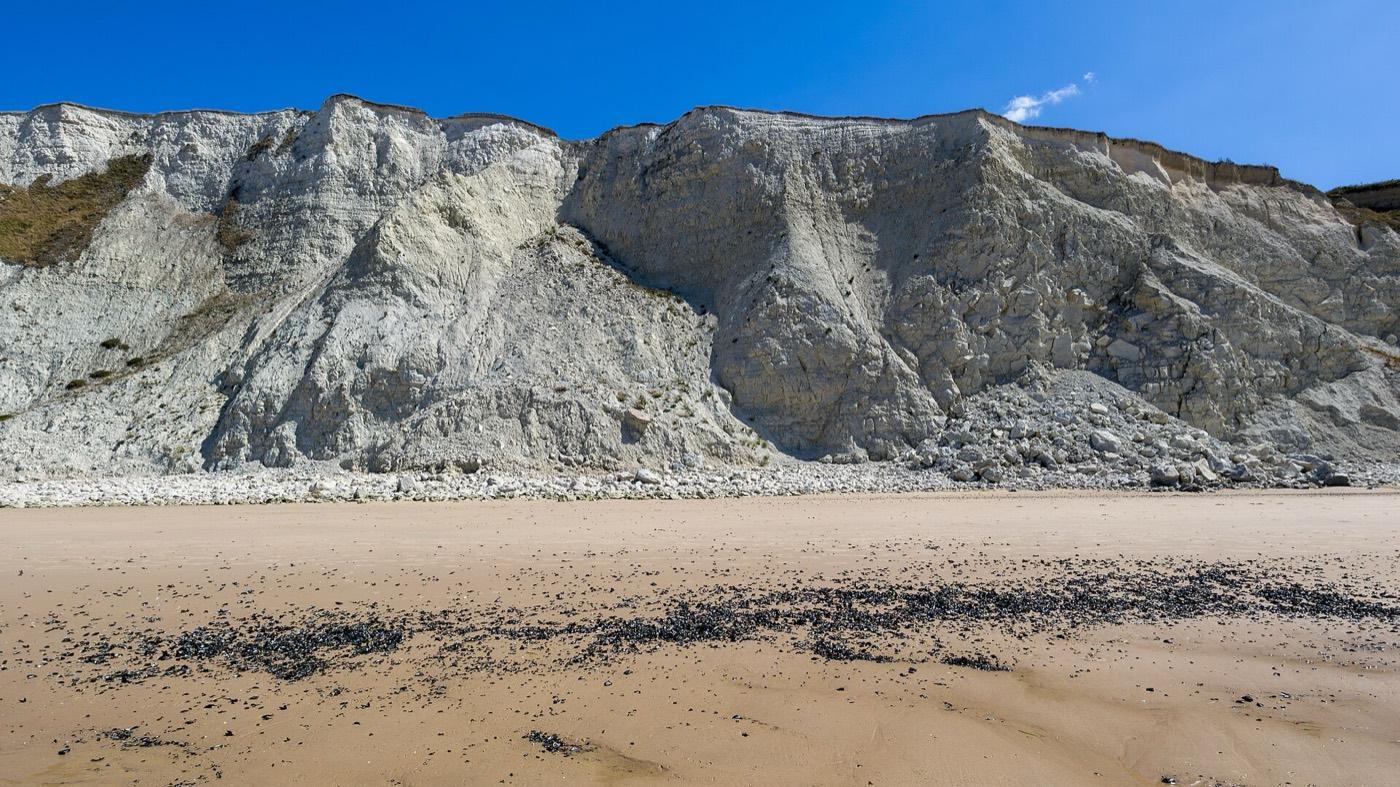
Cretaceous chalk cliffs on the Opal Coast near Calais, with Albian clay reachable at low water and about 70 metres of Cenomanian chalk above. Hand collection of naturally eroded material on the beach is tolerated, and heavy tools including a hammer are prohibited.
By Edward Chen · Published 11 September 2026
Introduction
Cap Blanc-Nez is the French side of the same chalk that forms the white cliffs at Dover. On a clear day you can see across to them. For a collector the interest is that two very different units are available on one visit.
The cliffs are Cenomanian and Turonian chalk, roughly 70 to 75 metres of it. At low water the foreshore exposes Albian clay, which is older and softer and yields a different assemblage.
The site is well known, well studied and busy. It is also one of the few French coastal localities where the collecting rules are written down precisely. That makes it straightforward to stay on the right side of them.
Location and Directions
Take Rue de la Mer in Escalles, 62179, Pas-de-Calais. Pass the holiday homes and follow the track along the edge of the fields. There is parking at the end.
From the car park the route to the beach descends through the Cran d'Escalles, a steep dry valley cut through the cliff line. This is the access point, and it is the way back up.
GPS: 50.9252°N, 1.7064°E.
Both Blanc-Nez and its neighbour Gris-Nez have reasonably large car parks. But on fine weekends they fill and people end up parking along the main road. Arrive early.
The foreshore is tidal. The Albian clay is only reachable at low water, which is the main reason to time a visit around the tide rather than the weather.
What Fossils You'll Find
The chalk yields the standard Cretaceous shelf fauna: ammonites, belemnites, echinoids, bivalves, brachiopods and sponges. Echinoids and belemnites are the most consistently found.
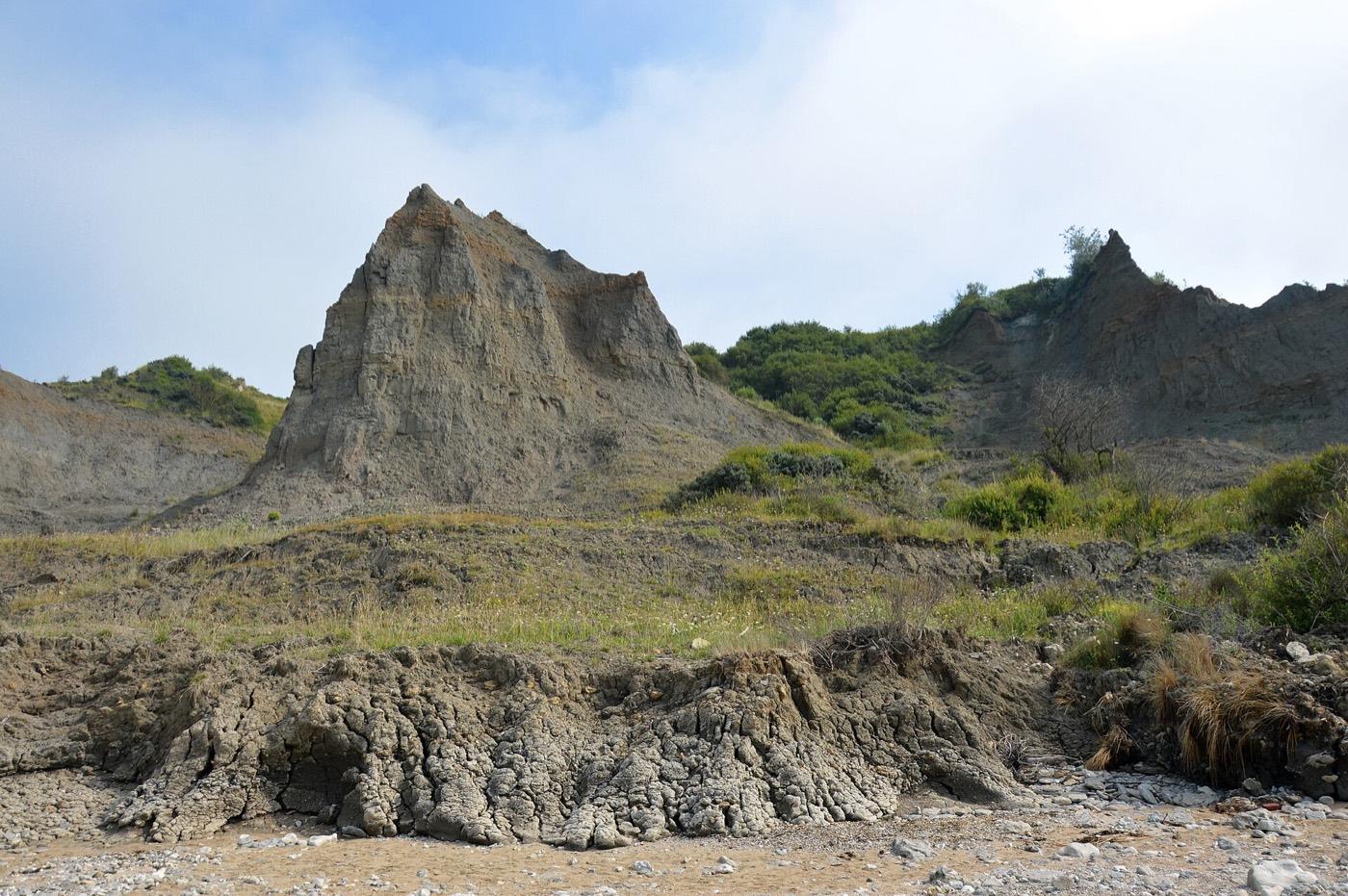
The Albian clay on the foreshore is the more interesting half of the visit. It is a different environment and a different assemblage, and it is only open to you for part of the tidal cycle.
Work the beach and the fallen debris. Fossil-rich layers occur on the foreshore, and material that has already weathered out is both easier to collect and legal to take.
Two practical notes on identification. Belemnite guards survive chalk weathering better than most fossils, so they are usually the first thing a visitor picks up. They are easy to mistake for ordinary flint splinters until you see the bullet shape. Echinoids are often preserved as flint internal moulds. That means the shell has gone and what remains is a stone cast of the inside of the animal.
The Plenus Marls, the thin unit named the Formation des Crupes here, mark a global event at the Cenomanian and Turonian boundary when ocean oxygen levels crashed. That two metres of rock is studied far beyond France, and it is one of the reasons this section appears in the international literature.
 Photo: JackyM59, CC BY-SA 4.0, via Wikimedia Commons
Geologic History
The Cenomanian succession here is described bed by bed, and the named formations run, from the bottom up, as follows.
The Formation de Strouanne is a glauconitic chalk, about 2 metres, sometimes called the Tourtia. Above it the Formation du Petit Blanc-Nez is around 30 metres of chalk and marl alternations. The Formation du Cran follows at about 10.7 metres of chalk-dominated cycles. The Formation d'Escalles is roughly 30.3 metres of finely rhythmic chalk. The Formation des Crupes, about 2.16 metres, is the Plenus Marls. The Formation du Grand Blanc-Nez is nodular chalk at the top.
That level of stratigraphic detail exists because the section is a reference for the Cenomanian in northern France. It is the reason the cliffs appear so often in the literature on the Cenomanian and Turonian boundary.
All of it accumulated in a warm shelf sea during the Late Cretaceous. Sea level was high, and chalk formed across much of north-west Europe.
 Photo: Jörg Braukmann, CC BY-SA 4.0, via Wikimedia Commons
Collecting Rules and Regulations
Two separate orders apply here, and they are often confused.
The inter-prefectoral biotope protection order of 26 March 2021 covers the coast from the cran d'Escalles to Strouanne. It exists to protect the seabird colony. From 1 January to 31 August it prohibits cliff climbing and free flight. It also bars drones over the cliff and within 300 metres of it, and motorised leisure overflight below 150 metres. It contains no fossil provision at all.
The collecting rule comes instead from a prefectoral order made under the decree of 23 December 1987, which classified the site. That order prohibits mechanical extraction and heavy tools, named as pickaxe, spade and hammer, on the beach as well as on the cliff. A geologist's hammer needs prefectoral authorisation.
Hand collection of rock or fossil samples that erosion has already exposed on the beach is tolerated.
The practical position is therefore simple. Leave the hammer in the car, pick up what is already loose on the foreshore, and never dig into the cliff. Digging the cliff is both prohibited and dangerous.
This page could not find the collecting order published on an official website. Ask the Pas-de-Calais prefecture for the current text before you plan serious work here.
 Photo: JackyM59, CC BY-SA 4.0, via Wikimedia Commons
Safety
The chalk cliffs are unstable and rockfall happens. Keep away from the cliff base and do not shelter beneath overhangs.
Do not get cut off. The Albian clay is exposed only at low water, and a rising tide will push you against the cliff. Work a falling tide and know your route back to the Cran d'Escalles.
The descent through the Cran d'Escalles is steep and becomes slippery in wet weather. Wear boots with grip.
The site is exposed to wind coming off the Channel. Conditions on the cliff top can be considerably rougher than they look from the car park.
Sources
https://www.parc-marin-epmo.fr/ https://www.paleontica.org/sites/fossil_site.php?plaats=52&language=en https://pedagogie.ac-lille.fr/svt/le-cap-blanc-nez/ https://www.visitpasdecalais.com/escalles-quite-a-sight/