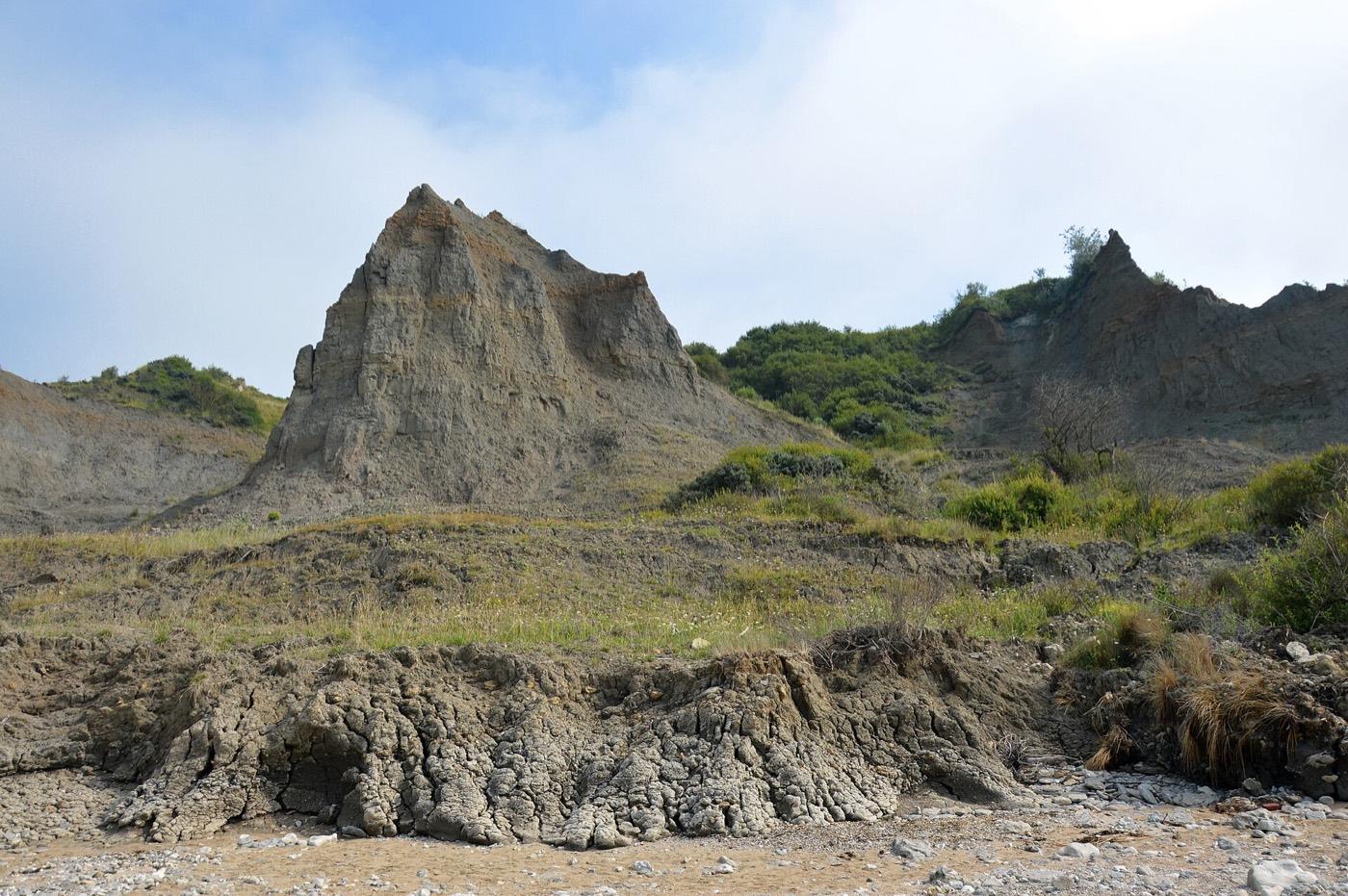
Falaises des Vaches Noires Fossil Hunting Guide
Image: DimiTalen (CC0)
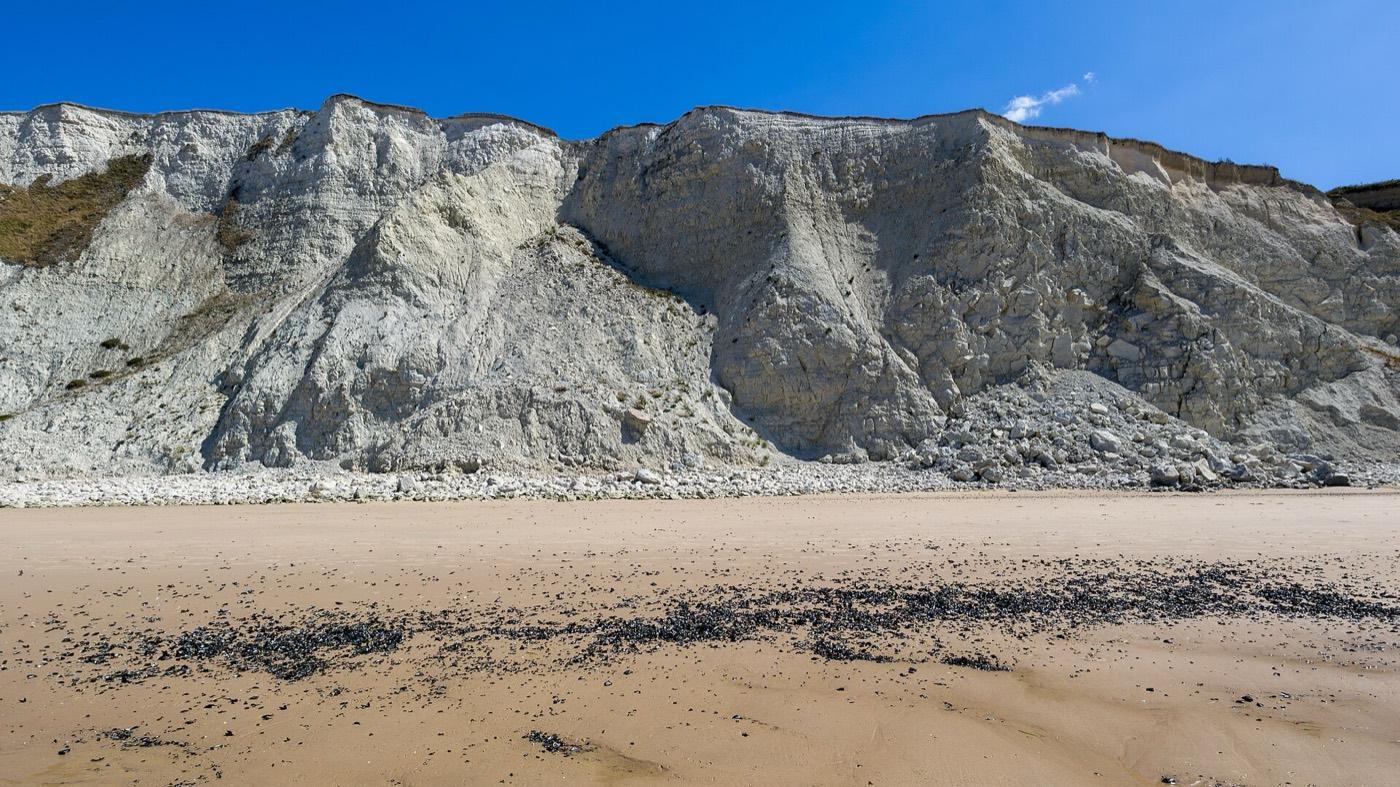
Four and a half kilometres of slumped Jurassic clay cliffs between Villers-sur-Mer and Houlgate in Calvados, feeding ammonites, echinoids and marine reptile bone onto the foreshore. A national nature reserve created in September 2026 now bans collecting outright. Go to look.
By Edward Chen · Published 11 September 2026
Introduction
The Vaches Noires are not conventional cliffs. They are a slumped, gullied mass of dark Jurassic clay and marl that slides steadily toward the sea. That instability is exactly why the site works. Fresh material arrives on the foreshore constantly. What lies on the foreshore has usually been released by the last few tides rather than dug out by anyone.
The name means black cows. Seen from the water, the dark slumped blocks scattered along the shore were said to look like a herd standing in the shallows.
The exposure runs about 4.5 kilometres between Villers-sur-Mer and Houlgate in north-west Calvados. It has been studied for more than 250 years, and it remains productive. A description of the mid-Jurassic bony fish assemblage from these cliffs was published in PLOS ONE in 2026. That gives a sense of how much material still comes out.
Location and Directions
Villers-sur-Mer is the usual start. Park in the town, walk down to the beach and head east toward Houlgate. The productive ground begins once you are clear of the sea wall and the groynes.
GPS: 49.310°N, 0.050°W.
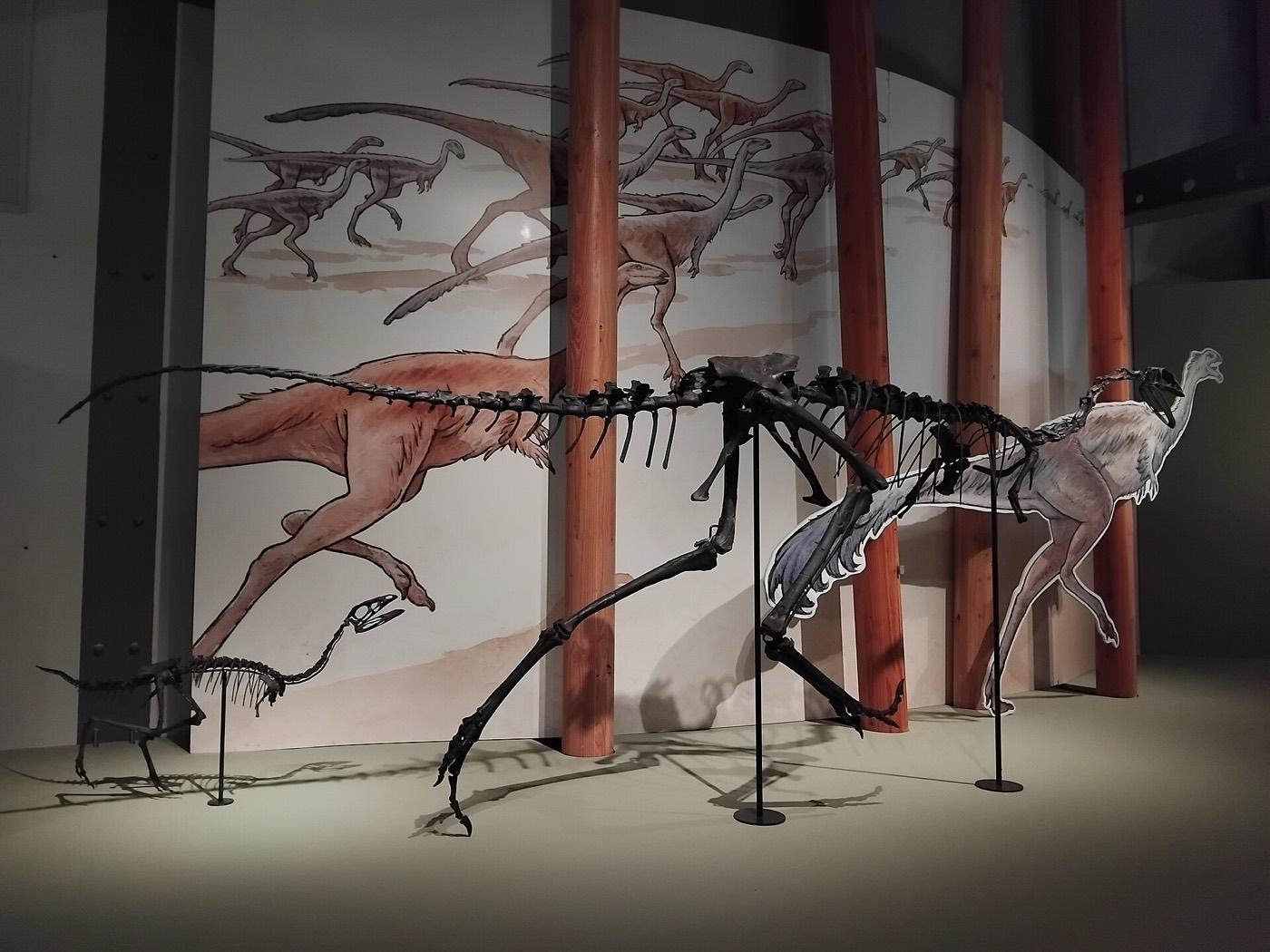
The whole walk to Houlgate and back is a long outing on soft ground, so most visitors work a shorter stretch and turn round. Villers-sur-Mer also has the Paléospace museum, which holds material from these cliffs and is the best place to have a find identified.
Tides govern everything here. The foreshore below the cliffs is cut off at high water. Check a tide table for Villers-sur-Mer before you go, start on a falling tide, and give yourself a clear route back. Do not plan to walk out around a headland and return the same way late in the cycle.
What Fossils You'll Find
Ammonites are the staple, weathering out of the clay as pyritised or calcitic shells, sometimes with the original shell lustre intact. Sizes run from a thumbnail to something you need both hands for.
Echinoids are the other common find, and they are one of the reasons the site is well known. Nautiloids, belemnites and bivalves occur throughout.
The material that makes the site internationally cited is vertebrate. The Marnes de Dives include beds rich in vertebrate remains. The cliffs have produced plesiosaur and ichthyosaur bone as well as a bony fish assemblage recently described in the scientific literature. Marine reptile material is not a routine find, and you should not travel expecting it.
Look in the loose scree at the foot of the slumps and along the strand line rather than at the cliff face. Fossils here are released by weathering, and the sea does the sorting for you.
 Photo: René Hourdry, CC BY-SA 4.0, via Wikimedia Commons
Geologic History
The sequence outcrops continuously from the upper Callovian, around 163 million years ago, to the middle Oxfordian, around 160 million years ago.
The lower part is the Marnes de Dives, upper Callovian, and specifically the Lamberti Zone and Praelamberti Subzone. These are the beds known for their vertebrate content.
Above them sit the Marnes de Villers, sometimes called the Argiles de Villers, which are lowermost Oxfordian.
Both units were laid down in a shallow shelf sea. The clays are soft, they hold water, and they sit on a coast under active marine attack. That combination produces the continuous slumping that keeps the site supplied.
 Photo: René Hourdry, CC BY-SA 4.0, via Wikimedia Commons
Collecting Rules and Regulations
Collecting is now prohibited. A decree of 2 September 2026 created the réserve naturelle nationale des falaises jurassiques du Calvados, and it came into force on 10 September 2026.
The reserve covers about 1,900 hectares across some 37 kilometres of coast and two dozen communes along the Calvados coast. The Vaches Noires between Houlgate and Auberville form one of its zones.
Whether the short western end of the cliffs, towards Villers-sur-Mer, falls inside the boundary is not something this page can settle from the published summaries. Treat the whole site as inside the reserve until you have checked the zone map.
The decree forbids extracting or removing fossils, rocks, sand, minerals and concretions from the ground or subsoil of the reserve. It covers the foreshore as well as the cliff, out to the low-water line.
Exceptions exist only for authorised scientific and educational work. There is no general exception for a visitor picking up a loose ammonite.
That is a change from decades of practice, and most guidance you will find online predates it. Anything written before September 2026 describes the old position.
The ban is practical as well as legal. These cliffs are actively unstable, and hammering at the base of a slump is a direct way to bring material down on yourself.
If you find something that looks like articulated vertebrate material, leave it, photograph it, note the position and contact the Paléospace museum at Villers-sur-Mer. An articulated marine reptile is a scientific specimen, and removing it badly destroys most of its value.
 Photo: René Hourdry, CC BY-SA 4.0, via Wikimedia Commons
Safety
The cliffs are actively unstable. Slumping is what makes the site productive and it is also the main hazard. Stay well out from the base of the cliff, and never shelter under an overhang.
Do not get cut off by the tide. The foreshore floods against the cliff at high water and there is no route up through the slumps. Check the tide table for Villers-sur-Mer, work a falling tide, and leave early.
The ground is soft clay and slippery when wet. Wear boots with grip and expect to get dirty.
Mobile coverage along the cliff base is unreliable. Tell someone your route and your expected return time.
 Photo: René Hourdry, CC BY-SA 4.0, via Wikimedia Commons
Sources
https://en.normandie-tourisme.fr/experience/fossil-hunting-vaches-noires-cliffs/ https://journals.plos.org/plosone/article?id=10.1371%2Fjournal.pone.0344519 https://www.normandie-cabourg-paysdauge-tourisme.fr/en/a-faire/mer-et-nature/les-falaises-des-vaches-noires/ https://www.paleospace-villers.fr/