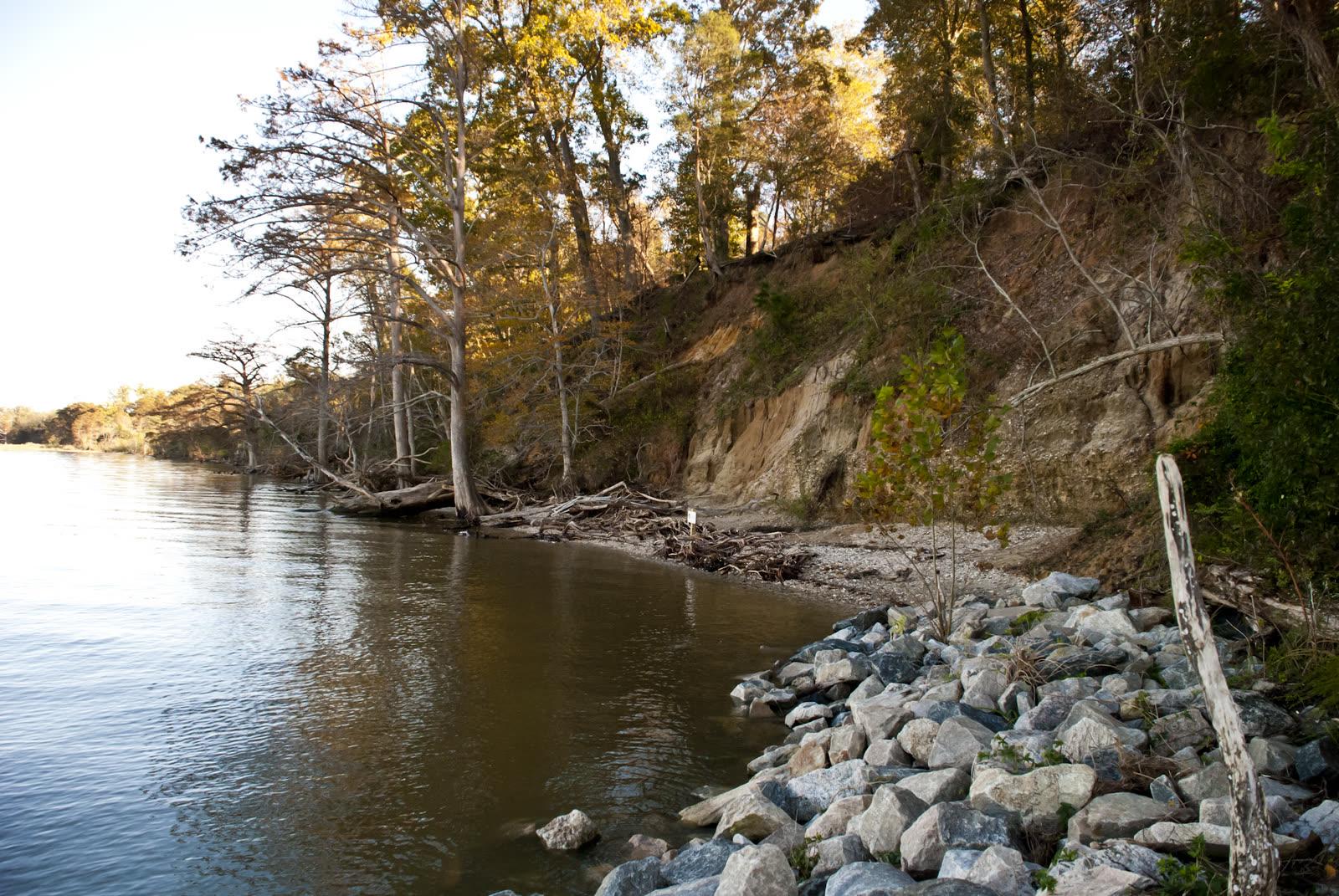
Chippokes State Park Fossil Hunting Guide
Image: Virginia State Parks staff (CC BY 2.0)
Chippokes State Park in Surry County, Virginia, lets visitors collect Miocene and Pliocene shells and shark teeth from the James River beach below 6 to 20 m bluffs. The Yorktown Formation yields scallops, megalodon teeth and whale bone. Digging and tools are not allowed. A parking fee applies.
By Edward Chen · Published 1 October 2026
 Photo: vastateparksstaff (guest blogger photo), CC BY 2.0, via Wikimedia Commons
Introduction
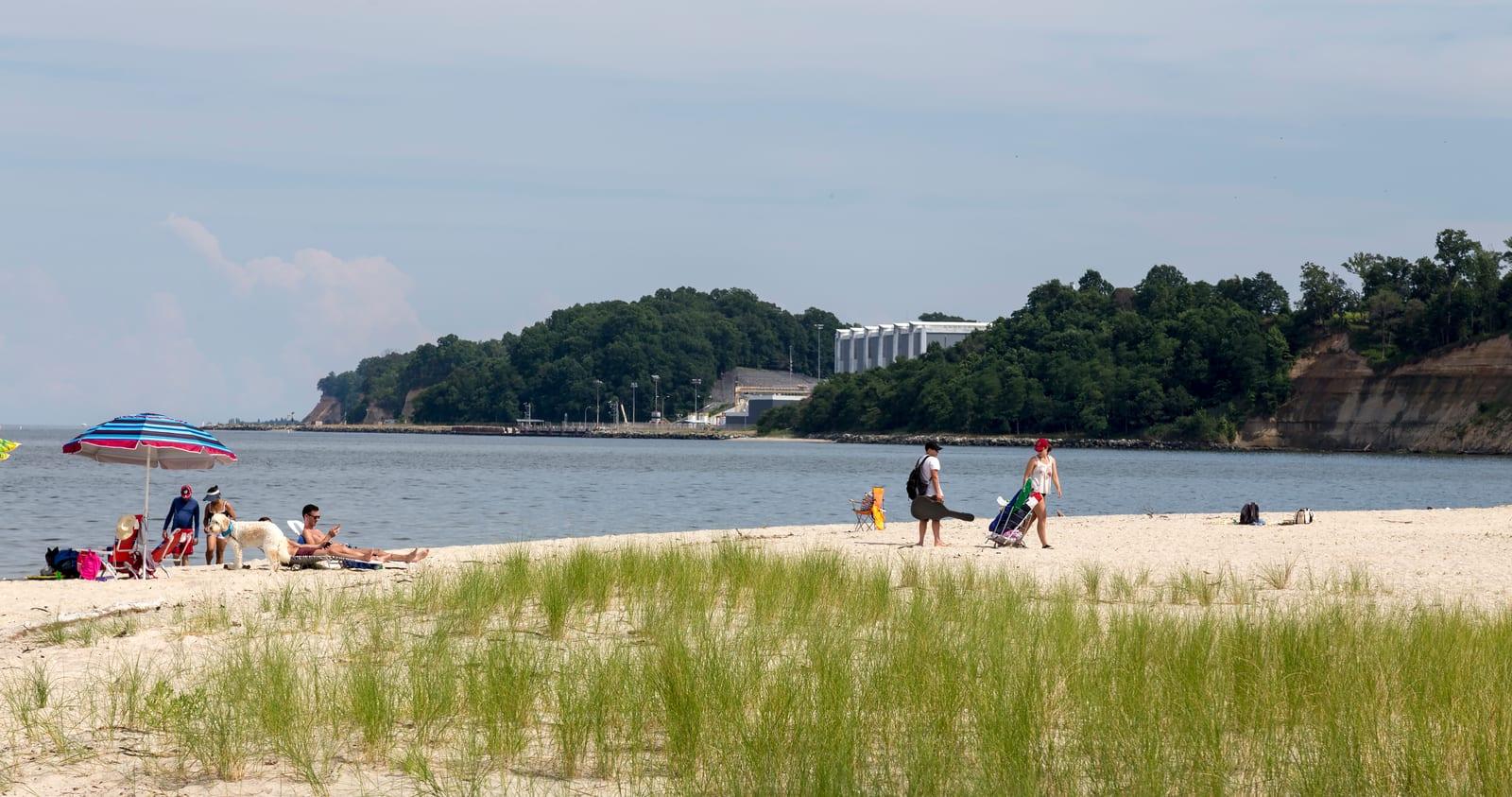
Chippokes State Park in Surry County, Virginia, has a James River beach below bluffs 6 to 20 m high. Pliocene and Miocene shells wash out of them. The scallop Chesapecten jeffersonius, the state fossil of Virginia, turns up in the hundreds to thousands. Shark teeth, including teeth of the giant shark megalodon, also occur.
The Virginia Department of Conservation and Recreation (DCR) allows fossil collecting on the beach. Digging and tools are not allowed. You collect what has already washed loose.
The park also holds a historic area and a Farm and Forestry Museum. It was formerly named Chippokes Plantation State Park. The park is open from dawn to dusk, and a parking fee applies.
Location and Directions
The park address is 695 Chippokes Park Road, Surry, VA 23883. It lies on the Surry side of the James River. The visitor center sits at 37.146 degrees north and 76.739 degrees west. The park telephone number is 757-294-3728.
The park is open daily from dawn to dusk. The visitor center is open 8:30 to 16:30 for most of the year. From December to February it opens 9:00 to 16:00.
A parking fee applies at Virginia state parks all year. DCR lists daily fees between $5 and $10 per car across the system, and the Deposits magazine article gave $7 at Chippokes in 2021. Pay at the contact station and confirm the current rate there. The Deposits article gives the approach to the park as Route 10, then Route 634 and Route 665.
Two trails lead to the beach. DCR names the College Run Trail and the Powhatan Trail. College Run is a paved 1.2 mile route from the visitor center. The Deposits article describes a short walk from the visitor center and a much longer College Run route, over an hour each way. DCR lists a ranger-led walk to the beach of about 0.3 mile. Bring water and wear shoes that grip wet sand.
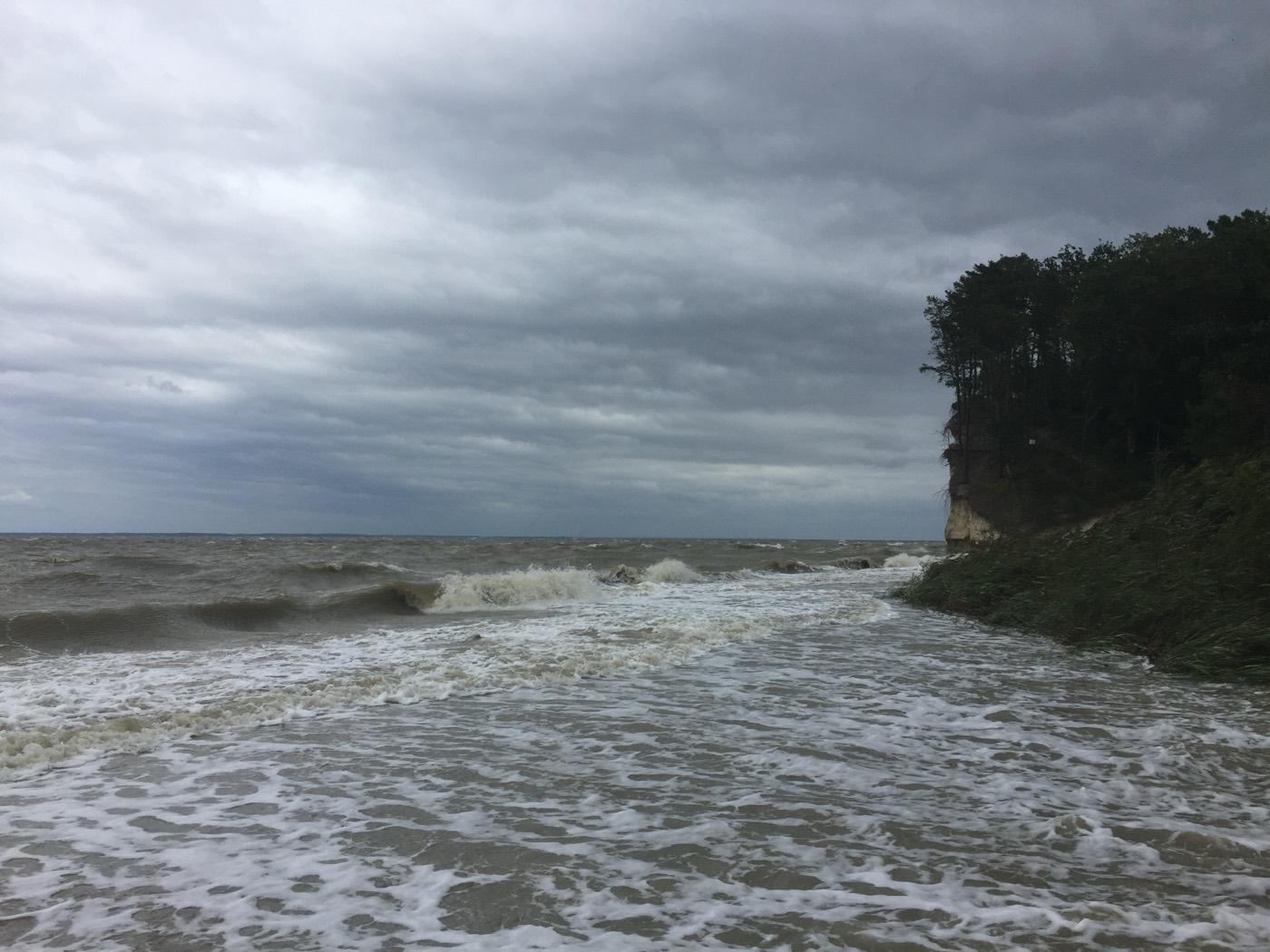
What Fossils You'll Find
 Photo: Virginia State Parks, CC BY 2.0, via Wikimedia Commons
Marine shells make up most of the finds. Chesapecten jeffersonius is the most abundant fossil and averages 9 to 11 cm across. The small turret shell Turritella plebeia measures 2 to 3 cm. The Deposits article also lists the clam Mercenaria cuneata and barnacles of Balanus concavus proteus.
Shark teeth are the best known find. DCR states that all guests are welcome and encouraged to collect shark teeth, and that this includes megalodon teeth. The Deposits article lists teeth of the extinct mako Isurus hastalis.
Whale bone is rarer. The Deposits article lists whale bone of Balaena ricei and describes an inner ear bone 11.4 cm long.
The finds come from more than one formation. The bluffs expose the Yorktown, Eastover, St. Marys, Choptank and Calvert Formations of the Chesapeake Group. The Deposits article also lists the upper Pliocene Chowan River Formation. It names the Yorktown Formation as the main unit.
Geologic History
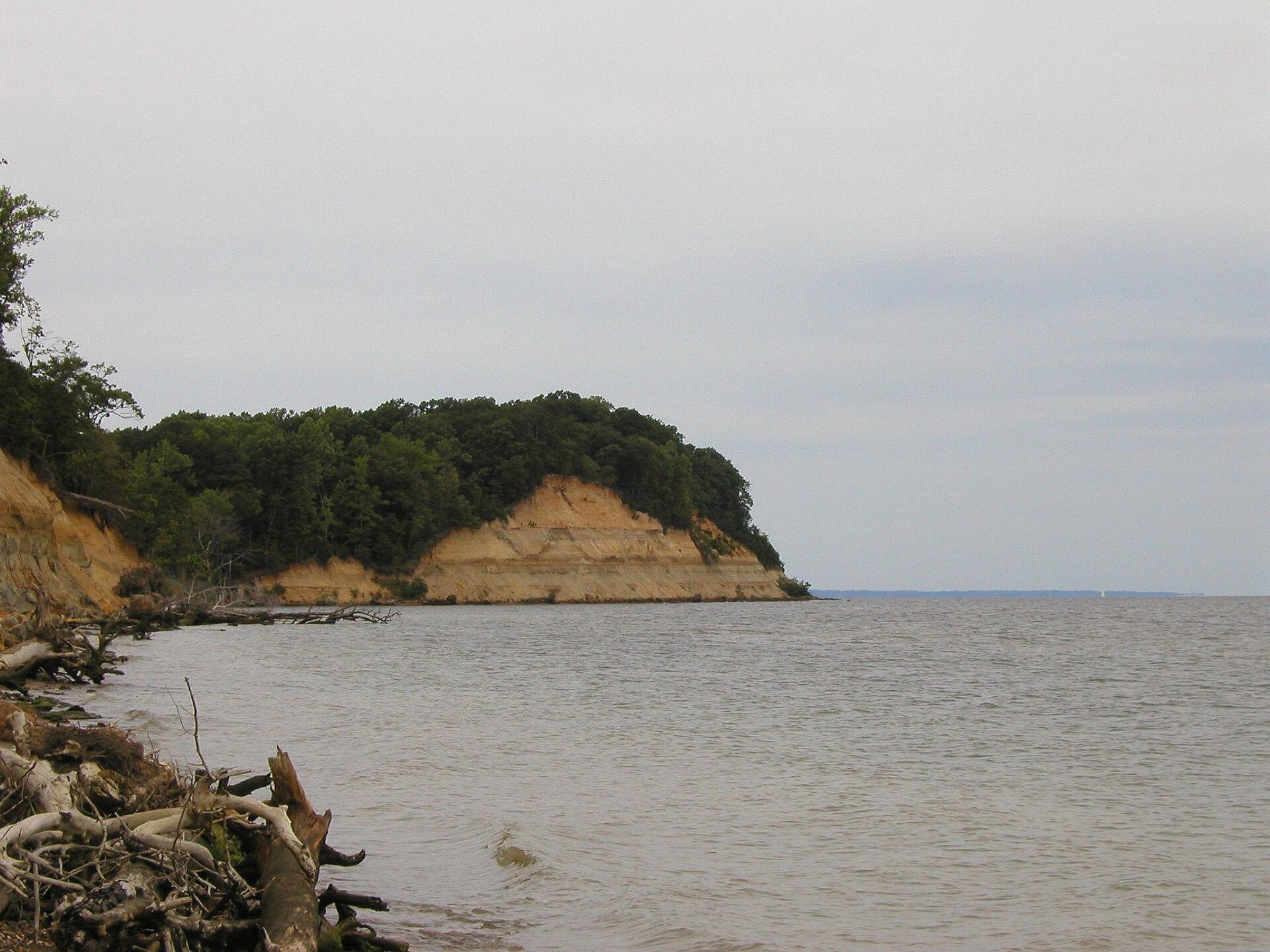
 Photo: Jstuby (English Wikipedia), Public domain, via Wikimedia Commons
The Chesapeake Group is a stack of shallow-water marine sediments on the Virginia Coastal Plain. The beds at Chippokes range from the Miocene Calvert Formation to the Pliocene Yorktown Formation. DCR dates the fossil beds at Chippokes from 11 to 3 million years ago.
The Yorktown Formation is early to late Pliocene. The USGS Geolex database gives it a span of about 4.8 to 2.9 million years. The upper Yorktown is no younger than about 3.0 million years. A gap in the record separates it from the overlying Chowan River Formation.
The older units lie lower in the bluffs. The Deposits article dates the Calvert Formation to the early to middle Miocene and the Choptank Formation to the middle Miocene. It dates the St. Marys Formation to the middle to late Miocene and the Eastover Formation to the late Miocene.
The park lies on the James River, and the river cuts the bluffs. Fossils reach the beach from these exposures.
Collecting Rules and Regulations
Collecting on the beach is allowed. DCR says guests may keep the shark teeth and fossils they find, and it adds that a megalodon tooth is "finders keepers". DCR asks you to take only a few. The agency says limits vary from park to park.
Digging and tools are not allowed. DCR states that you are not permitted to dig or use tools to find these fossils. A secondary source reports that digging in the bluffs is not allowed, and that commercial-scale collecting is not permitted. Pick up loose material only.
Do not climb the bluffs. Do not pull material out of the cliff face.
General Virginia state park rules forbid the removal of natural objects. DCR notes that you are usually not allowed to take anything natural from its parks. DCR states that it allows visitors to take fossils and shells in spite of this. If you are unsure, ask a ranger. The park interpreter leads Fossil Walks, and school groups can book one on 757-294-3625.
DCR also listed a ranger-led excursion called Fossils of the James on 28 October 2023, from 13:30 to 15:00. It needed no registration. Ask the park for current dates.
Safety
The beach lies below bluffs 6 to 20 m high. Stay away from the foot of the bluffs. Bluff material can fall. Never climb the cliff face.
Visit at low tide. The Deposits article advises a visit at low tide. Check a tide table before you walk down.
The park beaches are not guarded. The park says swimming is at your own risk. Wear sturdy shoes, and carry water on the longer College Run route.
The approach roads are steep and winding, as the Deposits article notes. Drive slowly. In an emergency, dial 911.
Sources
https://www.dcr.virginia.gov/state-parks/chippokes https://www.dcr.virginia.gov/state-parks/blog/meet-the-fossils-of-chippokes-in-southside-virginia-3983 https://www.dcr.virginia.gov/state-parks/event?id=2023-09-05-08-52-19-705096-8lu https://www.dcr.virginia.gov/state-parks/blog/hidden-gems-of-virginia-state-parks-part-2 https://www.dcr.virginia.gov/state-parks/parking-fees https://www.dcr.virginia.gov/state-parks/document/data/trail-guide-chippokes.pdf https://ngmdb.usgs.gov/Geolex/UnitRefs/YorktownRefs_4487.html https://depositsmag.com/2021/11/24/miocene-pliocene-shallow-water-marine-fossils-at-chippokes-plantation-state-park-virginia-usa/
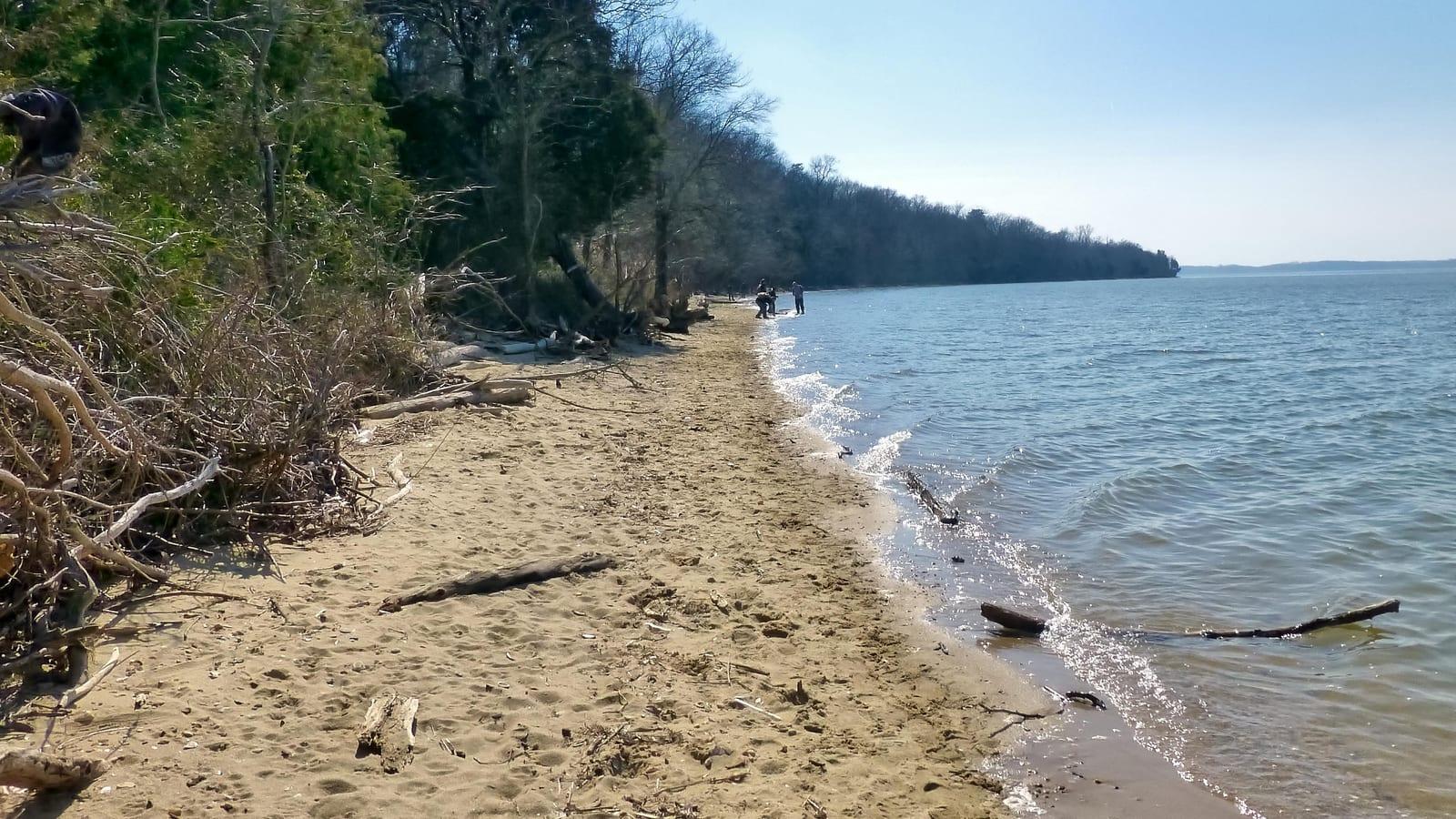
.jpg)
.jpg)
